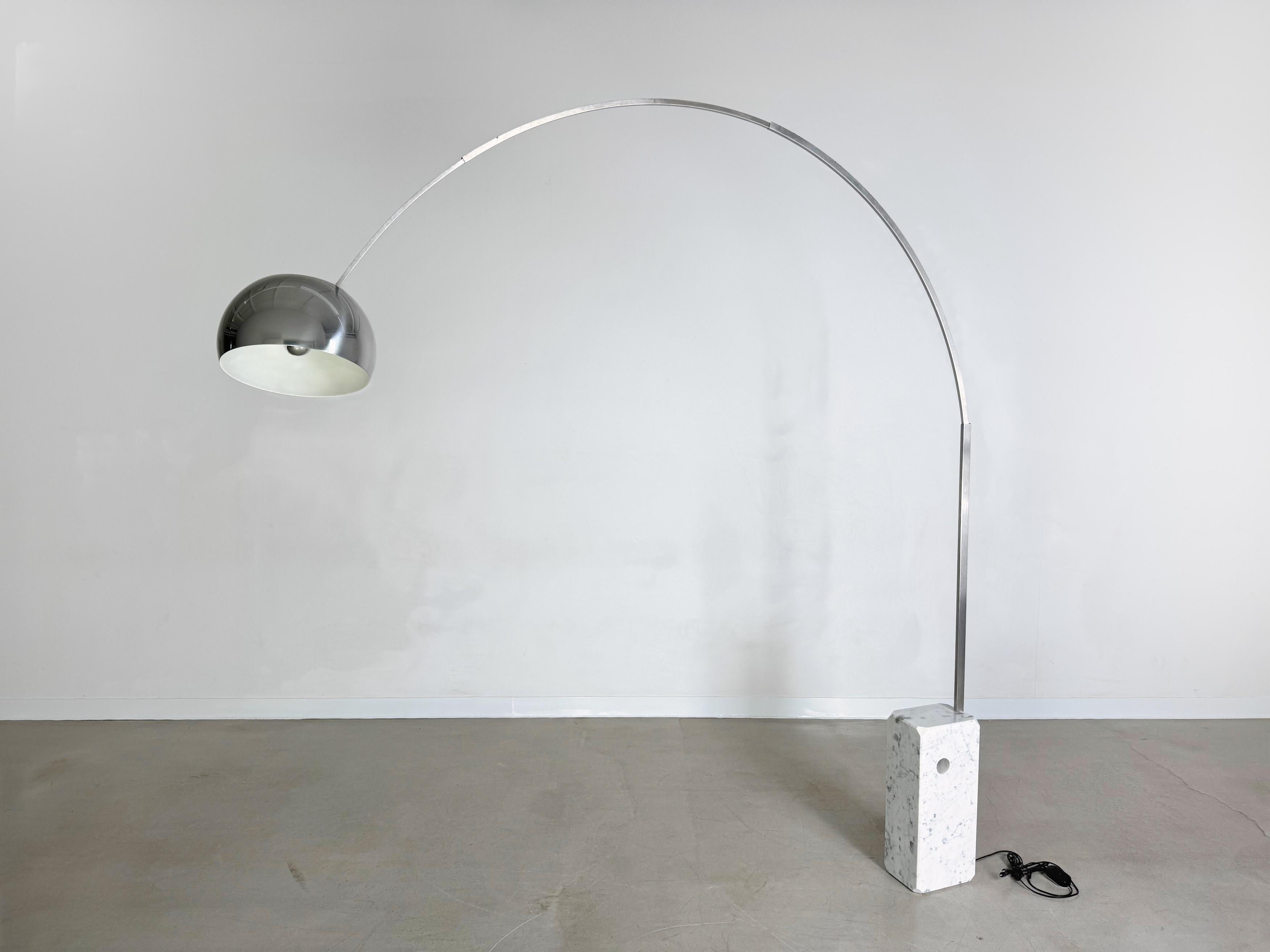
Achille Castiglioni's Arco floor lamp with Carrara marble base and stainless steel arc, produced by Flos since 1962

Castiglioni Objects: Flos and Zanotta, 1951-1971

Castiglioni objects between 1951 and 1971 are eleven domestic pieces — most of them still in production at Flos and Zanotta — that argued the readymade and the catalogue object could share a shelf without either losing its citizenship. The line begins in 1951 with Achille Castiglioni and Pier Giacomo Castiglioni drawing a linear fluorescent task lamp called Tubino for a Milanese lighting workshop that would soon be reorganised as Flos. It closes in 1971 with Achille and Pio Manzù tensioning a single steel cable between floor and ceiling, hanging a sliding bracket spotlight off it, and calling it Parentesi. In the twenty years between those two cables — a fluorescent tube and a steel tension wire — the brothers proposed that the household object could be assembled out of tractor seats, bicycle saddles, car headlamps and Carrara marble cylinders without ceasing to be furniture. ...
June 15, 2026 · 16 min · 3326 words · FORMA Editorial
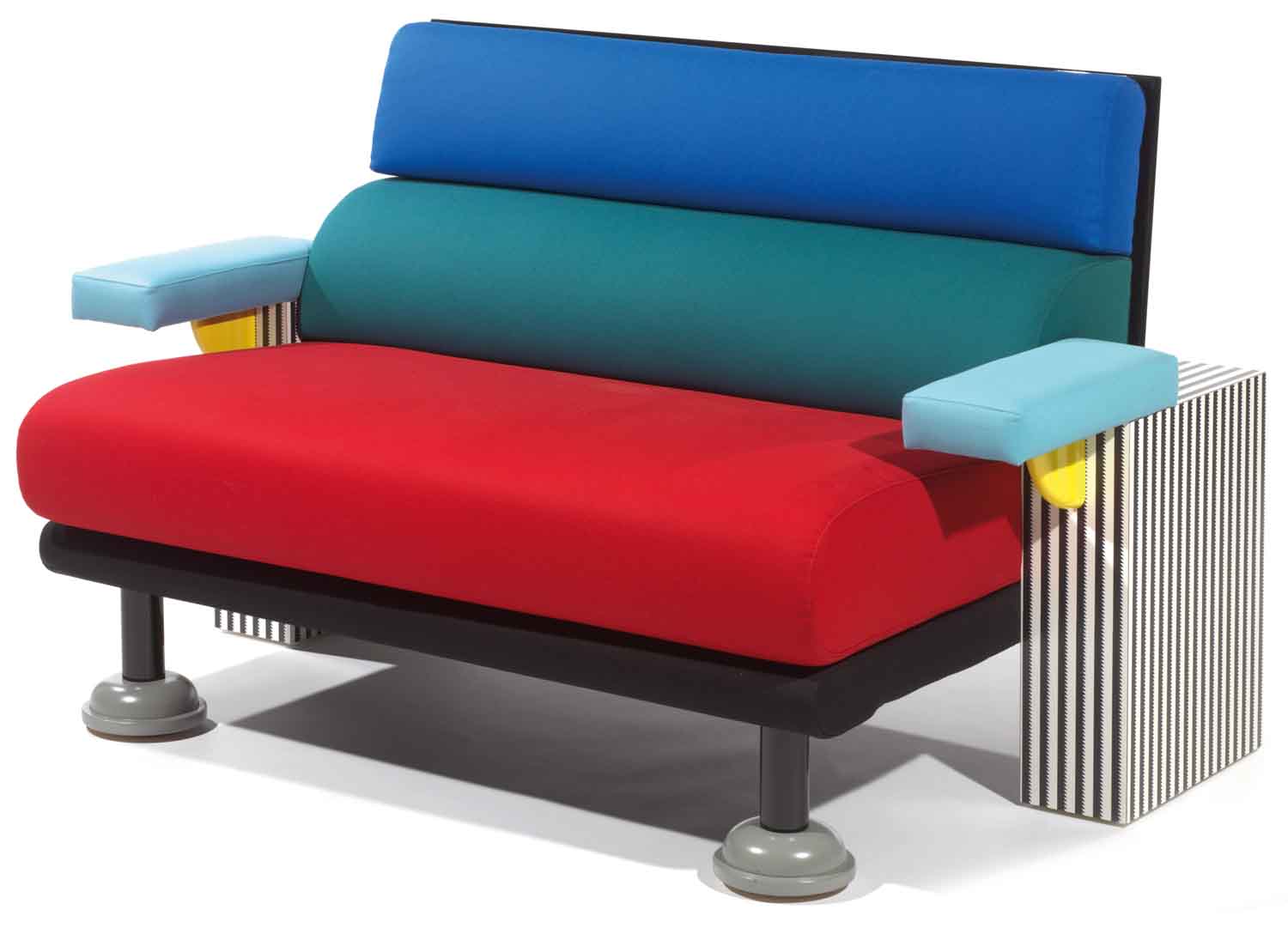
Andrea Branzi, Ettore Sottsass and Alessandro Mendini in Italian Radical Design timeline 1966–1995.

Italian Radical Design: 1966–1995 Lineage

Italian radical design begins in Pistoia in December 1966, when Archizoom Associati and Superstudio mount Superarchitettura in two rooms of a provincial gallery and publish a founding statement against the modernist project. The movement runs for roughly thirty years from that exhibition to the opening of the Groninger Museum in 1994, passes through three distinct organisational forms — the Florentine collectives of 1966–1974, the Milanese teaching networks of Global Tools and Studio Alchimia in 1973–1980, and Memphis Milano in 1980–1988 — and is carried throughout by three protagonists whose careers overlap and intersect: Andrea Branzi, Ettore Sottsass, and Alessandro Mendini. The shape of the answer is a lineage, not a school. There is no single manifesto and no single object. There is a chain of groups, magazines, exhibitions and pieces of furniture in which each generation re-stages the argument of the previous one with different materials, different cities and different enemies. ...

May 25, 2026 · 14 min · 2872 words · FORMA Editorial
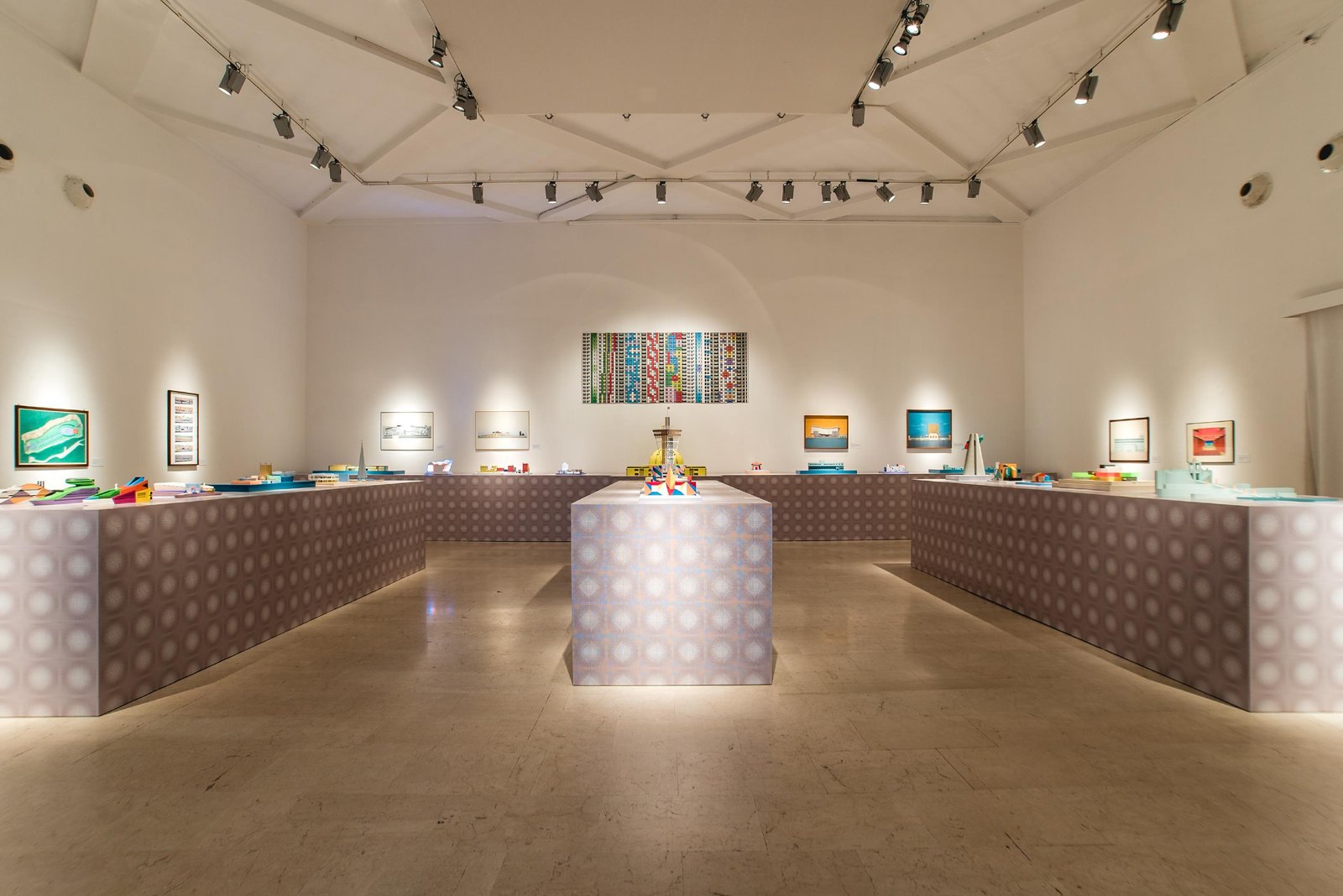
Alessandro Mendini retrospective at Villa Giulia, Verbania, Lake Maggiore, 2026, with the Proust Armchair and 100% Make-Up vases distributed through the 19th-century villa as furnishings

Alessandro Mendini Retrospective: 130 Works, Villa Giulia

Loredana Parmesani has filled a 19th-century Pallanza villa with 130 Mendini objects arranged not as museum vitrines but as rooms — the Proust Armchair in one, the Straw Armchair in another, the 100% Make-Up vases lined up like household china, a jacket from the 1997 Furniture for Men series standing in the hallway clad in gold mosaic. The alessandro mendini retrospective at Villa Giulia, Verbania, on the western shore of Lake Maggiore, runs from 16 May to 27 September 2026, was organised by the City of Verbania with the Alessandro Mendini Archive run by Mendini’s daughters Elisa and Fulvia, and stages the Studio Alchimia and Alessi lineages inside a domestic shell rather than the white cube. The exhibition is titled “Alessandro Mendini. Objects. Rooms as worlds.” The design of the show is by Alex Mocika. The thesis, by Parmesani’s own statement, is that the room — “a place of reflection, rest, quietness, and work, but also a place of turbulence” — is the unit of Mendini’s thinking, and that to put his work in vitrines is to mistake the work for its objects. ...

May 24, 2026 · 17 min · 3537 words · FORMA Editorial

Stay in the loop

New posts, occasionally. No spam.