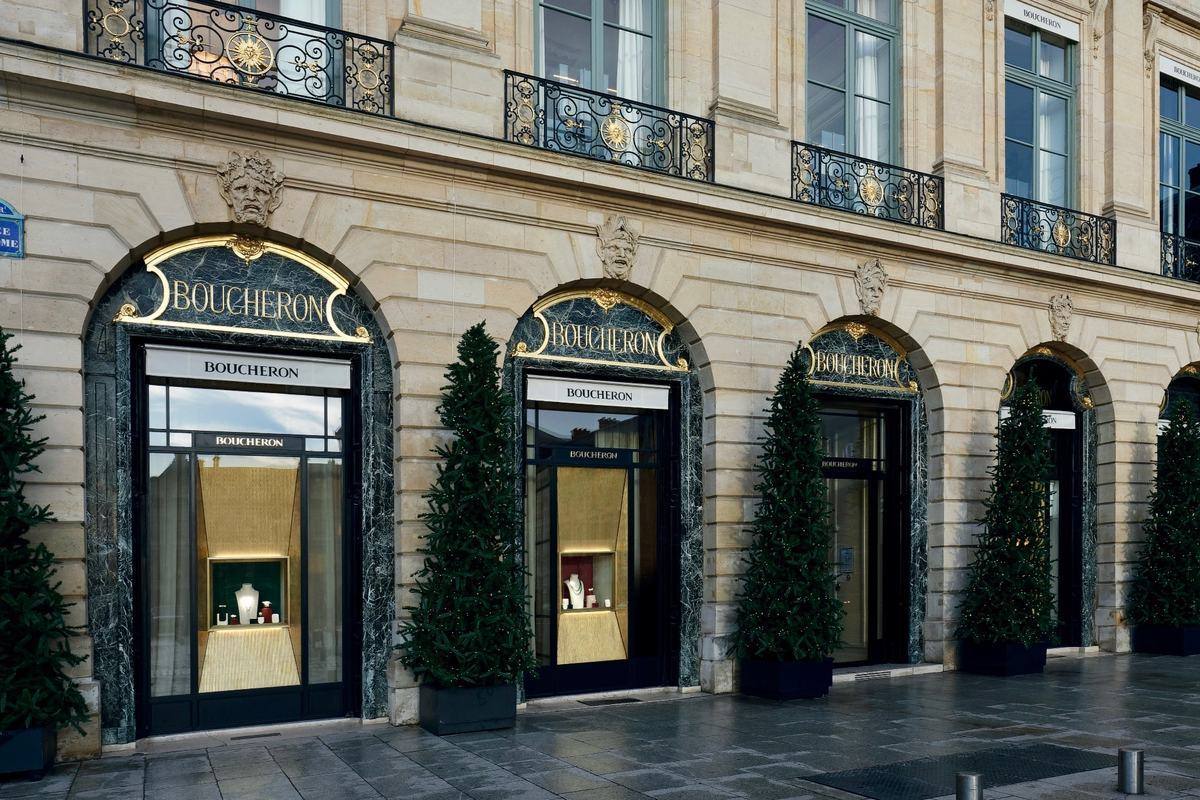
Kering put Jean-Marc Duplaix in charge of a new jewellery division on 17 March 2026 and gave him four houses, €935 million in 2025 revenue, and one job: catch Cartier. The Kering jewellery division, announced on 16–17 March 2026, consolidates Boucheron, Pomellato, Dodo and Qeelin under a single P&L for the first time, with Group COO Jean-Marc Duplaix appointed CEO of the new structure while keeping his COO duties. Read against the comparator set — Richemont’s Cartier and Van Cleef & Arpels, LVMH’s Tiffany & Co. and Bulgari — the move is less a brand reorganisation than the second leg of Luca de Meo’s ReconKering plan: turn a sub-billion-euro spread of acquired jewellers into a category platform that can be measured against the two groups that already won the last cycle.
The shape of the answer matters. Kering is not buying its way into hard luxury jewellery the way LVMH did with Tiffany in 2021 for $15.8 billion or with Bulgari in 2011. It is doing the opposite: stitching together houses it already owns — three acquired between 2000 and 2013, plus a sub-brand born inside Pomellato in 1995 — and adding a manufacturing spine via Italian supplier Raselli Franco Group, in which Kering took a 20% stake in late 2025 with full acquisition planned by 2032. The bet is that the gap to Cartier is not a brand gap. It is an operating gap: scale, manufacturing, retail discipline, and the kind of platform metabolism that Richemont built around Cartier and Van Cleef over twenty years and LVMH replicated at speed with Tiffany and Bulgari.
What was announced on 16–17 March 2026
The communication ran across two days. On 16 March 2026 Kering pre-briefed the structure; on 17 March 2026 the formal release named the division Kering Jewelry and confirmed Duplaix as CEO. The four house CEOs — Hélène Poulit-Duquesne at Boucheron, Sabina Belli at Pomellato, the Dodo lead, and the Qeelin head — now report into Duplaix, who keeps his role as Kering Group Chief Operating Officer. That double-hatting is the structural tell. Kering did not hire an outside hard-luxury jewellery executive in the mould of a Cartier or Bulgari veteran. It put its own COO — the most operationally fluent person in the building, the executive who already runs Group functions — at the top of the new perimeter.
Luca de Meo framed the announcement in the language he has used since the Florence Capital Markets Day: “With Kering Jewelry, we are giving the group a powerful and cohesive platform capable of supporting our houses’ ambitions in an area where creativity and excellence are inseparable.” Two words in that sentence carry weight. “Platform” — singular, group-level, not house-by-house — and “cohesive”, which is what the four houses, scattered across separate reporting lines and acquired across thirteen years, demonstrably were not before 17 March.
De Meo also flagged the latent number that may matter most for the strategy beyond the four named houses: Gucci generated three times more jewellery revenue a decade ago than it does today. That comparison is not a side observation. It tells you that Kering reads the jewellery opportunity as a recoverable category inside its own group as much as a competitive position against Cartier — and that the new division is a vehicle for both moves at once.
The combined 2025 revenue figure of approximately €935 million sets the starting line. Q4 2025 alone contributed €266 million, which annualises above the full-year run rate and indicates the division enters 2026 with positive momentum from a holiday quarter that is structurally jewellery-heavy. €935 million is meaningful but not yet category-defining. For context, LVMH’s Watches & Jewellery segment — which includes Tiffany, Bulgari, Chaumet, Fred, Repossi and the watch houses — runs north of €10 billion. Richemont’s Jewellery Maisons division, which is essentially Cartier plus Van Cleef & Arpels plus Buccellati and Vhernier, runs north of €15 billion. The Kering jewellery division opens at roughly one-tenth of the smaller of those two comparators on the jewellery side alone. That is the gap the platform has to close.
The four houses inside the kering jewellery division
The division is not a homogeneous portfolio. It is a bet that four very different jewellery models — Place Vendôme high jewellery, Milanese prêt-à-porter, animal-charm accessible fine jewellery, and Hong Kong-born Chinese-symbol design — share enough operating logic to benefit from a shared back office, shared retail discipline, shared manufacturing capacity, and a single CEO interface to the Kering group.
| House | Founded | Founder | Acquired by Kering | Specialty | CEO | Creative Director |
|---|---|---|---|---|---|---|
| Boucheron | 1858, Paris | Frédéric Boucheron | 2000 (via Gucci Group) | Place Vendôme high jewellery | Hélène Poulit-Duquesne (since 2015) | Claire Choisne (since 2011) |
| Pomellato | 1967, Milan | Pino Rabolini | July 2013 | Prêt-à-porter fine jewellery | Sabina Belli (since Dec 2015) | Vincenzo Castaldo (since 2004) |
| Dodo | 1995, Milan (as Pomellato sub-brand) | Pomellato | 2013 (with Pomellato) | Charm/animal-motif fine jewellery | (reports into division) | (in-house design) |
| Qeelin | 2004, Hong Kong | Dennis Chan, Guillaume Brochard | January 2013 (majority stake) | Chinese-symbol fine jewellery | (reports into division) | Dennis Chan |
Three observations follow from the table. First, three of the four acquisitions cluster in 2013 — Pomellato and Dodo together in July, Qeelin in January — meaning Kering has held this jewellery footprint for thirteen years without operating it as a single division. The 2026 announcement closes a gap that has been open since François-Henri Pinault’s group first assembled the portfolio. Second, Boucheron is the outlier in time, scale and address: 1858 founding, acquired in 2000 via the Gucci Group transaction that built modern Kering, and the only one of the four with a Place Vendôme flagship. Third, Qeelin is the outlier in geography. Its January 2013 acquisition was Kering’s first purchase of a Chinese brand, and Wulu — the gourd-shaped pendant Maggie Cheung wore at the 2004 Cannes Film Festival — gave Kering an Asian fine-jewellery icon that neither LVMH nor Richemont has a direct equivalent of in their portfolios.
Boucheron at 26 Place Vendôme
Boucheron is the anchor. Founded in 1858 by Frédéric Boucheron, it became the first jeweller to open on Place Vendôme, settling at number 26 in 1893. The address matters because Place Vendôme — the octagonal square in the 1st arrondissement, completed in 1720 by Jules Hardouin-Mansart — is the most concentrated piece of competitive geography in luxury jewellery on earth. Cartier, Van Cleef & Arpels, Bulgari, Chaumet and Boucheron all front onto the same square. Boucheron’s 1893 address makes it the senior tenant of the high-jewellery side of the square, a fact the house has used as a positioning lever for over a century.
Hélène Poulit-Duquesne has run Boucheron since 2015. Claire Choisne has been creative director since 2011. The Choisne tenure is now in its fifteenth year, which inside high jewellery is unusual continuity — closer to the duration logic of a Pierre Hardy at Hermès jewellery than to the rotating creative direction of fashion houses in the same group. That continuity is part of what Duplaix inherits as a strategic asset on day one of the new division. Place Vendôme tenancy plus a fifteen-year creative director plus a CEO in her eleventh year is not a fixer-upper at Boucheron — it is the platform’s most stable house and the one that will most directly absorb high-jewellery scale ambition.
Pomellato and Milanese prêt-à-porter
Pomellato was founded in 1967 in Milan by Pino Rabolini and pioneered what the industry calls prêt-à-porter fine jewellery — production-scale, design-forward, wearable pieces priced and merchandised closer to ready-to-wear than to bespoke high jewellery. Kering acquired it in July 2013. Sabina Belli has been CEO since December 2015. Vincenzo Castaldo has been creative director since 2004 — twenty-two years in the role at the moment of the 2026 reorganisation, which is the longest creative tenure across the four houses by a wide margin.
Pomellato sits in a different competitive bracket from Boucheron. Its Place Vendôme equivalent is Milan’s Via Manzoni and Via della Spiga, where a different cohort of jewellers competes on design density and colour-stone signature. Belli has run a Milan-anchored growth story through the back half of the 2010s and into the 2020s built on the Nudo and Iconica collections, both of which have the kind of recognisable silhouette that translates into multi-channel scale: department store, monobrand, e-commerce, travel retail. The relevance of Pomellato to the new division is precisely that scalability. Pomellato is the house Duplaix can use as the platform’s volume engine while Boucheron does the high-jewellery margin work.
Dodo and the environmental signal
Dodo launched in 1995 as a Pomellato sub-brand. The name was a deliberate environmental signal — chosen for the extinct flightless bird as a way of marking the brand’s positioning before the language of sustainability had hardened in luxury communications. Dodo specialises in charm and animal-motif fine jewellery at accessible price points, with a customisation logic — pick a chain, build a charm assembly — that prefigured the personalisation models that have since spread across the category.
Dodo is the smallest of the four houses by revenue and the most channel-distinctive. Its retail logic — light, accessible, gift-skewed — gives the division a price-laddering bottom step that Boucheron and Pomellato do not occupy. In platform terms, Dodo is the house most likely to be expanded into adjacent gifting and travel retail channels under a unified jewellery operating model.
Qeelin and the China door
Qeelin was founded in 2004 by Dennis Chan and Guillaume Brochard and is headquartered in Hong Kong. The Wulu pendant — the gourd-shaped piece Maggie Cheung wore at the 2004 Cannes Film Festival — turned the house into a recognisable name in Greater China and gave Kering, when it took the majority stake in January 2013, its first Chinese brand acquisition.
Qeelin’s strategic value to the new division is asymmetric. As a revenue line it is the smallest of the four, but as a channel and geography it is the only one of the four houses with a Chinese design language built in from the founding moment. In a cycle where Kering’s Q1 2026 numbers were dragged down disproportionately by Greater China weakness across Gucci, the existence of a Hong Kong-headquartered jewellery brand with an Asian iconography and a recognisable Chinese-symbol catalogue gives Duplaix a category-distinct China lever that the rest of the Kering portfolio does not provide.
Why Duplaix and not a hard-luxury jewellery hire
Jean-Marc Duplaix’s appointment is the most-watched personnel choice in the announcement. He is Kering’s Group COO, a finance-trained operator who served as group CFO before assuming COO duties, and he keeps the COO mandate while taking on the new division. The double-hat structure is unusual in luxury, where divisional CEOs typically come either from inside one of the operating houses or from a competitor’s jewellery business.
Three readings of the choice are worth holding side by side. The first is operational: Duplaix is the executive most positioned to integrate four back offices, four supply chains, four retail logics and one new manufacturing partner (Raselli Franco) into a working platform on a 12-to-24-month horizon. The second is signalling: putting the COO on top of the division tells the market that Kering reads jewellery as an operating problem first and a brand problem second — the opposite of the diagnosis that would have led the group to hire a high-profile creative or commercial figure from outside. The third is governance: the four house CEOs, including the long-tenured Poulit-Duquesne and Belli, now have a single internal interface rather than parallel reporting lines into the broader group, and that interface is the executive with the most direct view of group capital allocation.
The Duplaix appointment also reads against the Florence ReconKering plan as a continuity move. Florence committed Kering to doubling recurring operating margin, lifting return on capital employed above 20%, closing roughly 250 stores over four years and taking €1 billion of inventory out of the system inside 12 months. Each of those constraints lands on the new jewellery division too. A jewellery house operating inside a 250-store closure programme cannot run channel strategy independently. A category whose inventory contribution to the group target depends on supply-chain consolidation cannot run procurement independently. Duplaix is the executive whose job already includes those programmes at group level, which makes him the lowest-friction integrator across the four houses.
The platform fight: Kering vs LVMH vs Richemont
The competitive frame is the part of the story that the formal Kering release leaves implicit. The new division does not exist for its own sake — it exists because LVMH and Richemont have spent the last fifteen years assembling jewellery platforms that have outscaled the Kering footprint by an order of magnitude.
| Group | Jewellery houses | Anchor brand | Defining acquisition |
|---|---|---|---|
| Kering | Boucheron, Pomellato, Dodo, Qeelin | Boucheron (Place Vendôme since 1893) | Pomellato + Dodo, July 2013 |
| LVMH | Tiffany & Co., Bulgari, Chaumet, Fred, Repossi | Tiffany & Co. | Tiffany & Co., 2021 ($15.8B) |
| Richemont | Cartier, Van Cleef & Arpels, Buccellati, Vhernier | Cartier | Cartier (foundational, 1988) |
Three structural differences come out of the comparator table. First, scale of anchor: Cartier alone is a multi-billion-euro jewellery business, Tiffany was acquired at a $15.8 billion valuation in 2021, and Boucheron — Kering’s anchor — is a sub-billion-euro business inside a sub-billion-euro division. Second, defining-acquisition cycle: Richemont’s Cartier ownership is foundational to the group’s modern identity since 1988, LVMH’s Tiffany acquisition closed in 2021 and reset the LVMH jewellery centre of gravity, and Kering’s defining jewellery acquisition was Pomellato in July 2013, which by 2026 had not yet been amplified by a comparable hard-luxury purchase. Third, geographic footprint: Richemont and LVMH both have multi-house Place Vendôme presence; Kering has Boucheron at number 26 and a Hong Kong-headquartered Qeelin that the other two groups do not have a direct equivalent of.
The structural read of the platform fight is therefore not “Kering competes brand-to-brand with Cartier” — Boucheron has a different commercial and historical positioning. It is “Kering competes platform-to-platform with the Richemont Jewellery Maisons division and the LVMH Watches & Jewellery division for share of the category’s total growth.” The 17 March 2026 reorganisation creates the divisional perimeter from which that competition becomes legible. Before the reorganisation, the four houses did not roll up to a single number that could be benchmarked against Richemont’s Jewellery Maisons or LVMH’s Watches & Jewellery. After the reorganisation, they do. The €935 million combined-2025 disclosure is the first version of that benchmarkable number.
Raselli Franco and the manufacturing spine
The manufacturing piece is the announcement’s quietest detail and one of its most consequential. Italian jewellery manufacturer Raselli Franco Group folds into the new division. Kering took a 20% stake in Raselli Franco in late 2025, with full acquisition planned by 2032. The structure mirrors the craft acquisition pattern Kering and its peers have applied to leather goods and tannery suppliers across the past decade — minority equity now, full integration on a defined horizon, supplier locked in over the gap.
Manufacturing capture matters in jewellery for two reasons. The first is margin: vertical integration across casting, setting, polishing and finishing reshapes the gross-margin structure of a jewellery business in ways that are difficult to replicate by purchasing from third parties. The second is creative protection: techniques, alloys, finishings and proprietary processes embed inside an owned supplier in a way they do not inside a contracted one. Kering’s bet on Raselli Franco is a bet that the jewellery division’s future scale requires manufacturing capacity it can plan against rather than buy on the open market, and that the 2025–2032 phased acquisition window is the right shape for that capability transfer.
What the division has to do in the first 18 months
The 18-month horizon — roughly through the back half of 2027 — is where the new division is most measurable. Four operating tasks land on Duplaix’s desk in sequence.
First, integrated reporting. The €935 million combined-2025 number is the baseline, but the division has to produce quarterly comparable disclosure across the four houses, ideally with a like-for-like growth metric that the market can benchmark against the Richemont Jewellery Maisons line and the LVMH Watches & Jewellery line. Without a like-for-like number, the platform thesis is unverifiable in the data the market actually trades on.
Second, retail integration inside the broader Kering 250-store closure programme. The four jewellery houses run distinct retail networks today. Place Vendôme is fixed for Boucheron, but Pomellato, Dodo and Qeelin all operate monobrand and shop-in-shop networks that overlap in some markets and are absent in others. A unified jewellery store-portfolio review is the first decision that has to come out of the new structure, and it has to align with the group’s stated 100-store-closure target for 2026 alone.
Third, the Gucci jewellery question. De Meo’s reference to Gucci having generated three times more jewellery revenue a decade ago is not a side fact — it is the optionality the new division provides. The Kering jewellery division’s operating capability could be deployed to rebuild Gucci jewellery as a category, either by serving Gucci as an internal manufacturing and design partner or by absorbing Gucci jewellery licensing and operations into the divisional perimeter. Neither path was specified in the 17 March release, and that silence is itself a planning question for the first 18 months.
Fourth, the Raselli Franco transition. The 20% stake taken in late 2025 has to translate into operational integration across the four houses by the time the path-to-100% acquisition reaches its mid-point. Manufacturing capability does not produce margin uplift on its own; it produces margin uplift when divisional product development is rebuilt around it. That work begins in 2026 and matures across the platform horizon.
François-Henri Pinault, de Meo, and the strategic logic
The 17 March 2026 announcement closes a thirteen-year arc that started under François-Henri Pinault, the chairman who built the jewellery footprint through the 2013 Pomellato, Dodo and Qeelin acquisitions and the 2000 Gucci Group transaction that brought Boucheron into the building. For a decade after that footprint was assembled, Kering operated the four houses as separate brand entities with parallel reporting lines into the group. The decision not to consolidate them sat unmade across multiple market cycles. The 17 March 2026 reorganisation makes the decision under Luca de Meo, in the same quarter as the Florence ReconKering reveal and inside the same operating framework — and the Duplaix promotion lands as the second of de Meo’s 2024-2026 Kering house-CEO appointments, after Bellettini at Gucci and before D’Attis at McQueen.
Read against the broader 2026 strategic context — the Q1 2026 luxury results comparison, the Pieter Mulier Versace move into Prada Group that reshaped the luxury M&A frame in March, and the Kering platform presence at Milan Design Week — the jewellery division reads as the most operationally specific of de Meo’s first-year moves. It does not require a transaction. It does not require new creative direction at any of the four houses. It does not require a market window. It requires a structural decision that Kering had been deferring for thirteen years, and the decision is now made.
The platform fight against Richemont’s Cartier and Van Cleef & Arpels and against LVMH’s Tiffany and Bulgari is not a fight Kering will win on the headline numbers in 2026 or 2027. The €935 million combined-2025 starting line is too far below the comparator divisions for that to be a credible 24-month claim. The fight Kering can win in that window is the one that determines whether the platform thesis is verifiable: whether divisional reporting is clean, whether the Raselli Franco integration delivers the margin shape it promises, whether the Gucci jewellery optionality is exercised inside the new perimeter, and whether the four house CEOs work as a coordinated commercial line under Duplaix rather than four parallel businesses sharing a corporate parent. If those four conditions hold by the back half of 2027, the next acquisition the group makes — whenever and whatever it is — lands inside a structure that can absorb it. If they do not hold, the 17 March reorganisation will have been a label change.
The Kering jewellery division, on the day it was named, was already the answer to a question the group had refused to answer for a decade: do these four houses share a P&L, or do they not? The answer, dated 17 March 2026, is yes. Everything else — the comparator gap, the Raselli Franco capacity, the Gucci recovery optionality, the Place Vendôme adjacency to Cartier and Van Cleef and Bulgari — runs through that single structural fact, and that is the reading that will hold through the next four years of measurement against it.