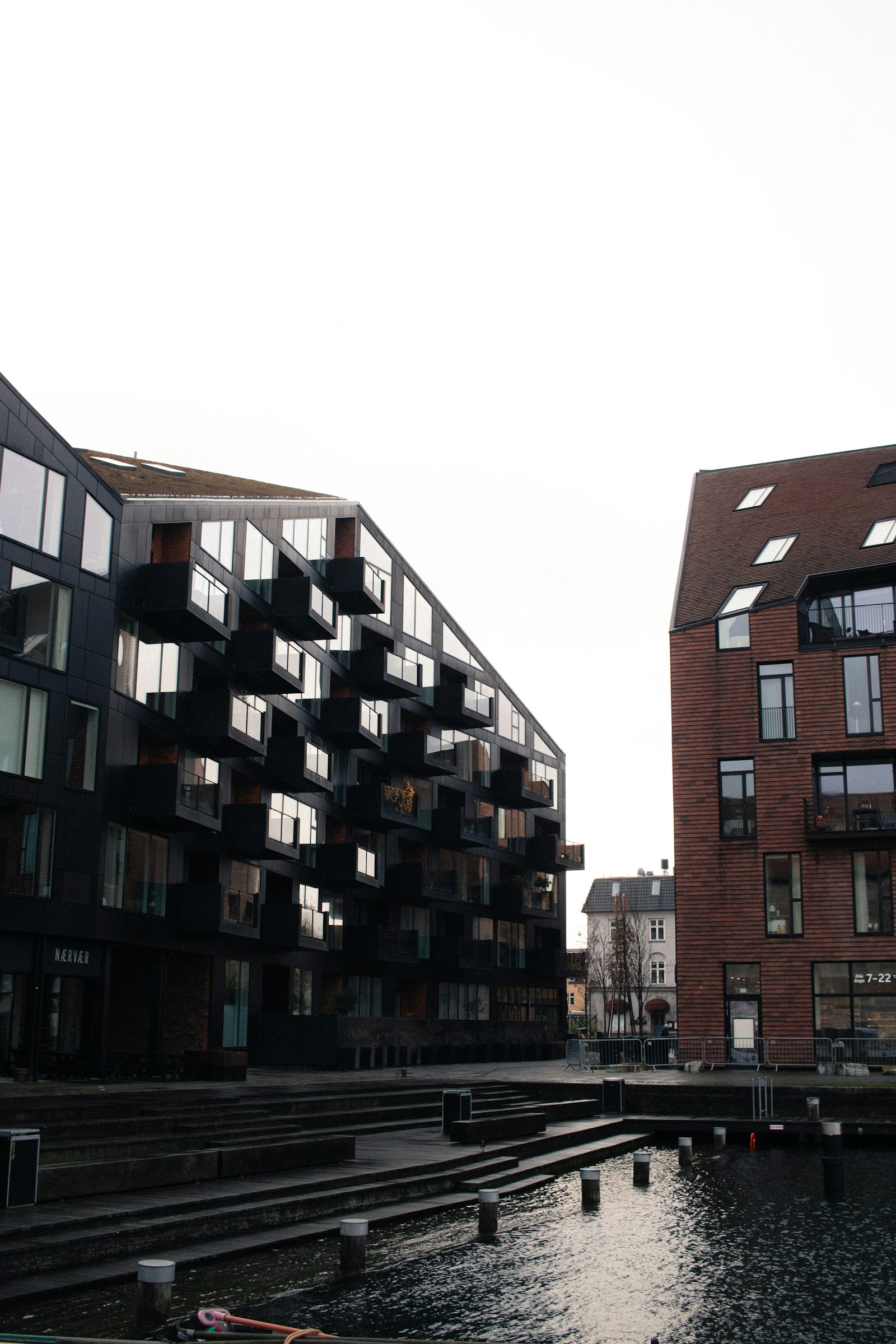
Copenhagen’s 3 Days of Design has spent most of its decade-long existence in the awkward position of being compared to Milan. The comparison has never been useful. The Danish event is a different kind of thing — smaller, slower, more focused on the domestic context that produced it — and trying to evaluate it against Salone’s scale was always a category error. The 2026 edition, which opens June 17, is the first to feel as though the organisers and exhibitors have collectively agreed to stop pretending. The programme is unapologetically Nordic, the venues are unapologetically domestic, and the work on display is unapologetically committed to the values — restraint, honest materials, considered proportions — that Scandinavian design has been refining for a hundred years.
The change is subtle but decisive. For years, Copenhagen was caught between two incompatible strategies: behave like a smaller Milan and chase the international fashion brands that began appearing on the periphery, or hold the line and stage a serious furniture week aimed at serious buyers. The 2026 programme makes the choice explicit. The exhibitor list reads less like a roster aimed at producing photogenic moments for the international press and more like a working catalogue of the Nordic furniture industry presenting the work it has spent the last twelve months developing. That is a duller pitch on paper. It is also, for anyone who actually buys furniture for a living, the more useful trip of the year.
The Theme
This year’s theme, Keep It Real, is mercifully unpretentious. The organisers have framed it as a corrective to what they describe, with diplomatic indirection, as “performative” tendencies in international design — referring, presumably, to the theatrical excess that has come to characterise Salone’s largest brand presentations. The implicit critique is hard to argue with. Milan in April 2026 produced moments of genuine ambition — Memoria at San Simpliciano, Les Mains de la Maison at La Pelota — but it also produced queues that stretched for two hours, palazzi too crowded to walk through, and a Metamorphosis theme so broad it functioned as marketing rather than curatorial frame. Keep It Real, by comparison, makes a claim narrow enough to be falsifiable. Either the work on display is rooted in actual production, actual materials, actual use — or it isn’t.
Whether or not one accepts the implicit critique, the theme has produced a useful effect on the programme. The exhibitor list this year skews heavily toward established Nordic brands showing actual products rather than installations: Fritz Hansen, Gubi, &Tradition, Hay, Frama, Audo, Vipp, and roughly forty smaller manufacturers. The major international brands that have used Copenhagen as a marketing venue in past years — Hermès made a quiet appearance in 2024, Loewe in 2025 — have, this year, stayed away. This is, on balance, good for the event. The fewer marketing exercises, the more it can do what it does best: present serious furniture in serious quantities to serious buyers.
It is worth noting how unusual that pitch has become. The dominant pattern of the last five years has been the reverse: Milan absorbing fashion houses into furniture, Paris repositioning around gallery work, Tokyo leaning harder into experimental fabrication. Copenhagen, in 2026, is moving in the opposite direction — back toward the proposition that a design week is a trade event whose primary audience is the people responsible for stocking shops and specifying interiors. That is a less photogenic programme, and the most honest reset of any of the major weeks this year.
The Brands
Fritz Hansen is presenting a major reissue of Poul Kjærholm’s PK0 series, including the PK0/A chair that has not been produced since 1953. The pieces will be shown at the brand’s Bredgade flagship. This is, on its own terms, a significant moment. Kjærholm’s furniture has been the spine of Fritz Hansen’s catalogue for half a century, but the PK0/A — bent plywood, flowing in a single continuous line from seat to base — has remained in archive territory, treated as too technically demanding to manufacture at scale. Bringing it back is the kind of move that signals confidence in the production capability of the underlying factory rather than confidence in any particular trend. The reissue belongs to the same broader movement — call it archive activation — that has produced this year’s previously unreleased Le Corbusier pieces at Cassina and the steady drip of mid-century reconstructions across the canonical European publishers. The difference is that Cassina is mining a continental modernism with a wide audience and a stable price ceiling. Fritz Hansen is mining a Nordic vocabulary that has, until recently, been understood as a regional concern. The premise of the 2026 programme is that this distinction no longer holds.
Gubi is debuting a new collaboration with Spanish-Italian architect Patricia Urquiola — her first work for the brand — alongside a substantial archive activation of Pierre Paulin pieces from the 1960s. The Gubi presentation is at the brand’s Klassen showroom. Urquiola is one of the most prolific designers of her generation, with sustained work for Cassina, B&B Italia, Moroso, and Kettal; her arrival at Gubi is the kind of move that consolidates a brand’s position rather than expanding it. The Paulin archive is the more interesting half of the pairing. Paulin’s work — sculptural, foam-based, unapologetically of its decade — has been steadily reabsorbed by the design canon over the last fifteen years, and Gubi has been one of the publishers most responsible for that reabsorption. A substantial Paulin showing in Copenhagen is a statement that the brand intends to continue being the principal custodian of his catalogue, against competition from larger houses that would happily take it.
&Tradition is opening a temporary exhibition space in a former bakery in Vesterbro, presenting new work by Jaime Hayon, Cecilie Manz, and the emerging Norwegian studio Anderssen & Voll. This is the most ambitious off-site presentation of the week and worth prioritising. Vesterbro, as a venue, is an interesting choice — historically working-class, only partly gentrified, materially honest in a way the more polished districts are not. The choice signals that &Tradition wants to be read as an editorial rather than a corporate proposition this year. Hayon’s work for the brand has always been the more decorative end of the catalogue; Manz the more rigorous; Anderssen & Voll an investment in the next generation. Putting the three under one temporary roof is a curatorial gesture that the brand has not really attempted before, and the shape of the room — a converted bakery rather than a purpose-built showroom — suggests the presentation will be looser and more contingent than the standard Copenhagen format.
Frama is producing what they are calling a “domestic” presentation — quite literally, a fully furnished apartment in the Latin Quarter, occupied for the week by collaborators who will work and live in the space. Visitors are invited in small groups. The format has obvious antecedents in Milan — Loro Piana’s Casa Brera and Bottega Veneta’s permanent residence on Via San Maurilio are the most prominent recent examples — but the Frama version is less institutional. Where Casa Brera is a four-floor townhouse restored over three years by Vincenzo De Cotiis and curated by Federica Sala, the Frama apartment is closer to a working flat with the brand’s catalogue installed for a week. The premise is the opposite of theatrical. The furniture is meant to be used, the kitchen is meant to be cooked in, the beds are meant to be slept in. Whether or not this format scales, it is the most direct response to Keep It Real on the programme.
Audo Copenhagen is hosting the most interesting institutional moment of the week: a panel and exhibition on the legacy of Verner Panton, organised in collaboration with the Vitra Design Museum, marking thirty years since Panton’s death. This is a significant collaboration in its own right. Vitra has been the principal manufacturer of Panton’s catalogue for decades — the moulded plastic Panton Chair, first produced by Vitra in 1967, is among the most reproduced single pieces of post-war design — and the Vitra Design Museum, located within the Vitra Campus at Weil-am-Rhein, holds one of the deepest archives of Panton material in the world. Bringing that archive to Copenhagen, in collaboration with a Danish brand operating partly in Panton’s chromatic and spatial register, is the closest thing this year’s programme has to a museum-grade event. It also clarifies the broader reading of the week. The most ambitious institutional moment in Copenhagen is being staged in collaboration with a Swiss-German museum, mounted by a Danish brand named after the building it occupies, in a city whose design week has just declared its independence from Milan. That is not a parochial event. It is a regional one, in the most ambitious sense.
The Quiet Programme
The most interesting work, as is increasingly the case, is happening at the margins. Several galleries in Nørrebro and Vesterbro are presenting collectible design from Nordic makers operating outside the major brand structures. The Etage Projects gallery, in particular, has built a substantial reputation for showing work that sits between art and design, and their June presentation is one of the appointments worth booking in advance. The pattern echoes what Milan itself spent the 2026 edition demonstrating — that the line between gallery and showroom continues to dissolve in productive ways, and that the most ambitious work is increasingly being produced by independent galleries operating with smaller editions, longer development cycles, and less obligation to the trade-show calendar. Copenhagen’s version of this conversation is younger and smaller, but it is staged with more discipline. The rooms are quieter. The work has space to breathe. The visitors who walk in are, in most cases, capable of engaging with what they are looking at without the buffer of a press handler.
The Royal Danish Academy is also opening its degree show during the same week, which has quietly become one of the better venues for spotting emerging talent. The school’s furniture programme has produced an unusually strong cohort this year, with several pieces that have already been picked up by manufacturers. This is one of the structural advantages Copenhagen retains over its larger peers. The educational pipeline, the manufacturers, and the showrooms all sit inside the same forty-minute walking radius. A graduate student showing a chair on Tuesday can be in a manufacturer’s office on Thursday. That kind of compression simply does not exist in Milan or Paris, and it is one of the reasons the Nordic furniture industry has retained the cohesion it has.
A second strand of the quiet programme is worth flagging: the Danish fashion houses with serious design sympathies, Cecilie Bahnsen most notably, who have begun to treat their store interiors and limited-edition objects as design statements in their own right. The label’s Copenhagen presence has steadily expanded into spaces that are recognisably hers — colour, material, scale — and that operate on the same logic as the more disciplined brand residences in Milan: small editions, considered material, no logos. None of this is on the official 3 Days of Design programme. It does not need to be. The visitors who matter will find it.
Why It Matters
The case for going to Copenhagen, increasingly, is not that it is a smaller version of Milan. It is that it is a fundamentally different kind of event — one where the conversations happen at human scale, where the dinners are not impossible to book, where the work on display is meant to be lived with rather than photographed. The pace allows for actual looking, which is something Milan, in its current form, makes difficult. By Wednesday of Salone week, the better presentations are inaccessible without queueing, the streets in Brera and Tortona are walkable only with effort, and the experience of looking at furniture has been displaced by the experience of negotiating crowds. Copenhagen, by virtue of its smaller scale and its pedestrian and bicycle infrastructure, simply does not produce these conditions. Three days is enough to see most of what matters. The walks between venues are short. The bars are not impossible to enter. The conversations, when they happen, are with people who are not also trying to push past you.
For buyers and serious enthusiasts, this is increasingly the more useful trip. The work is more rigorously edited. The presentations are more honest about what they are. And the city itself, in June, is one of the most pleasant places in Europe to spend three days walking between showrooms. The Nordic light, in particular, is a quietly important variable. June in Copenhagen produces close to seventeen hours of usable daylight, and most of the showrooms are organised around large windows and pale interiors that are at their best in that light. Furniture seen in those rooms reads differently than furniture seen under the controlled lighting of a Milanese palazzo. The materials are more honest. The colour decisions are more obvious. The proportions, in particular, become harder to fake. A chair that looks plausible under directed spotlighting at La Pelota can look thin and underdeveloped under the flat northern light of a Bredgade flagship. That is part of the city’s quiet test, and it is one of the reasons Copenhagen has retained its disproportionate influence on the catalogues of the major Nordic brands.
The deeper argument the 2026 edition is making is one about specialisation. Milan, increasingly, is the venue at which fashion-house ambition into furniture gets staged for the international press. That is a real and significant development — the fashion-into-design movement has produced some of the most ambitious work of the last two years, and several of those projects are genuinely distinguished — but it is not the only thing a design week can be. Copenhagen’s wager is that there is room, on the calendar, for an event that is not trying to compete with Milan on theatrical scale and is instead trying to do something narrower and harder: present a regional furniture industry, fully and honestly, in the city where most of it is made. If that wager pays off, Copenhagen becomes the trade week that Milan stopped being some time around 2018. If it does not, the brands will drift back toward the larger venues and the event will resume its slow squeeze between Stockholm Furniture Fair in February and Milan in April. The 2026 edition is the strongest version of the argument the event has produced. It deserves to be taken on its own terms.
Practical Notes
3 Days of Design runs June 17–19. The official map and exhibitor list will be released in mid-May. Hotels in central Copenhagen are already substantially booked for the week; we recommend booking immediately if you intend to attend. Most venues are accessible by bicycle, which is the only sensible way to navigate Copenhagen during the event. Several brands offer bicycle rentals or shuttles between their venues. The compact geography rewards a loose itinerary — most of the major showrooms are within a three-kilometre radius of Kongens Nytorv, and the off-site presentations in Vesterbro and Nørrebro add no more than fifteen minutes by bicycle in either direction. Plan for fewer venues per day than you would in Milan. The work rewards longer looking, and the rooms reward longer staying.
A coda. One of the more interesting features of the 2026 calendar is that the year’s two most argumentative design weeks — Milan in April and Copenhagen in June — are arguing for opposite things. Milan is arguing for spectacle and for the productive dissolution of the line between fashion and design. Copenhagen is arguing for restraint and for the reassertion of design as a manufacturing practice with its own internal standards. Neither argument is wrong. Both events benefit from each other’s existence, and the design industry benefits from having both available. The mistake of the last decade was treating Copenhagen as a smaller Milan. The 2026 edition declines that comparison. What it offers, instead, is a different proposition: that design weeks are most useful when they are honest about the work they are organised around. Milan organises itself around theatre. Copenhagen, in 2026, organises itself around the catalogue. The category error that has dogged this event for a decade is finally being corrected, and the result is the most coherent programme it has staged.
FORMA will be on the ground in Copenhagen and will publish daily coverage during the event. Our Milan archive remains available.