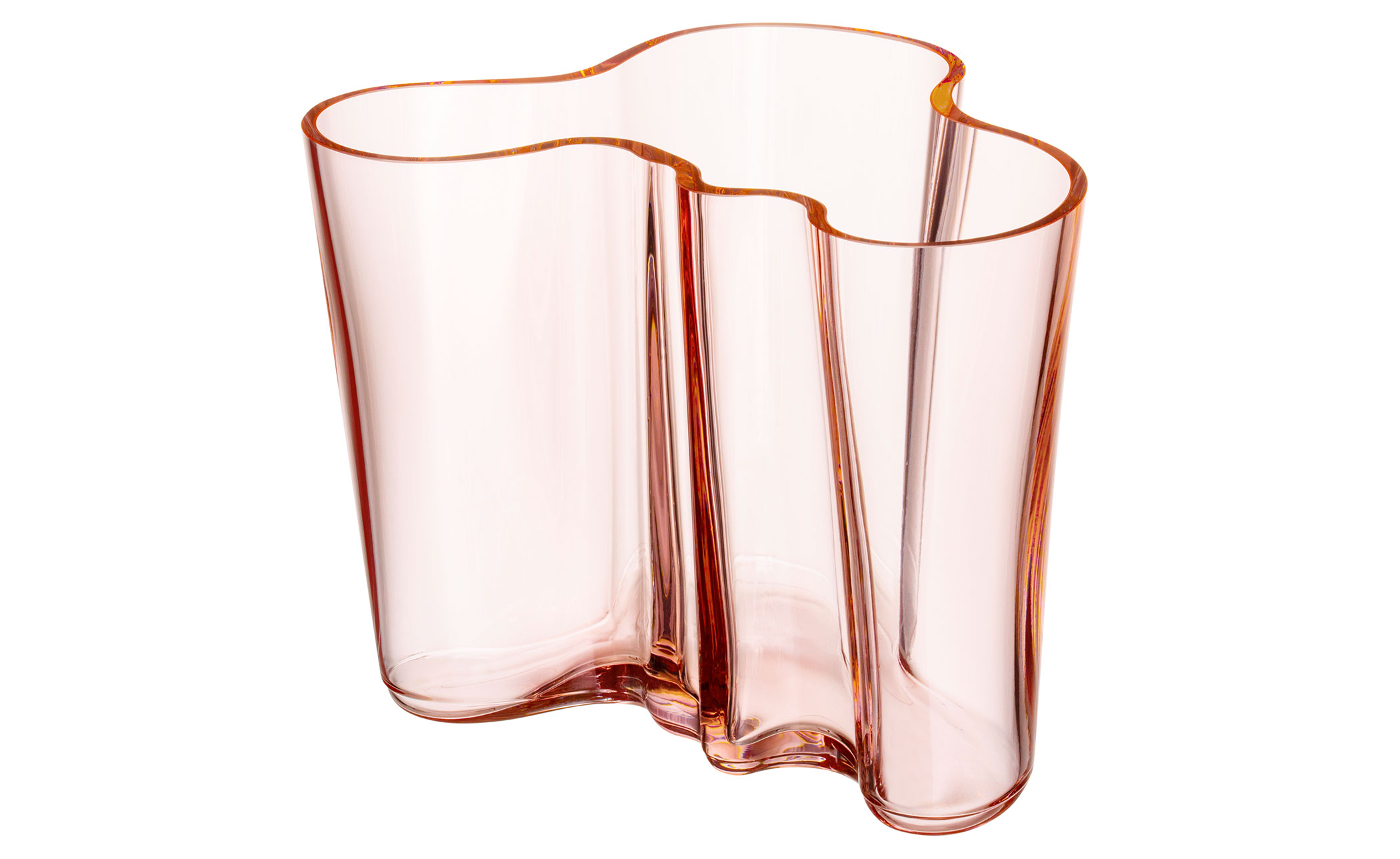
A seven-metre aluminium Savoy vase rises at Copenhagen’s harbour edge: Iittala and Norsk Hydro have built Alvar Aalto’s 1936 icon at monumental scale, walkable inside, for 3 Days of Design 2026. The iittala savoy pavilion 3 days of design commission - officially the Aalto 90 Pavilion - is the centrepiece of Iittala’s contribution to the 17–19 June 2026 edition of the Copenhagen festival, built in low-carbon Hydro REDUXA aluminium and timed to mark ninety years since Aalto designed the original glass vessel for the Savoy restaurant in Helsinki. It is also, read alongside the same supplier’s commissions at Schloss Hollenegg, the clearest sign yet that Norsk Hydro is positioning itself as design-grade aluminium’s go-to producer for 2026.
The pavilion’s interior houses the new Aalto City vase collection - Iittala’s anniversary extension of the Aalto vase family - and Janni Vepsäläinen, the brand’s creative director, frames the project in language that goes straight back to Aalto’s own register: “Alvar Aalto challenged the conventions of the time, creating an object that expresses intuitive and free design.” The sentence carries more freight than a press quote usually does, because the Savoy vase is exactly the object on which the claim has to be tested. To rebuild it at seven metres in aluminium - a process material that did not enter Aalto’s vocabulary at any meaningful scale until decades after 1936 - is to make a specific argument about what the vase is and what it can be made of. The pavilion is that argument, in walkable form.
Aalto’s 1936 Savoy vase, blown up to seven metres
The Savoy vase is one of the most-photographed objects in twentieth-century design, and it has earned the attention. Alvar Aalto designed it in 1936 with his first wife and architectural collaborator Aino Marsio for the Savoy restaurant in Helsinki, a Karelia-modern interior the couple had been commissioned to fit out the same year. The vase debuted publicly in 1937 at the Paris Exposition Internationale des Arts et Techniques dans la Vie Moderne, won an Iittala competition entry under the name Eskimåkvinnans skinnbyxa - Eskimo Woman’s Leather Breeches, a title whose racial register the brand has long since walked away from - and entered Iittala’s permanent catalogue under the Aalto and Savoy names that have stuck for nearly nine decades.
The vase’s silhouette is the entire argument: a mould-blown, asymmetrical, free-curving outline that refuses any radial symmetry and reads as a contour map of a Finnish lake from above. Aalto himself never wrote the lake comparison down, and the often-repeated origin story - that the curve traces a Finnish shoreline - is more apocryphal than documented, but the silhouette has been compelling enough that the apocrypha refuses to die. What is documented is the production method. The 1936 vase was mould-blown into a wooden form, the wood charring on each blow and producing a ribbed interior surface that became part of the object’s identity; later versions used cast-iron moulds and a smoother interior, and Iittala still produces the vase by hand at its Iittala glassworks in southern Finland.
Scaling the silhouette to seven metres changes almost everything about the object except its outline. A mould-blown glass vase whose interior wall is two or three millimetres thick reads as a single continuous surface; an aluminium pavilion of the same outline reads as a wall, a structure, a thing you walk through. The pavilion’s seven-metre height puts it at roughly thirty-five times the scale of the original 160-millimetre vase that is still Iittala’s most-sold Aalto piece, and at that ratio the outline stops being an object’s silhouette and starts being an architectural plan. The visitor inside the pavilion is standing inside the curve - the asymmetry that, on the desk, you turn the vase to appreciate, you now walk around. The translation is the point, and the translation is what makes the pavilion more than a decorative blow-up.
The choice of aluminium rather than glass is the second decision and the more interesting one. Aalto’s vase has been reissued in coloured glass, in optical-clear glass, in a dozen height variants, and the brand has on previous occasions made signature glass pieces at exaggerated scale. To skip glass for the ninetieth-anniversary monument - to choose, instead, an industrial extruded and sheet metal that Aalto would have known principally from aircraft and not from domestic objects - is to read the vase as a form, not as a material proposition. The form survives the translation. That is the test the pavilion stages, and the early visuals suggest it passes.
Hydro REDUXA and the year of low-carbon aluminium
The aluminium itself is Hydro REDUXA, Norsk Hydro’s low-carbon primary aluminium stream, produced with renewable hydroelectric energy at the Norwegian smelters Hydro has run since its 1905 founding in Oslo. REDUXA’s carbon-footprint claim - measured per tonne of aluminium produced - sits at the low end of industry numbers, because the smelting electricity comes from Norwegian hydro rather than coal-fired grids, and because Hydro’s primary process has been steadily decarbonised across a century of refinement. The pavilion’s whole-life carbon claim depends on those numbers being true at production scale, and on the pavilion being disassembled, reused or recycled rather than landfilled at the festival’s close. Aluminium, unlike glass, is infinitely recyclable without quality loss - the standard industry claim is that around 75 per cent of all the aluminium ever produced is still in circulation - and the pavilion is, materially, well placed to substantiate the cycle.
Hydro’s design-side activity in 2026 has accelerated faster than any other industrial-materials supplier in the calendar. The same producer is behind three of the headline pieces at Schloss Hollenegg’s Element: Metal exhibition - the last in the Styrian castle’s five-edition classical-elements series - and the cohort there reads like a roll call of the extrusion-curious end of contemporary design practice: Max Lamb’s Prove light, Philippe Malouin’s T-Board shelving, and Sabine Marcelis’s Orbit pendant. All three are built in Hydro-supplied extruded aluminium, all three were briefed against the same material constraint, and all three sit alongside the Iittala pavilion in a year-of-design that Hydro has, by accident or design, made its own.
That FORMA can write a Schloss Hollenegg metal piece and a Copenhagen Iittala piece in the same week and name the same Norwegian smelter in both is, on its own, a marker. The aluminium industry has historically been content to be invisible - to supply the substrate and let the brand take the credit - and Hydro’s willingness, in 2026, to be named on the byline of these commissions suggests a deliberate repositioning. Industrial-materials companies have learned in the last decade that the design industry is one of the most useful storytelling channels for a low-carbon claim, because designers and the design press are unusually willing to engage with material specifics. Hydro has, in 2026, moved into that channel with both feet.
The 2026 Hydro design partnerships, side by side
Read together, the Iittala pavilion and the Schloss Hollenegg trio give Hydro four named commissions across two of the year’s most-watched design venues. The shape of that partnership map is worth seeing in one frame.
| Project | Designer | Form | Venue | Event |
|---|---|---|---|---|
| Aalto 90 Pavilion | Iittala (with Alvar Aalto’s 1936 silhouette) | 7-metre walkable pavilion | Copenhagen harbour | 3 Days of Design 2026 (17–19 June) |
| Prove | Max Lamb | Extruded-aluminium light | Schloss Hollenegg, Styria | Element: Metal (until 31 May 2026) |
| T-Board | Philippe Malouin | Extruded-aluminium modular shelving | Schloss Hollenegg, Styria | Element: Metal (until 31 May 2026) |
| Orbit | Sabine Marcelis | Extruded-aluminium pendant light | Schloss Hollenegg, Styria | Element: Metal (until 31 May 2026) |
Four commissions, four designers (counting Iittala-Aalto as a single design authorship), two venues, one supplier. The Schloss Hollenegg pieces all sit inside the extruded-aluminium category - sections pulled through dies at length - while the Iittala pavilion uses a combination of sheet and extruded forms to build a hollow volume. The two categories cover most of what aluminium does as a process material, and Hydro’s positioning across both means the supplier is named on light, shelving and pavilion-scale architecture in a single calendar year. That is a wide spread for an industrial brand whose primary customers are still aerospace, automotive and construction.
Iittala’s Savoy Pavilion: from Helsinki restaurant to Copenhagen harbour
The site choice for the pavilion is its own argument. Copenhagen’s 3 Days of Design - founded in 2013 by Signe Byrdal Terenziani and now the largest design festival in Northern Europe - is staged across showrooms and venues throughout central Copenhagen, with harbour-front installations a recurring feature for brands prepared to commit to monumental scale. The Iittala pavilion sits inside that lineage; it is a piece of festival architecture in a city whose modernist credentials run deep enough to host a Finnish-Norwegian aluminium monument without losing the thread.
The geographic logic is also worth naming. The Savoy vase was designed for a Helsinki restaurant in 1936, by a Finnish-Swedish architectural couple, manufactured at a Finnish glassworks founded in 1881 in the village of Iittala in Janakkala municipality, and is now being rebuilt at scale by a Finnish brand owned by a Finnish conglomerate, in aluminium from a Norwegian producer founded in 1905, on the Danish capital’s harbour edge. The whole production reads as a Nordic-modernist cross-section - Helsinki to Iittala to Oslo to Copenhagen - and the festival siting is the punctuation. It is hard to imagine a more compact summary of what the Nordic design economy is, in 2026.
The harbour edge also matters as a viewing condition. A seven-metre object is a different scale at street level than it is silhouetted against water; the asymmetric Aalto outline, read against the horizontal of the harbour, will sit closer to its lake-shore-contour origin myth than it ever would in a closed venue. Whether or not Aalto ever traced a Finnish lake on a napkin, the visual logic of seeing the curve against water restores the apocrypha to something close to plausibility. The siting does work that the silhouette alone could not.
Iittala, Fiskars, and what gets built in 2026
Iittala is, in corporate terms, one division of Fiskars Group - the Finnish homewares conglomerate that acquired the brand in 2007 and that also holds Royal Copenhagen, Wedgwood, Waterford, Rörstrand and Arabia. Fiskars’ acquisition logic has been to consolidate Northern European tableware and homewares into a single portfolio capable of competing globally; the 2007 Iittala purchase brought into the group the Aalto vase, the Kaj Franck Teema and Kartio lines, the Tapio Wirkkala glass catalogue, and a hundred and forty years of mould inventory at the Iittala glassworks. The portfolio is one of the deepest design archives held by any contemporary conglomerate.
What Fiskars has not done, to its credit, is over-extend the Aalto vase as a brand asset. The vase has been reissued in colour variants, in size variants, in special editions for anniversaries, but the core mould-blown object is still made by hand at the Iittala glassworks, and the brand has been careful not to license the silhouette into territory it does not control. The Aalto 90 Pavilion is a controlled extension - a one-off, architecturally specific, supplier-named piece - rather than a brand-licensing move, and the difference matters. Iittala has used the ninetieth anniversary to make a piece of architecture, not a hundred new merchandise lines.
The new Aalto City vase collection housed inside the pavilion is the merchandise corollary, and it sits inside the brand’s established practice of extending the Aalto family without modifying the original mould. Where the original vase was designed for a Helsinki restaurant whose name has been carried as the object’s secondary name for nearly nine decades, the City vases extend the family into a new contextual register - urban, contemporary, scaled for the apartment rather than the institutional dining room. The collection is the commercial pivot of the pavilion programme, and the pavilion itself is the architectural amplifier.
Vepsäläinen’s tenure as creative director at Iittala has been characterised by exactly this kind of move - anniversary projects that double as architecture, designer collaborations that respect the existing catalogue, and a willingness to stage Iittala’s heritage in venues that the homewares industry does not usually occupy. The 3 Days of Design pavilion is the largest expression of that approach to date, and it suggests that the next decade of Iittala’s brand activity will be staged more often at festival scale than at trade-show scale.
Hydro’s parallel commission at Schloss Hollenegg
The Schloss Hollenegg trio deserves its own paragraph because the parallel is the second story the pavilion tells. Max Lamb (British, b. 1980), Philippe Malouin (Canadian, London-based since 2008) and Sabine Marcelis (Dutch, b. 1985) have all worked extruded-aluminium briefs for the same Hydro supplier, the same closing edition of the Element series, the same curator - Alice Stori Liechtenstein, who has run the schloss programme since 2016 - and the same brief constraint of a die-defined section at arbitrary length. The cohort produces a light, a shelf and a light, and the productive part of the rhyme is that the two lights differ in register: Lamb’s is structural, Marcelis’s is luminous, and Malouin’s shelf sits between them as the most explicitly modular piece.
The Schloss Hollenegg show closes on 31 May 2026, three weeks before the Iittala pavilion opens at the Copenhagen harbour. The calendar overlap is short but significant: Hydro’s design-industry visibility is, for a brief window in late spring 2026, simultaneous across a Styrian castle and a Danish harbour, with four named commissions and four named designer authorships. That is the kind of cross-venue presence usually associated with consumer brands rather than industrial-materials suppliers, and it sits behind FORMA’s earlier characterisation of 2026 as Hydro’s year in design.
The two registers are also instructive. The Schloss Hollenegg pieces are interior-scale, museum-context, limited-edition objects whose audience is the collectible-design and gallery circuit. The Iittala pavilion is exterior-scale, festival-context, free-to-visit public architecture whose audience is the design-week-attending public - a much larger, less specialist constituency. To occupy both ends of the design-industry attention spectrum in a single calendar year, with the same low-carbon aluminium claim attached to every commission, is the play Hydro is making. Whether the play converts into the architectural-spec and product-design briefs that pay the supplier’s bills will be visible later in the decade; the visibility itself is already secured.
What the pavilion has to do, and what it does
Anniversary architecture is hard to get right. The category is full of well-meant blow-ups that mistake scale for argument - giant chairs, oversized lamps, monumental objects that confuse the existing form’s logic by changing the body it was designed around. The Iittala pavilion has a particular escape route from that trap, because the Savoy vase has always been a contour rather than a body. The vase is interesting because its outline is interesting; the outline scales without losing its character in a way that, say, a Wegner Wishbone Chair could not, because the chair’s interest is in the relationship between the seat, the back and the human body, and the vase’s interest is in a free-running curve that the human body was never the reference for.
The walkable interior is the second escape route. A monument you walk through is doing different work from a monument you look at; the pavilion is staging an experience of being inside the Aalto curve, not just an experience of seeing it bigger. That puts the visitor in a position - quite literally - to read the asymmetry from the inside, where the outline becomes a perimeter rather than a silhouette. The translation is conceptually clean, and it gives the pavilion a use beyond its photograph.
The Aalto City vase collection inside the pavilion is the merchandising hook, but the architecture is the argument, and the argument is recognisably Aalto-modern: that an intuitive, free-curving form can sit inside an industrial production logic without losing its character. That is the proposition the original 1936 vase made about mould-blown glass, and it is the proposition the 2026 pavilion makes about extruded and sheet aluminium. Vepsäläinen’s quote about intuition and freedom is the press-release version; the pavilion is the working version, and it earns the framing.
Coda
The iittala savoy pavilion 3 days of design commission is two things at once. It is an anniversary monument for a 1936 glass object that has earned a place in the modernist canon by being formally distinctive enough to survive ninety years of reproduction without going stale. It is also a 2026 statement piece for a Norwegian aluminium producer that has chosen this calendar year to make its low-carbon material visible at festival and exhibition scale. Both readings are correct, and they reinforce each other: the Aalto silhouette gives Hydro a recognisable carrier, and Hydro gives Iittala a low-carbon claim that an anniversary built in glass at this scale could not have carried.
Whether the pavilion has a life after the three festival days is the next question. Aluminium pavilions disassemble, repackage and reassemble well; the same structural logic that makes the material attractive for festival architecture also makes it attractive for travelling installations, brand activations, and museum-loan circuits. Iittala has not, at the time of writing, announced a post-Copenhagen itinerary, but the pavilion’s modular construction and the recyclability of the substrate mean that it is well placed to travel. The seven-metre Aalto outline could, with the right partner programme, become a recurring fixture at design events from Tokyo to Salone over the next several years. The 3 Days of Design opening is the start of that life, not the end of it.
For now, what stands at the Copenhagen harbour edge from 17 to 19 June is the most ambitious anniversary architecture the Finnish design industry has produced in years - a walkable Savoy vase in low-carbon Norwegian aluminium, ninety years after Alvar and Aino designed the original for a Helsinki restaurant. The pavilion will be photographed exhaustively, walked through enthusiastically, and read variously as anniversary, sustainability statement, brand activation and Nordic-modernist monument. All of those readings will be partly right. The vase’s silhouette, scaled by thirty-five and rendered in metal, will do most of the work.