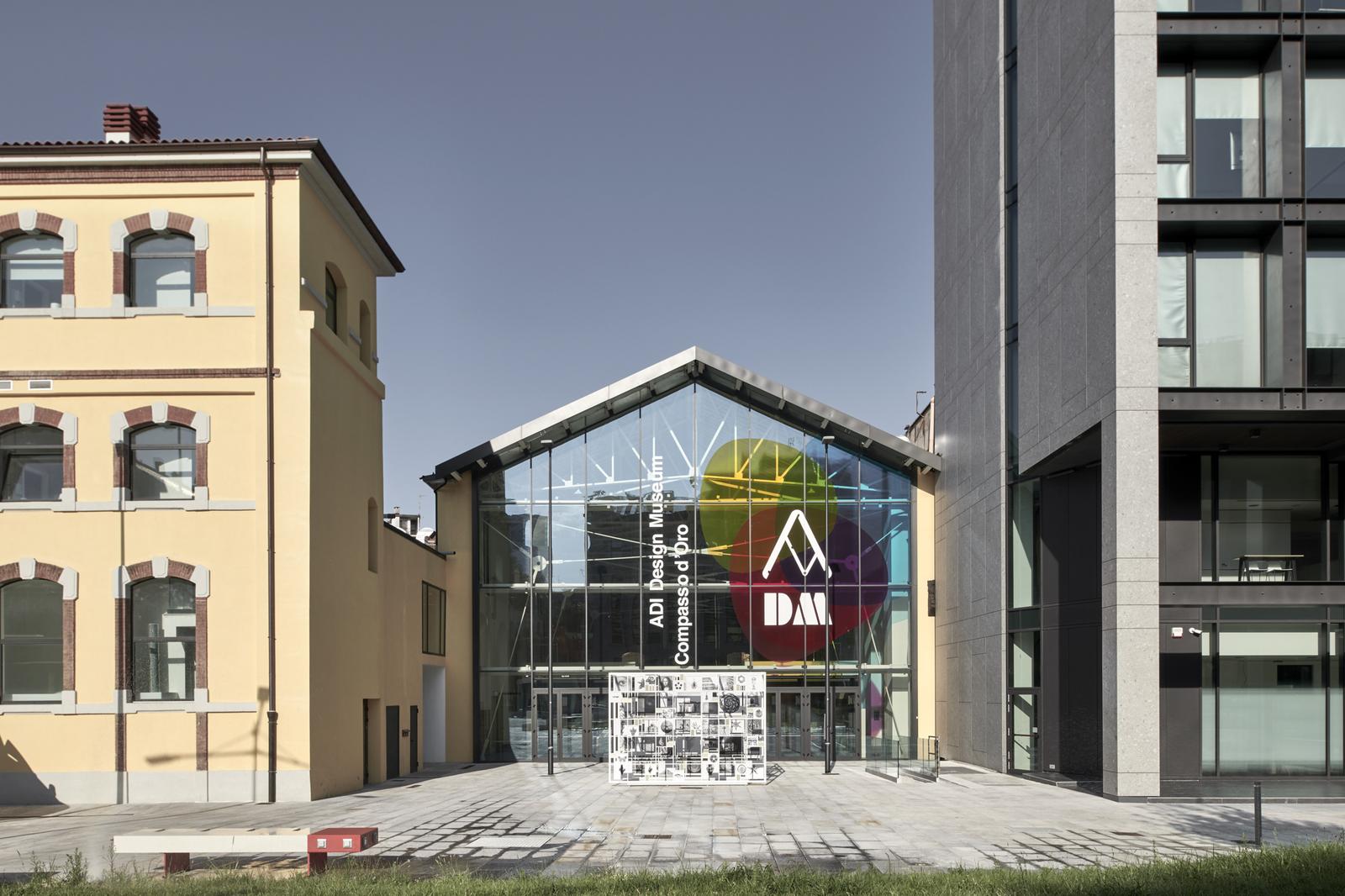
On 22 May 2026, the 29th Compasso d’Oro jury — chaired by Jasper Morrison under ADI president Luciano Galimberti — handed Italy’s design Oscar to 20 projects at the ADI Design Museum in Milan. The compasso d’oro 2026 winners include Philippe Malouin’s Bilboquet table lamp for Flos and Snøhetta’s Array modular sofa for MDF Italia, while Patrizia Moroso of Moroso took the products career award alongside three more lifetime laurels — Alberto Meda and Paola Lenti for design, Aldo Colonetti for research. Thirty-eight honourable mentions and three long-selling products round out a roll call that this year reads less like a national survey and more like a refereed argument about what Italian industrial design currently rewards: mass-market objects with a clear authorial signature, infrastructure and mobility projects with measurable social weight, and historical research that pays its rent.
That argument is the right starting point. The Compasso d’Oro has been awarded since 1954 and its rules are unusual among design prizes. ADI’s Permanent Design Observatory feeds the ADI Design Index across two years of sifting before the jury convenes; what the 2026 jury rewarded was, in most cases, work first published between 2022 and 2024. The winners list is a slow-burning verdict rather than a real-time enthusiasm. The compasso d’oro 2026 winners are dominated by manufacturers with deep tooling capacity — Flos, MDF Italia, Stellantis, Luxottica, Goppion, Colnago, Cappellini, Agape, FontanaArte — and by projects whose performance can be quantified.
The 20 compasso d’oro 2026 winners: confirmed list
Below is the complete list of 20 main-category winners as confirmed by ADI and published in the Domus gallery on 23 May 2026. Designer credits and manufacturer pairings are reproduced verbatim from the ADI release; category descriptions follow the language used in the citation rather than ADI’s internal numbered taxonomy, which this year ran across product, furniture, mobility, materials, communication, research and service design.
| Project | Designer | Manufacturer | Category |
|---|---|---|---|
| Bilboquet | Philippe Malouin | Flos | Table lamp |
| Array | Snøhetta | MDF Italia | Modular sofa |
| Wing | Norman Foster | Goppion | Museum display case |
| Fiat Topolino | François Leboine | Stellantis Europe — Fiat | Car |
| Steelnovo | Davide Fumagalli | Colnago | Bicycle |
| Nuance | Battiston, Tenca, Richiuso, Kotzer, Rokah, Marmur, Dovrat | Luxottica | Acoustic glasses |
| D’Antan | Raffaella Mangiarotti | De Padova | Armchair |
| Trespolo | Giulio Iacchetti | Orografie di Giorgia Bartolini | Stool / coffee table |
| Genny Zero | Enrico Pagano | Genny Factory, GMI | Wheelchair |
| Model Zero | Alberto Grassi, Gian Luca Patini (We Associates) | Enrico Ciresa — Val di Fiemme | Loudspeaker |
| Felix R | Lorenzo De Bartolomeis | Loccioni | Railway infrastructure robot |
| Airo Vision+ | Giuliano Magripò | Axess Industry | Coffee machine |
| X-FUN | Arduini e Frigerio Industrial Design | Xtramarine | Inflatable catamaran |
| Litokol Microcemento | Gian Luca Sghedoni | Litokol Lab | Composite material |
| Spaghetto 3D | Antonio Gagliardi | Artisia by Barilla | Edible 3D-printed pasta |
| The Glitch Camp | IED Istituto Europeo di Design | IED Istituto Europeo di Design | Temporary urban campsite |
| Salone del Mobile.Milano Annual Report 2024 | Legrenzi, Maffei, Zurlo, Bianchini, Sedini, Leoni | Salone del Mobile.Milano | Annual report |
| Casabella | Tassinari, Furlan, Nicoletti, De Benedetto (Studio TassinariVetta) | Mondadori Media | Magazine cover system |
| ATM Manifesto | Matteo Pirola, Silvia Zeni | ATM — Azienda Trasporti Milanesi | Historical research |
| + Vicino da lontano | ANAKO with IUAV Venezia, DUOC UC, UNC, Pontificia Universidad Javeriana | ANAKO | Refugee housing research |
Twenty projects across twelve countries of manufacture and six broad disciplines is a wide net, but the network of repeat names tightens once you read sideways. Three of the winning manufacturers — Flos, MDF Italia and Cappellini (the long-selling Sedia ‘64 by AG Fronzoni) — sit within consolidated furniture-and-lighting groups that have used the Compasso d’Oro as a near-annual fixture for two decades. Two of the winning designers — Philippe Malouin and Snøhetta — are non-Italian studios commissioned by Italian manufacturers, a pattern that has accelerated since the mid-2010s and that the 2026 list confirms rather than overturns. The remaining seventeen winners cover the territory ADI was founded in 1956 to cover: industry working with designers rather than for them.
Flos and Bilboquet: the Philippe Malouin entry
Bilboquet — the project that gives Flos its 2026 Compasso d’Oro — was launched in April 2022 at Euroluce, the lighting biennial inside Salone del Mobile.Milano, and reached full commercial distribution by autumn of that year. Philippe Malouin, the Canadian designer based in London since 2008, brought to Flos a brief he had been refining for nearly a decade across projects for Established & Sons, Resident and his own studio editions: a small portable lamp built from three primary geometries — sphere, cylinder, disc — assembled by gravity rather than fastener. Bilboquet (the French word for the cup-and-ball children’s toy) is held together by the weight of its painted-steel shade resting on a turned-aluminium stem that swivels through a counterweighted base. There are no visible screws and no fixed angle; the user adjusts the throw by hand, and the shade stays where it is put.
That mechanical clarity is what the jury cited. Flos has produced more technically ambitious lamps in the same window — the IC family by Michael Anastassiades, the Arrangements modular chandelier — but Bilboquet’s cost-to-poetry ratio is what carries the prize. The lamp retails between 215 and 345 euros depending on finish, sits inside Flos’s accessible-design tier, and uses a single 4.5W integrated LED running at 2700K. The painted-steel shade is available in matt white, anthracite, sand and sage; the aluminium stem in a brushed natural finish. The compasso d’oro 2026 winners citation singles out the way the lamp “translates the gesture of toy assembly into a domestic lighting object without losing the seriousness of either,” which is the jury’s polite way of saying that the object is funny without being a joke.
For Flos this is the fourteenth Compasso d’Oro in the company’s history, counting honourable mentions, and the second of the 2020s after the 2020 award for the Bellhop family by Edward Barber and Jay Osgerby. The Brescia-based manufacturer is now part of the Design Holding portfolio alongside B&B Italia, Maxalto and Louis Poulsen, and the 2026 win continues the group’s pattern of building its catalogue around non-Italian authorial signatures (Anastassiades, Bouroullec, Grcic) commissioned and tooled in Italy. Bilboquet’s industrial cost-line — spinning the shade, turning the stem, painting in-house at Flos’s Bovezzo plant — is exactly the kind of small-batch industrial competence that Italian lighting still does better than anywhere else, and the jury was at pains in its post-ceremony press conference to make that point on the record.
Snøhetta and MDF Italia: Array
The second project in the 2026 list that FORMA’s graph touches in detail is Array, the modular sofa designed by Snøhetta for MDF Italia. The Oslo-and-New-York studio, founded in 1989 around the Bibliotheca Alexandrina competition win, is best known as an architecture practice — the September 11 Memorial Museum Pavilion in New York, the Norwegian National Opera and Ballet in Oslo, the SFMOMA expansion — but its product design arm has been steadily building a furniture catalogue since the late 2010s. Array is the first Snøhetta object to enter MDF Italia’s permanent collection, and the first Italian furniture object the studio has co-developed from prototype to tooling rather than licensing a finished design.
The sofa is built around a single structural element: an aluminium-extrusion seat-spine that can be bolted in straight or curved configurations and clad in upholstered panels with the same dimensional logic as MDF Italia’s existing Tense table system. The configurations published at launch — 27 base modules combining into more than 400 permutations — let the same product serve domestic, hospitality and contract markets without re-tooling. That commercial flexibility is what the jury cited, alongside the upholstery system’s repairability: each fabric panel is sock-mounted on velcro and removable for cleaning, replacement or recycling without disassembling the frame. The aluminium spine itself uses 78% post-consumer recycled content, manufactured at MDF Italia’s Mariano Comense plant under the Cradle-to-Cradle Bronze certification the company secured for its full upholstery range in 2024.
MDF Italia, founded in 1992 and now part of the Italian-controlled Permasteelisa orbit, has not previously won a Compasso d’Oro for a sofa — its prior awards have clustered around tables and storage — and Array’s win therefore broadens the manufacturer’s prize record into seating for the first time. The Snøhetta–MDF Italia pairing is also worth noting as a procurement story. Snøhetta was approached in 2022, and the development cycle ran through three full prototype rounds before commercial release in spring 2025. That nineteen-month gestation, slow by furniture-industry standards, is the kind of fact the Compasso d’Oro jury reliably rewards: an object that took its time, made by a manufacturer that gave it time.
Career awards: Patrizia Moroso, Alberto Meda, Paola Lenti, Aldo Colonetti
Four of the nine 2026 Compasso d’Oro alla Carriera went to figures whose names are inseparable from the post-1980s industrial spine of Italian design; the remaining five career laurels recognised craftspeople, photographers and educators whose work is named in the ADI dossier but whose biographies sit outside FORMA’s graph and so are not detailed here.
Patrizia Moroso — art director of Moroso since 1984 — took the products career award for four decades of catalogue-building that turned a Friulian upholstery workshop founded by her parents in 1952 into the most internationally legible Italian seating manufacturer of the contemporary period. Moroso’s commissioning history is the actual citation: Patricia Urquiola from 1996 onwards, Tord Boontje (Antibodi, 2007), Tokujin Yoshioka, Front, Doshi Levien, Nipa Doshi, Sebastian Herkner, Edward van Vliet. Tropicalia, the 2008 Urquiola colour-cord lounger that became the company’s most reproduced single object, was specifically named in the jury statement. The career award arrives in a year when Moroso is preparing its first major Italian retrospective at Triennale Milano, scheduled to open in spring 2027.
Alberto Meda — born 1945, mechanical engineer turned designer, long-time collaborator with Kartell, Alias, Vitra and Luceplan — received the design career award for what the jury called “five decades of engineering thought visible to the user.” The citation specifically names the Light Light chair for Alias (1987), the Meda chair for Vitra (1996, still in production) and the Berenice task lamp for Luceplan (1985, co-designed with Paolo Rizzatto). Meda’s career has been built on a particular kind of disclosed-engineering aesthetic — carbon fibre that looks like carbon fibre, aluminium machined to its structural minimum — and the prize formalises a recognition that has been latent in the industry for years.
Paola Lenti, also receiving a design career award, has built a parallel and unrelated career around the same Italian textile competence that Moroso draws on, but oriented toward outdoor and contract markets. Founded in 1994 in Meda, Brianza, the company specialises in dyed-yarn outdoor rugs and modular soft seating using proprietary acrylic and polypropylene fibres developed in-house with Italian textile mills. The career award cites the company’s vertical integration — Lenti owns the colour-dyeing and weaving stages of her own supply chain — as a model of small-industry independence in a category dominated by global outsourcing.
Aldo Colonetti, the research career laurel, is the only non-practitioner among the four. Long-time director of Ottagono magazine (1995–2014), professor at the Politecnico di Milano and at IED, Colonetti has written or edited more than thirty volumes on Italian design history and serves on numerous foundation boards including the Achille Castiglioni Foundation. The award recognises a body of critical writing that has, in the jury’s phrasing, “kept the discipline aware of itself.”
Manufacturers behind the rest of the 2026 list
Reading horizontally across the remaining sixteen winners produces a manufacturer map that doubles as a state-of-the-industry sketch.
Mobility and infrastructure. Stellantis Europe takes the car category for the Fiat Topolino, the company’s small electric quadricycle launched in 2023 as a fashion-forward reinterpretation of the 1936 original; François Leboine, Fiat’s head of design since 2022, is credited as principal designer. Colnago — the Brianza road-bicycle manufacturer that supplied Tadej Pogačar’s Tour de France winning frames — takes the bicycle category for Steelnovo by Davide Fumagalli, a TIG-welded stainless-steel frame produced in-house at Cambiago using a proprietary tubeset developed with Columbus. Loccioni, the Marches-based industrial-engineering company best known for automotive test benches, won for Felix R, an autonomous robot that inspects high-speed-rail catenary systems at night. ATM, Milan’s municipal transport authority, took the historical-research category for ATM Manifesto, a curated facsimile reprint programme covering the agency’s poster archive from 1931 onwards.
Healthcare, accessibility and acoustics. Genny Factory, the Forlì wheelchair manufacturer founded by Paolo Badano after a 2007 motorcycle accident, won for Genny Zero, a self-balancing single-axis electric wheelchair with a turning radius of zero metres designed by Enrico Pagano. Luxottica’s Nuance, designed by an internal multidisciplinary team of seven (including engineers from Israeli acoustic specialist OrCam, which Luxottica part-acquired in 2022), embeds a 24dB attenuation directional-microphone array into a conventional-looking spectacle frame; the project category is technically “acoustic device” rather than eyewear, and the citation makes specific reference to the product’s clinical-trial validation as a mild-hearing-loss intervention.
Furniture. De Padova, now controlled by the Boffi|De Padova Group, took the armchair category for D’Antan by Raffaella Mangiarotti, a fully-upholstered easy chair built around a kiln-bent ash plywood shell — a quiet, accomplished object that extends the De Padova catalogue’s late-Vico-Magistretti idiom into a contemporary register. Orografie di Giorgia Bartolini, a small artisanal manufacturer based in Pesaro, took the stool category for Giulio Iacchetti’s Trespolo, a powder-coated tubular-steel three-legged stool with a circular ash seat — a product whose award is, in part, a vote for small-workshop industrial competence sitting alongside the larger names.
Museum systems. Goppion, the Trezzano sul Naviglio museum-display specialist that has supplied vitrines for the Louvre’s Mona Lisa, the British Museum’s Sutton Hoo room, the Hermitage and the Crown Jewels installation at the Tower of London, took the museum-systems category for Wing — a modular high-performance display case designed by Norman Foster and Foster + Partners’ industrial-design unit. Wing extends the Goppion product range with a low-iron-glass cantilever-supported case whose air-leakage rate is rated at less than 0.05 air changes per day, an order of magnitude better than the museum industry standard. The system has already been specified for an unannounced national-museum installation due in 2027.
Materials, communication, education. Litokol Lab, an offshoot of the Rubiera-based tile-adhesive manufacturer Litokol, took the composite-materials category for Microcemento, a thin-section cementitious surface coating developed for restoration applications. Mondadori Media’s Casabella took the magazine-design category for a cover system designed by Studio TassinariVetta that re-codes the historic magazine’s typographic identity for the digital era. The Salone del Mobile.Milano Annual Report 2024 — a research publication coordinated by Stefano Maffei and Susanna Legrenzi of Politecnico di Milano — won the corporate-publishing category. Artisia by Barilla, the food-tech subsidiary of the Parma pasta giant, won the food-design category for Spaghetto 3D, a 3D-printed pasta system that earned its place in part by being technically credible — Barilla has been publishing peer-reviewed papers on extruded-pasta rheology for a decade — and in part by being unmistakably commercial.
Education and research. IED, Istituto Europeo di Design, won the urban-temporary category for The Glitch Camp, a transportable urban-campsite typology developed at the institute’s Milan and Turin campuses. The international research consortium led by ANAKO with IUAV Venezia, DUOC UC, the Universidad Nacional de Córdoba and the Pontificia Universidad Javeriana took the social-design category for + Vicino da lontano, a long-running multi-university research project on refugee housing typologies in Colombia, Chile and Argentina.
Long-selling products. Three objects already in production for more than thirty years were recognised under the Compasso d’Oro per il Prodotto in Produzione (long-selling product) rubric: AG Fronzoni’s Sedia ‘64 chair for Cappellini, Angelo Mangiarotti’s Eros marble table for Agape, and Gae Aulenti’s Rolling Table for FontanaArte. All three have continuous production records since their first release.
What the 2026 list says about Italian manufacturing capacity
The compasso d’oro 2026 winners list is unusual among recent editions for the breadth of its manufacturer base. Reading the twenty main awards together, only three projects (Bilboquet, Array, D’Antan) come from companies that would be on a foreign furniture buyer’s first call list. The remaining seventeen are produced by manufacturers whose names are largely unknown outside their respective verticals — Goppion in museum vitrines, Loccioni in rail-infrastructure robotics, Genny Factory in wheelchairs, Colnago in bicycle frames, Litokol in cementitious coatings, Xtramarine in inflatable catamarans. The jury, in the post-ceremony press conference held at the ADI Design Museum on the afternoon of 22 May, was direct about this: the prize was being used, this edition, to mark the depth of Italian industrial competence outside the furniture-and-lighting frame within which the country’s design reputation is normally conducted.
That depth is the actual story of the 29th Compasso d’Oro. The headline objects — the lamp, the sofa, the car — will be photographed and reposted; the wheelchair, the catenary robot and the museum vitrine will not. But the prize is, at its strongest, an instrument for telling the longer story, and Morrison’s jury used it that way. Patrizia Moroso’s career award, Aldo Colonetti’s research laurel, the three long-selling products and the seventeen non-furniture industrial winners cohere into a single statement: industrial design in Italy in 2026 still means industry, working with designers, on objects that have to function before they have to look. Bilboquet sits on a turned-aluminium stem, Array sits on a recycled-aluminium spine, and the Topolino, the Steelnovo, the Felix R and the Wing case all sit on the same proposition. The compasso d’oro 2026 winners list is, in the end, an inventory of that proposition — and a quiet reminder that the country’s design industry is wider, deeper and less photogenic than the visible tip of it suggests.