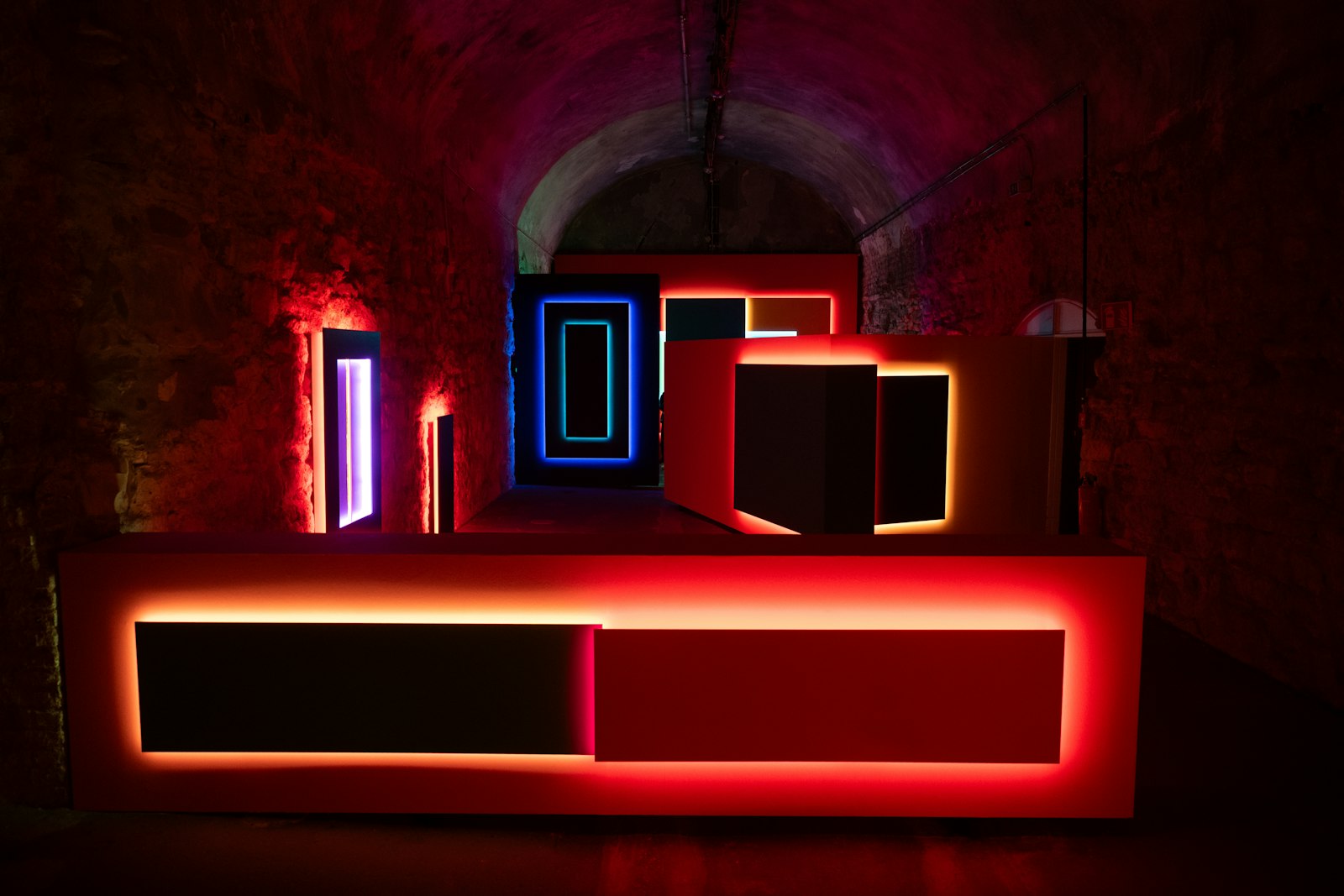
The Sirmai-Peterson House — Frank Gehry’s 1983–88 cluster of cubic pavilions in Thousand Oaks, California — sold quietly in 2026, the last Gehry residence in private hands designed before his 1989 Vitra Design Museum commission redirected him toward institutional architecture.
The Frank Gehry Sirmai-Peterson sale, reported by Wallpaper on 27 April 2026 and brokered by The Value of Architecture, closes a small and specific chapter in Los Angeles residential history. Between his own Gehry Residence at 1002 22nd Street in Santa Monica, completed in 1978, and the Vitra Design Museum that opened in Weil am Rhein in 1989, Gehry built a handful of private houses in greater Los Angeles that effectively served as full-scale models for everything that came after. The Sirmai-Peterson House — designed with Greg Walsh, completed five years after it was commissioned, and sited on a sloped, oak-studded hillside overlooking a pond — is the last of those experiments to change hands. Its sale to a medical professor and his wife, who plan roof repairs but have committed to preserve the design, is also a hinge: the moment at which the residential lineage that produced Gehry’s institutional career is finally treated as architectural patrimony rather than as a place to live.
This article traces that lineage. It is concerned with three buildings — the Gehry Residence (1978), the Sirmai-Peterson House (1983–88) and the Vitra Design Museum (1989) — and with the year, 1989, in which Gehry’s career pivoted from Los Angeles experiment to European institution.
1002 22nd Street: The Gehry Residence, Santa Monica, 1978
Frank Gehry was born in Toronto in 1929 and has been based in Santa Monica for most of his working life. In 1977, he and his wife Berta bought a pink 1920 bungalow on a corner lot at 1002 22nd Street, in a quiet residential block of what was then a middle-class Santa Monica neighbourhood. The renovation, completed in 1978, did not replace the bungalow. It wrapped it.
The wrap is the building’s argument. Gehry left the original Dutch colonial structure visible from the inside — the old clapboard, the existing windows, the kitchen ceiling open to the rafters — and built a new, partial outer shell around three sides of it in chain-link fencing, corrugated steel, plywood, and tilted glass cubes set at the corners. The new kitchen floor is the original asphalt of the driveway. The exterior was, depending on which contemporary review one reads, an act of vandalism against the neighbourhood, an early statement of deconstructivist architecture, or, in Gehry’s own framing, an attempt to make the existing house “more interesting” without erasing it.
The Gehry Residence is widely cited as one of the earliest deconstructivist buildings, a label Gehry himself rejected — he has consistently described his interest as collage rather than theory, and the Santa Monica house as a domestic experiment rather than a manifesto. The materials are nevertheless the materials of the movement: industrial fencing used as a domestic envelope, raw corrugated steel left unpainted, plywood treated as finish surface, glass volumes pulled away from the building grid and tipped at angles. Together they read as the working vocabulary that Gehry would carry, with adjustments, into every residential project of the 1980s.
The house is also, importantly, not a single gesture. The 1978 wrap was succeeded by a 1991–94 second renovation, in which Gehry added bedrooms for his sons and rebuilt parts of the original; that later phase is not the subject here. The relevant fact, for the lineage that produced Vitra, is that Gehry spent the late 1970s living inside a building he had partly demolished. The clients who came to him for residential commissions in the early 1980s knew exactly what they were buying.
Thousand Oaks, 1983: The Sirmai-Peterson Commission
Bob Sirmai and Patricia Peterson commissioned Gehry in 1983. The site was not in Los Angeles proper — Wallpaper’s headline framing notwithstanding — but in Thousand Oaks, a suburban city in Ventura County roughly forty miles north-west of central LA, on the inland side of the Santa Monica Mountains. The plot was a sloped hillside studded with mature coast live oaks, with a small pond at the lower edge and views back across the property toward the trees.
Gehry co-designed the house with Greg Walsh, his long-time partner at Frank O. Gehry & Associates and the project architect on most of the firm’s residential work in the period. A separate guest house on the property was designed by the local Venice-based architect Brian Murphy. Construction took the better part of five years; the main house was completed in 1988.
The form is the cluster. Rather than a single volume, Sirmai-Peterson is a group of independent cubic pavilions, each a discrete room or function, arranged across the slope and connected by an elevated walkway. A taller tower-lantern volume rises above the cluster as a vertical accent. The pavilions read, from across the pond, as a small village rather than as a single house — a strategy Gehry had used in earlier unbuilt schemes (most notably the 1978 Familian Residence project) and would return to in later commissions, but which Sirmai-Peterson is the most fully resolved built example of.
The materials are deliberately heavier and more permanent than the Santa Monica wrap. Concrete block forms the base and the lower walls of several pavilions. Stucco is used on upper volumes. Douglas fir is the principal interior wood, and galvanised aluminium accents — flashings, edges, small roof elements — pick up the industrial register that the Gehry Residence had stated in chain-link. The combination is Californian in a specific way: it borrows from agricultural outbuildings (the concrete-block barn, the stucco shed) and from the Case Study tradition of industrial-residential hybrids, without belonging to either.
What Sirmai-Peterson does that the Gehry Residence does not is operate at the scale of a complete house on an open site. The Santa Monica project is a renovation hemmed in by a corner lot. Sirmai-Peterson, on its hillside, lets Gehry test the cluster strategy at full size: how independent volumes negotiate a slope, how a walkway becomes the connective spine, how a vertical lantern reads against horizontal pavilions. Those questions are the questions the Vitra Design Museum, on its corner of the Vitra Campus in Weil am Rhein, would be asked to answer two years later — but in plaster and titanium-zinc rather than concrete block and Douglas fir, and for a public rather than a private client.
The 2026 Sale and the Wallpaper Report
The Sirmai-Peterson House sold in April 2026, brokered by The Value of Architecture, the specialist agency for design-significant residential listings. Wallpaper’s report on 27 April 2026 confirmed the buyers as a medical professor and his wife. The price was not disclosed. The new owners face roof repairs — a not-uncommon issue for late-1980s Gehry residential projects, where the unconventional flashing details at junctions between cubic volumes have aged unevenly — and have stated that they intend to preserve the design rather than alter it.
Two facts make the sale a useful waypoint. First, it is the last Gehry residence from the pre-Vitra period to remain in private hands and to change owners under the open market — most of the comparable houses (the Norton Residence in Venice, 1983; the Schnabel House in Brentwood, 1989) are either in long-term ownership, listed but unsold, or have been converted to other uses. Second, the buyer profile — academic medical professional, preservation-minded, working through an agency that exists to vet exactly this kind of buyer — signals that the market for Gehry’s residential output has shifted from the speculative to the custodial. The houses are now bought to be kept.
That is a different status from the one Sirmai-Peterson had in 1988, when it was simply a house for the couple who paid for it.
1989: Vitra Design Museum and the Pritzker
1989 is the pivot year. In the same twelve months in which the Vitra Design Museum opened in Weil am Rhein and Gehry won the Pritzker Architecture Prize, the Sirmai-Peterson House was completed (1988, with finishing work running into 1989) and the Schnabel House in Brentwood — the most ambitious of the late-1980s residences — was finished. The residential lineage closes; the institutional career opens.
The Vitra Design Museum was Gehry’s first European commission. It was built for Rolf Fehlbaum, the second-generation owner of Vitra, the Swiss-German furniture manufacturer whose Weil am Rhein factory site had been partly destroyed by fire in 1981. Fehlbaum had begun, in the wake of the fire, to commission the buildings that would eventually become the Vitra Campus: Nicholas Grimshaw’s production halls, the Vitra Fire Station by Zaha Hadid (her first built project, 1993), Tadao Ando’s conference pavilion (1993), Álvaro Siza’s later factory (1994), and, later still, the SANAA factory (2010) and the Herzog & de Meuron VitraHaus (2010). The Design Museum, opened in 1989, was the campus’s first cultural building and the building that set the template — a manufacturer’s site as architectural collection.
Gehry worked with the German architect Günter Pfeifer on the Weil am Rhein project, with Pfeifer providing the local execution role required for the German building code. The form is a small white sculpture: curved volumes in white plaster, set under titanium-zinc alloy roof planes that twist and lift over the gallery spaces. The plan is roughly cruciform, with the curving volumes pulling away from the main axes; the language is the cluster strategy of Sirmai-Peterson, but compressed into a single integrated form and rendered in surfaces that reflect light rather than absorb it.
The shift in materials is the shift in audience. The Gehry Residence used industrial materials at domestic scale; the Vitra Design Museum uses fine architectural materials — plaster, titanium-zinc — at institutional scale. The cubic pavilions of Sirmai-Peterson become, at Vitra, a single curved object that contains them. The walkway between volumes that was external in Thousand Oaks is internalised in Weil am Rhein. The vertical lantern is present, but absorbed into the roof geometry rather than rising as a separate element.
Gehry won the Pritzker Architecture Prize in 1989, the same year Vitra opened. The award is the institutional confirmation of the institutional turn. From 1989 onwards, the residential commissions taper — Gehry continues to build private houses, but the centre of gravity of the practice shifts to museums, concert halls and corporate work — and the language developed in the Gehry Residence and Sirmai-Peterson migrates into projects at a different scale: the Weisman Art Museum in Minneapolis (1993), the Bilbao Guggenheim (1997), the Walt Disney Concert Hall in Los Angeles (2003), the Fondation Louis Vuitton in Paris (2014).
A Timeline of the Residential-to-Institutional Pivot
The simplest way to see the lineage is to lay the dates against each other.
| Year | Project | Location | Role / Status | Materials & Form |
|---|---|---|---|---|
| 1929 | Frank Gehry born | Toronto, Canada | Birth | — |
| 1977 | Bungalow purchased at 1002 22nd Street | Santa Monica, California | Frank and Berta Gehry buy a 1920 pink bungalow | Existing Dutch colonial clapboard |
| 1978 | Gehry Residence completed | Santa Monica, California | Wraparound renovation; Gehry’s own house | Chain-link fencing, corrugated steel, plywood, tilted glass cubes |
| 1983 | Sirmai-Peterson House commissioned | Thousand Oaks, California | Bob Sirmai and Patricia Peterson commission Frank O. Gehry & Associates | Concept stage |
| 1988 | Sirmai-Peterson House completed | Thousand Oaks, California | Co-designed with Greg Walsh; guest house by Brian Murphy | Cluster of cubic pavilions, tower-lantern, elevated walkway; concrete block, stucco, Douglas fir, galvanised aluminium |
| 1989 | Vitra Design Museum opens | Weil am Rhein, Germany | First European commission; client Rolf Fehlbaum; cooperation with Günter Pfeifer | Curved white-plaster volumes, titanium-zinc alloy roof |
| 1989 | Pritzker Architecture Prize | — | Gehry awarded | — |
| 1991–94 | Gehry Residence second renovation | Santa Monica, California | Bedrooms added, original partly rebuilt | Continues original vocabulary |
| 2026 | Sirmai-Peterson House sold | Thousand Oaks, California | Sold in April 2026 to a medical professor and his wife; brokered by The Value of Architecture; preservation intended | Roof repairs pending; design preserved |
The table reads, in one column, as a five-decade movement from a corner-lot renovation to a European museum. Read as ratios, the gaps are smaller than they look. The Gehry Residence and Sirmai-Peterson are ten years apart and a forty-mile drive between them. Sirmai-Peterson and Vitra are one year apart and an ocean between them. The leap is geographical, not formal: the cluster, the tilted volume, the industrial-as-domestic material palette are continuous across all three.
What the Sirmai-Peterson House Tells Us About Vitra
The Vitra Design Museum is usually read backwards from Bilbao, as the small white prelude to the curved-titanium career. Read forwards from Sirmai-Peterson, it reads differently. The Vitra building is the Sirmai-Peterson cluster compressed and clad in institutional materials. The white plaster does in Weil am Rhein what stucco did in Thousand Oaks. The titanium-zinc does, at the roof, what galvanised aluminium did at the flashings. The curving volumes do, in plan, what the cubic pavilions did on the slope: they pull apart, then reconnect, around an internal circulation spine.
The reason the lineage matters is that it locates Gehry’s institutional language in the residential laboratory rather than in the European context that received it. Vitra is sometimes told as a story of European clients legitimising Californian experiment. The Sirmai-Peterson House complicates that. By 1988, Gehry had already built — for a private client, on a private hillside, with a guest house by a Venice architect — the formal proposition that Vitra would scale up. The European commission did not invent the Gehry of the 1990s. It received a Gehry that the Los Angeles residential market had already produced.
It also explains why Gehry’s later institutional projects, including the Walt Disney Concert Hall in his own city, return so insistently to the cluster idea. The pavilion-and-walkway logic of Sirmai-Peterson never fully exits the work; it survives, transposed into stainless steel, in the petals and volumes of Disney Hall. The residential lineage is not a phase Gehry left behind in 1989. It is the working vocabulary he took with him.
The 2026 Los Angeles Frame
Sirmai-Peterson sells in the same month that LA’s other long-running institutional architecture story moves into a new phase. The LACMA Geffen Galleries, Peter Zumthor’s 220,000-square-foot single-level replacement for the older LACMA buildings, opens in 2026 — a long, low concrete bridge across Wilshire Boulevard that is, by design, the opposite of Gehry’s clustered, ascending Disney Hall a few miles east. Zumthor’s building is the institutional architecture of Los Angeles in 2026; Gehry’s, in Sirmai-Peterson, is the residential architecture of Los Angeles in 1988.
That juxtaposition is not a competition. It is a way of measuring how Los Angeles’s architectural conversation has shifted in the thirty-eight years between Sirmai-Peterson’s completion and the 2026 sale. Gehry’s residential experiments produced a Pritzker-winning, Europe-bound institutional career. Zumthor’s institutional commission, arriving four decades later in the same city, can take that career as one of its preconditions. The Los Angeles that received Sirmai-Peterson in 1988 was a city in which the most ambitious architectural work was happening on private hillsides for private clients. The Los Angeles that opens the Geffen in 2026 is a city whose civic institutions have caught up to that ambition, and whose residential output of the 1980s has begun to be sold the way pre-war modernist houses were sold in the 1990s — as preservation cases, through specialist agencies, to buyers vetted for stewardship rather than for resale.
The Sirmai-Peterson sale therefore frames itself. It closes the open-market chapter of Gehry’s pre-Vitra residential lineage in the same month that the Geffen opens; it transfers a 1988 hillside cluster from its first owners to a custodial second owner; and it does so in a city whose institutional architecture is, in 2026, finally producing buildings that share the seriousness Gehry’s clients in Thousand Oaks were already paying for thirty-eight years ago.
Coda: The Hillside and the Campus
What the Sirmai-Peterson sale actually transfers is a small piece of evidence. Anyone who wants to understand how the Vitra Design Museum got its plan, how the Vitra Campus became the multi-architect collection it is — Hadid’s fire station, Ando’s pavilion, the ongoing Junya Ishigami project, the 2026 commissions Rolf Fehlbaum’s foundation continues to make — needs to start in Weil am Rhein with Gehry’s 1989 building, and from there walk back across the Atlantic to a hillside in Thousand Oaks. The cluster of cubic pavilions on the oak slope is not a footnote to the museum. It is the working drawing for it.
The 2026 buyers, by all accounts, understand that. They are not preserving a Gehry house in the abstract. They are preserving the immediate predecessor to the building that, three thousand miles east of California, set off everything that has happened on the Vitra Campus since — and that, by way of the Pritzker that arrived in the same year, redirected an LA residential architect into the practice that built Bilbao, Disney Hall and Fondation Louis Vuitton. A roof gets repaired in Thousand Oaks. A career gets read back to its source.