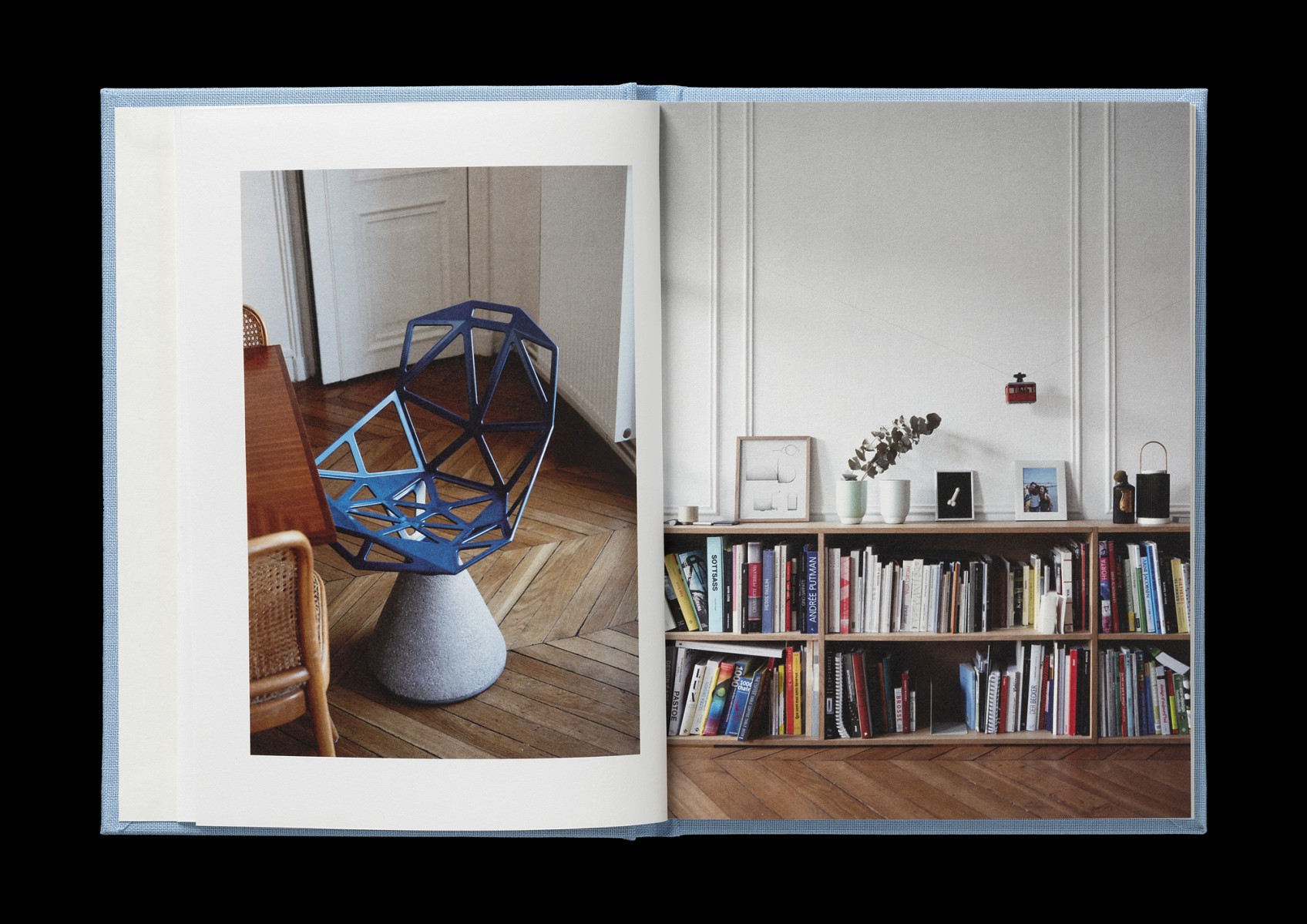
Pauline Deltour, who died at 38 on 5 September 2021 after ten years running a Paris studio that produced roughly 180 industrial-design objects, has finally been given the survey her catalogue deserved: the Pauline Deltour MADD Bordeaux retrospective is the first show to hold all of those objects in a single room. “Pauline Deltour, une apparente simplicité / An Apparent Simplicity” began on Wednesday 22 April 2026 with a 7 p.m. reception at 39 rue Bouffard and runs until 21 September 2026, the inaugural show of the partially reopened museum. It is co-curated by Bérengère Bussioz, Konstantin Grcic, Caroline Perret and Étienne Tornier, with exhibition design by Perret (CPWH) and Grcic assisted by Claire Pondard. The Pauline Deltour MADD Bordeaux survey is the first time her commissions for Alessi, Muji, Lexon, La Chance, Hem, Tolix, Discipline, Forge de Laguiole, Established & Sons, Cire Trudon, COR, JEM and Puiforcat have been gathered in one place, and the show is unusually graph-shaped: the curatorial premise is that an industrial designer’s life work is best read as a network of brands, artisans and dates rather than as a chronology of forms.
The thesis of this piece is that the show answers a research question the design press has not previously been able to answer in one image: what does the full output of a ten-year industrial-design studio actually look like, from breakout product to last unrealised commission? The answer at MADD Bordeaux is hundreds of drawings, photographs and models alongside finished pieces — some still in current production, some specifically produced for the exhibition — laid out across galleries that include the two former courtyards of the 19th-century Bordeaux municipal prison, now converted to exhibition space by Antoine Dufour Architectes. This article walks the graph: the Grcic years that trained her, the Alessi commission that made her, the studio that absorbed roughly twenty editors across three continents, the building that now holds the survey, and the curatorial argument that gives the show its title.
The Grcic studio years, 2007–2010
Pauline Deltour was born on 17 February 1983 in Landerneau, in the Finistère département at the western tip of Brittany. She enrolled at ENSAAMA Olivier de Serres in Paris in 2001 — the applied-arts school in the 15th arrondissement that produced an unusual share of the French industrial-design generation born in the early 1980s — and stayed for the two-year BTS in product design, leaving in 2003. She then transferred to the École nationale supérieure des Arts Décoratifs (ENSAD) on rue d’Ulin in the 5th arrondissement, where she completed the four-year industrial-design diploma in 2007. Her diploma project drew the attention of Konstantin Grcic, who had founded Konstantin Grcic Industrial Design (KGID) in Munich in 1991 and was, by 2007, four years past the release of the Chair_One stamped-aluminium seat for Magis and three years into the Myto cantilever for Plank.
Deltour joined KGID at its Schwanthalerhöhe address in Munich in 2007 as the studio’s first female assistant. The hire mattered. KGID through the mid-2000s was a four- to six-person operation in which the assistants — among them Christophe de la Fontaine, Bernhard Osann and later Caroline Perret — carried projects from initial sketch through to factory drawings. The assistant was not a draftsman: the assistant was the designer of record on whichever piece Grcic assigned, with Grcic’s signature applied at sign-off. Deltour stayed three years, leaving in 2010. The projects she worked on during that period are not separately credited in the Vitra Design Museum’s “Konstantin Grcic — Panorama” monograph, but Grcic has named her as the principal hand on the OK lamp for Flos prototyping, on early studies for the Pro school chair for Flötotto, and on the Diana series tables for ClassiCon in their second-generation iteration. The Munich years also gave her two long-term collaborators: Konstantin Grcic himself, who would return as co-curator of her retrospective fifteen years later, and Caroline Perret, who would design the MADD scenography with him.
The lesson of the Grcic studio, in Deltour’s own retelling in interviews she gave to Intramuros and AD France in 2014 and 2017, was discipline about the number of decisions. A Grcic-trained industrial designer arrives at a brief with a fixed view of which dimensions are negotiable and which are not, and treats colour, radius and finish as the last decisions rather than the first. That logic shaped every piece she produced afterwards.
Tigrane and the Alessi commission
Deltour returned to Paris in 2010 and opened her own studio at an address in the 11th arrondissement. The breakout commission arrived almost immediately. Alberto Alessi, who had been running Alessi from the Crusinallo factory in Piedmont since 1970 and who had built the company’s identity around designer-led metalwork — Aldo Rossi, Ettore Sottsass, Philippe Starck, Achille Castiglioni — gave Deltour a wire-basket brief in 2011. The result was the Tigrane family: stainless-steel mesh fruit bowls, bread baskets and centrepieces produced by spot-welded round wire on the same Crusinallo lines that produced Castiglioni’s earlier basket programmes. Tigrane became Deltour’s signature object. It set the tone for the next decade of her practice: a single technical idea (welded wire as a continuous structural skin) carried across a family of objects in graduated dimensions, with the geometry doing the decorative work.
Alessi did not stop at Tigrane. Deltour produced the A Tempo programme for Alessi in 2014 — a wider set of kitchen objects including a bottle opener, a corkscrew, a fruit bowl and serving accessories — and continued to release pieces with the Crusinallo factory through to 2020. The A Tempo basket, in particular, became one of the most photographed of her objects, and is among the pieces returned to MADD Bordeaux for the retrospective alongside Tigrane.
The Alessi commission did three things at once. It established Deltour internationally — Tigrane was distributed through Alessi’s global retail network from launch — gave her studio a reliable royalty income from year two, and signalled to other European editors that the Grcic-trained Paris designer was ready for serial production briefs. Within eighteen months of Tigrane’s release she was carrying live projects with Muji, Lexon and La Chance in parallel.
Pauline Deltour at MADD Bordeaux: every client, by year
The Paris studio between 2010 and 2021 took on roughly twenty editors. Some were one-off commissions; some were multi-year relationships that produced four or five objects. The MADD show’s curatorial conceit — the reconstruction of her design office in one of the galleries, alongside drawings and prototypes — is partly an attempt to show how a ten-person, single-floor Paris practice carried that many simultaneous briefs. The studio used the same vocabulary across all of them. Pressed sheet metal, welded wire, anodised aluminium, oak veneer, hand-thrown porcelain, blown glass. The materials are unflashy, the geometry is reduced to a small number of moves per object, and the finishes are matte. The signature is in the proportions.
A canonical Deltour piece per brand, in approximate chronological order, reads as follows:
| Year | Brand | Object | Production status |
|---|---|---|---|
| 2011 | Alessi | Tigrane wire basket family | in production |
| 2012 | Muji | aluminium desk accessories series | in production |
| 2013 | Lexon | Tilt clock and Mini Tykho radio refresh | in production |
| 2013 | La Chance | Bow pendant lamp | in production |
| 2014 | Alessi | A Tempo kitchen programme | in production |
| 2014 | Discipline | Tools shelving system | in production |
| 2015 | Forge de Laguiole | folding knife with composite scale | in production |
| 2015 | Hem | Tag occasional table series | in production |
| 2016 | Tolix | Pony stool in pressed steel | in production |
| 2017 | Established & Sons | side-table edition | discontinued |
| 2018 | Cire Trudon | reissue candle vessel | in production |
| 2018 | COR | Conseta-adjacent upholstered seating | in production |
| early 2020s | JEM | Étreintes jewellery line | in production |
| early 2020s | Puiforcat | flatware study | in production |
| 2026 | MADD Bordeaux | pieces produced for the exhibition | exhibition only |
The table is the shape of the show. Roughly 180 objects, twelve to fifteen editors, two continents of factories — Crusinallo, Tokyo, Stockholm via Vilnius, Autun, Laguiole, Milan — and a single Paris studio holding the drawings. The MADD curators have been explicit that the survey treats the brand list as the unit of analysis rather than the year. The galleries are organised by editor.
Deltour’s collaborations also reached outside Europe. She worked with artisans in Japan — most notably on the Bonhomie tea service for the Arita porcelain town in Saga prefecture, produced through the 2016 2016/ project that commissioned sixteen international designers and sixteen Arita kilns — in Italy through Alessi and Discipline, in Colombia on a small line of woven baskets with a Bogotá weaving cooperative, and in the United States on limited editions with a New England metalworking shop. Each collaboration arrives in the show with its own vitrine and its own attribution. The curators have refused to subsume artisan names into Deltour’s; the wall texts read like a contracts list.
The studio also produced exhibition design — the most-cited example being a 2014 installation for Wallpaper* Handmade at Salone del Mobile — and a slow trickle of self-initiated pieces. She taught occasional studios at ENSAD and at the Royal College of Art in London. She did not write. The Paris studio shut on the day of her death, 5 September 2021, at her family’s home in Saint-Maurice-les-Charencey in the Orne département in Normandy. The cause of death was not made public; she was 38.
MADD Bordeaux: the building behind the show
The Musée des Arts décoratifs et du Design de Bordeaux, known by the acronym MADD Bordeaux, sits at 39 rue Bouffard in the 33000 postcode, two blocks west of the place Gambetta in the city’s 18th-century quarter. The museum occupies two adjacent listed buildings: the Hôtel de Lalande, an 18th-century hôtel particulier built between 1775 and 1779 by the architect Étienne Laclotte for the magistrate Pierre de Raymond de Lalande, and the former municipal prison, a 19th-century carceral building added to the same block in the early 1800s and decommissioned as a prison only in 1967. Both buildings are inscribed on the Monuments Historiques register.
The Hôtel de Lalande became the city’s decorative-arts museum in 1924, holding furniture, silverware, ceramics, glass and miniatures from the 17th, 18th and 19th centuries collected from Bordeaux’s wine-merchant and shipping bourgeoisie. The prison wing, after decommissioning, was used intermittently as a municipal storage facility before being attached to the museum’s footprint in the late 1980s. For three decades the two buildings ran as a single institution with two physically and architecturally incompatible halves. The 2026 reopening is the resolution.
The institution shut for full renovation in 2020. The brief from the city of Bordeaux was to unify the two listed buildings into a single circulation, to add modern visitor amenities (reception, shop, restaurant) that the hôtel particulier could not accommodate without irreversible alterations, and to convert the prison’s two interior courtyards into climate-controlled exhibition space. The contract was awarded to Antoine Dufour Architectes, a Bordeaux practice that had previously delivered museum and heritage projects in Aquitaine. Construction ran through 2023, 2024 and 2025. The partial reopening on 22 April 2026 covers the prison wing, the new exhibition galleries, the reception, the shop and the restaurant; the historic hôtel particulier with the permanent decorative-arts collection is scheduled to reopen later, in 2027. The Deltour show is the first exhibition the public sees in the new fabric.
Antoine Dufour Architectes and the prison-yard conversion
The single most consequential decision in the renovation was to glaze the two prison courtyards. The municipal prison’s plan, like most 19th-century French carceral buildings, was a U around two open cellblock yards used for exercise. Antoine Dufour Architectes left the masonry walls, the cell-block windows and the iron-stair stubs in place, and dropped two new glass roofs at the height of the original cornice. The yards became double-height galleries with the original four walls visible. The floor was relaid in pale stone; the walls were left in their cleaned masonry. The two new galleries, taken together, add roughly the same exhibition area as the entire old museum once held.
The unification of the two listed buildings — hôtel particulier and prison — was achieved by piercing a small number of new openings through the shared party wall and adding a stair and lift core at the junction. The Monuments Historiques constraints did not permit large structural moves. Dufour’s response was to read the two buildings as two volumes joined by a thin spine, and to put visitor flow through the spine. From the new entrance on rue Bouffard the visitor crosses the reception into the former prison yards, climbs to a mezzanine level, and only then enters the 18th-century rooms of the hôtel through a single restored doorway.
The result is that the Deltour retrospective sits primarily in the prison galleries — the two glazed yards and the connecting cell-corridors — rather than in the period rooms of the hôtel particulier. This is the right architectural answer for the show. Industrial design in serial production sits more easily against cleaned 19th-century stone than against 18th-century parquet and panelling. The Tigrane wire baskets photograph cleanly against the prison wall. So does the Pony stool for Tolix, the Bow pendant for La Chance, and the Tools shelving for Discipline. The hôtel particulier is held in reserve for 2027.
The collaboration between an architectural practice (Dufour), an industrial-design curator (Tornier), a decorative-arts curator (Bussioz) and two scenographers who are also working designers (Perret and Grcic) is what makes the show readable. The wall texts are minimal; the vitrines are flat steel cases of the kind familiar from Grcic’s earlier shows at the Vitra Design Museum and Z33 in Hasselt; the pieces still in production sit in the open. Caroline Perret’s CPWH practice — co-founded with Winston Hampel — handled the casework drawings.
What “an apparent simplicity” actually means
The title is the curatorial argument. “Une apparente simplicité” reads in French as a deliberate hedge: not “simplicity” but “an apparent simplicity”, with apparent in the sense both of obvious and of seeming-but-not-actually. The English subtitle, “An Apparent Simplicity”, preserves the ambiguity. Deltour’s objects look simple. They are not.
The Tigrane basket is the simplest possible illustration. The basket reads, on first sight, as a single welded wire mesh formed into a hemispherical bowl. The technical reality is that the wire is graded in two diameters (the structural ribs and the infill mesh), that the welds are placed at calculated intervals to control stiffness, that the rim is a separate flatter wire bent and welded as a closing ring, and that the proportions of the family — from the small bread basket to the large fruit bowl — are not scaled uniformly but redrawn for each size to keep the visual density of the mesh constant. What looks like one decision is at least eight. The “apparent” simplicity is the achievement; the actual simplicity does not exist.
The same logic applies across her catalogue. The Pony stool for Tolix is a single piece of pressed and folded steel sheet that looks like a child’s toy but solves the seat-to-leg transition with a press tool of unusual complexity. The Bow pendant for La Chance is a milled aluminium ring suspended on three wires; the ring’s interior chamfer is the entire optical performance of the lamp. The A Tempo basket for Alessi is Tigrane’s logic restated for a different production line. Every object in the retrospective rewards close looking with a small surprise of technical density beneath a calm surface.
The curators argue, in the wall texts and in the small catalogue Caroline Perret has designed for the show, that this is Deltour’s specific contribution to the French and broader European industrial-design tradition. Restraint as a method, not a style. The objects refuse to perform; they decline to read as expressive; they hold their information back. Read against the post-Grcic generation of European industrial designers — against Big-Game’s vernacular pieces, Sebastian Wrong’s editions for Established & Sons, Sylvain Willenz’s lighting for Hem — Deltour sits at the most reduced end of the spectrum.
The show resists the obvious memorial register. There is no biographical wall, no chronological narrative wrapped around the rooms, no photographs of the designer at her desk. The reconstruction of her studio — the office, the model shelves, the sample wall — is the one concession, and it is treated as a workspace rather than as a portrait. The objects do the work of the survey. The wall labels name editor, year, factory and material. The visitor is asked to read industrial design as a designer reads it: by attribution and process.
If the show has a thesis beyond the cataloguing of every object, it is that an industrial designer’s life work is graph-shaped — a network of editors, factories, artisans and collaborators — and that the work cannot be summarised by any single piece or any single year. Tigrane is the breakout. It is not the whole. The retrospective gives equal weight to the Muji desk accessories, to the Lexon clock refresh, to the Forge de Laguiole folding knife with its composite scale, to the Hem Tag tables, to the Discipline shelving, to the Étreintes line for JEM. The bibliography of the catalogue lists every collaborator. The curators have refused the temptation to canonise a top-ten.
The Pauline Deltour MADD Bordeaux retrospective also reads, inevitably, as the closing argument for a kind of industrial-design practice that became harder to sustain through the 2010s. A Paris studio of fewer than ten people, carrying twenty live editor relationships across three continents, producing roughly 180 finished objects in ten years, with no fashion side-line and no auction-house collectible-design operation, is a model of practice that the collectible-design market and the contemporary brand consolidations have made commercially unusual. The 2026 generation of Paris-trained designers has more often pivoted to gallery editions and one-off pieces. Deltour did not. The retrospective is, among other things, a record of the last decade in which the editor model was the default route into industrial design in France.
The show closes on 21 September 2026. The historic hôtel particulier reopens in 2027 with the permanent collection of 17th-, 18th- and 19th-century decorative arts. The catalogue, the studio reconstruction, the four-curator argument and the prison-yard galleries together produce something rarer than a memorial: a complete graph-native survey of a working industrial-design practice, traceable down to the editor, the year and the factory. For designers, curators and historians the show is the new reference. For the museum it is the inaugural statement that MADD Bordeaux, after six years closed, intends to read decorative arts and design as a single continuous question — from the silver of the Bordeaux merchants in the Hôtel de Lalande to the welded steel mesh of an Alessi fruit bowl in the former prison yard, separated by two centuries, one renovation and a thin party wall.