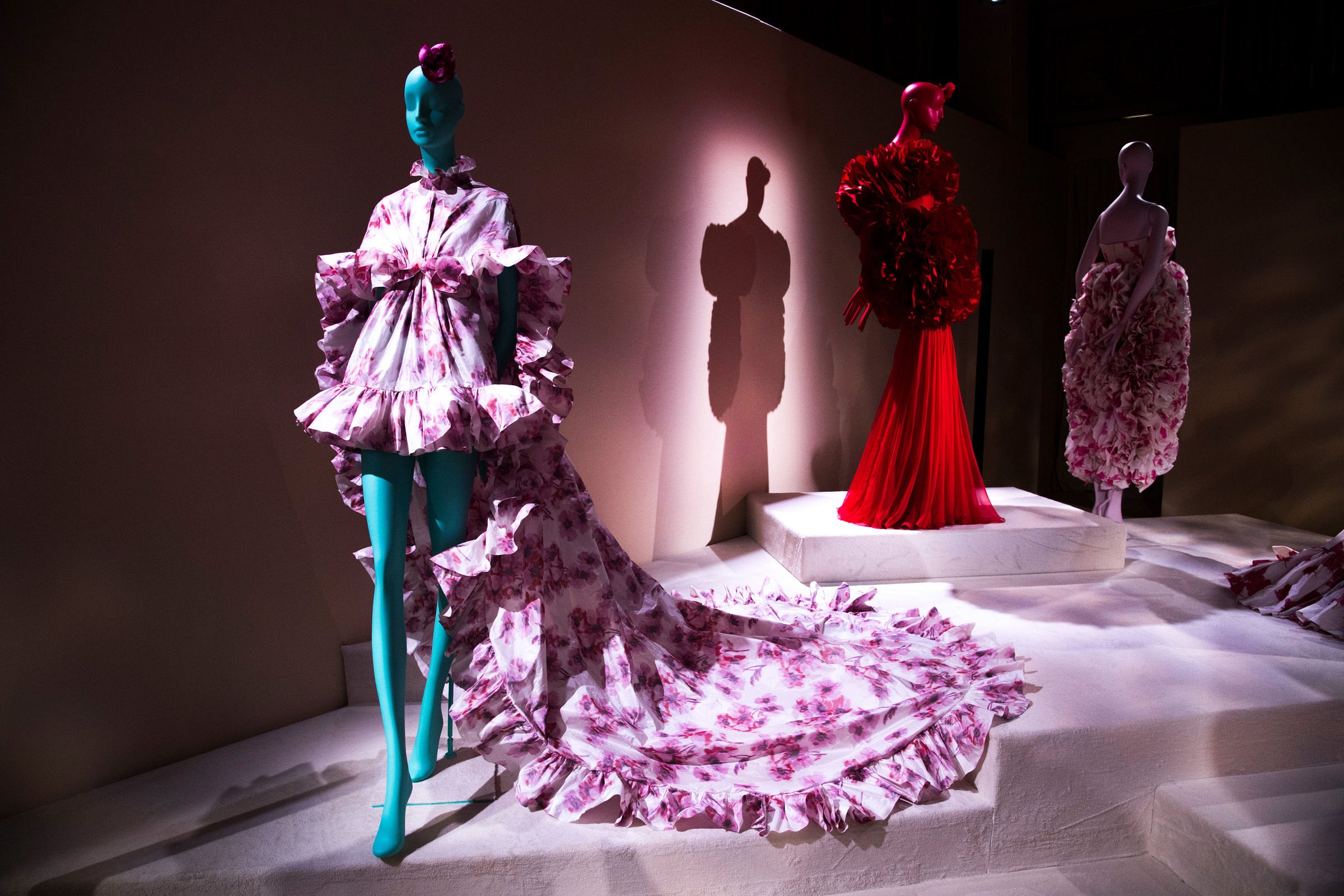
The giambattista valli buyback from Artémis, announced by Business of Fashion in May 2026, is the second time in eight years that a Paris fashion house has undone a Pinault-family bet — the first was Stella McCartney rolling back the 2001 Kering joint venture in March 2018. Valli’s reacquisition of his namesake house, Giambattista Valli SAS, from the holding company chaired by François-Henri Pinault closes a nine-year minority-to-majority arc that began with a 2017 stake and a 2021 control move. It is a small deal by Kering or LVMH standards, but it is the second clean unwinding of a founder-house from Artémis since the Stella McCartney departure, and it arrives during the most aggressive founder-buyback cycle in three decades.
Giambattista Valli’s buyback from Artémis: the deal in May 2026
The transaction was reported on a Tuesday in mid-May 2026, two months after Giambattista Valli SAS skipped Paris Fashion Week Fall 2026 ready-to-wear in March, and four months after the house pulled its Spring 2026 haute couture presentation from the official Paris couture calendar in January 2026. Those two absences — first the couture, then the ready-to-wear — were the public friction signal. By the time Business of Fashion confirmed the deal, the Paris trade had already priced in a separation.
Terms were not disclosed. What is known: Valli, who was born in Rome in 1966 and founded Giambattista Valli SAS in Paris in 2005, has reacquired full ownership of the house from Artémis, which had first taken a minority stake in 2017 and moved to a majority position in 2021. The buyback returns the company to the configuration it had for its first twelve years — founder-controlled, Paris-headquartered, couture and ready-to-wear under one roof — but with the haute couture business that the house added in 2011 now mature.
The structural read is that this is a quiet exit, not a contested one. Artémis does not appear to have run a public process, and Valli does not appear to have raised outside capital to finance the buyback, though the absence of an announcement of new minority partners is not the same as confirmation that he is operating alone. What it most resembles, in shape and tone, is the Stella McCartney departure from Kering in March 2018: a Pinault-side decision to disengage from a founder house that had never been the strategic centre of the portfolio, executed without litigation and without a noisy auction.
Artémis: the holding company that doesn’t behave like one
Artémis is the family holding company founded by François Pinault in 1992 and now chaired by his son, François-Henri Pinault. It is wholly owned by Financière Pinault. The portfolio is unusual because Artémis is not, in the conventional sense, a luxury holding — it is a family office that happens to control one of the two largest luxury groups in the world.
Beneath the Artémis umbrella sit Kering (the listed luxury group containing Gucci, Saint Laurent, Bottega Veneta, Balenciaga and Boucheron), Christie’s (taken private by Artémis in 1998 and still wholly held), the Pinault Collection (the contemporary art holdings shown at the Bourse de Commerce in Paris and the Punta della Dogana in Venice), Courrèges (the Paris house bought in 2018 and revived under Nicolas Di Felice), and CAA, the Hollywood talent agency, of which Artémis took a majority stake in 2023.
Artémis took the CAA majority earlier in 2023; in September 2023, François-Henri Pinault stepped back from his role as Kering CEO to focus full-time on Artémis, which by then had absorbed CAA and was operating across art, auctions, luxury, talent and a growing minority-investment book. The Valli stake — minority in 2017, majority in 2021 — sat in that minority-investment book, alongside positions in smaller designer houses that Artémis has historically been willing to hold off the Kering balance sheet.
The Christie’s deal is the parallel template for understanding what Artémis does with the assets it controls outright. Taken private in 1998, Christie’s has remained wholly held by Artémis for twenty-eight years; it is not pushed onto Kering, not spun out, not listed. It is, in Pinault-family terms, a strategic permanent holding. The Valli stake was never that. It was a fashion bet placed at the minority-investment level, scaled up to majority, and now wound down — closer in shape to a private-equity exit than to the Christie’s pattern.
Stella McCartney: the 2018 Kering precedent
The cleanest precedent for the giambattista valli buyback is the Stella McCartney unwind of March 2018. Stella McCartney’s namesake brand had been launched in 2001 as a 50/50 joint venture with the group then called Gucci Group, which became PPR and then Kering. The structure held for seventeen years. In March 2018, McCartney bought back Kering’s 50 per cent stake, ending the joint venture.
The 2018 buyback was the first time in the Kering era that a founder had successfully repatriated a house from the group. It mattered because it established three things at once: that Kering would sell back to founders when the strategic logic faded; that founder-led houses outside the top tier of the portfolio (Gucci, Saint Laurent, Bottega Veneta) were genuinely available; and that the cost of exit was manageable enough that a single designer-founder could finance it.
For Valli, the McCartney 2018 deal was the proof of concept. The two houses are not strategically comparable — McCartney built a global sustainability-led ready-to-wear business, Valli built a haute couture house with a smaller, denser client base — but the Pinault-side logic is the same. When a founder house sits at the periphery of the group’s strategic map, and when the founder has both the will and the capital structure to reclaim control, Artémis and Kering have demonstrated they will sell.
Stella McCartney’s 2025 LVMH exit and what it taught Valli
The second-order lesson came in July 2019, when McCartney sold a minority stake of her newly independent house to LVMH, and again on 27 January 2025, when she repurchased that minority and returned to full founder ownership. McCartney remains LVMH’s global sustainability ambassador — a role she has held since the 2019 deal — but the equity has been fully unwound.
The 2025 buyback is the more relevant precedent for Valli, because it is the model for a founder who has cycled through two big-group stakes and chosen, at the end of both, to own the house outright. McCartney’s path — Kering joint venture (2001–2018), independence (2018–2019), LVMH minority (2019–2025), independence again (2025–) — is now the template that Phoebe Philo’s relaunch and the Valli buyback both echo. The pattern is: take the group capital when it is useful, take it back when the strategic alignment frays, and treat the group relationship as a phase rather than a destination.
What McCartney’s 2025 deal taught the Paris market, and presumably Valli, is that the buyback mechanic is now well-rehearsed. A founder with a defined brand identity, a stable atelier and a creditworthy capital structure can move in and out of group ownership without the brand losing coherence. The friction is reputational rather than operational.
For Valli specifically, the lesson is sharper because his house never had a Stella-scale ready-to-wear operation to defend. Giambattista Valli SAS is a couture-led house with a ready-to-wear line and a long history of collaborations — most visibly the Moncler Gamme Rouge partnership from 2006 to 2018, which gave the house twelve years of high-visibility runway exposure adjacent to Moncler’s outerwear business. The couture, added in 2011, is the strategic centre. A founder-owned couture house in Paris is a defensible structure; a minority-Artémis couture house in Paris had become, by 2025, a structurally awkward one.
Phoebe Philo and Jonathan Anderson: the LVMH minority-stake template
The other half of the buyback playbook lives on the LVMH side, in the minority-stake template that the group has built around founder-controlled houses.
Phoebe Philo relaunched her namesake house in October 2023 as a majority-founder-owned business with an LVMH minority stake. The structure is the inverse of what Stella McCartney had with Kering in 2001 — there, the joint venture was 50/50 with the group on the controlling side of the cap table. The Philo structure puts the founder in unambiguous control and treats LVMH as a strategic financial partner rather than a parent. Phoebe Philo the brand has been built around that asymmetry from launch.
Jonathan Anderson’s JW Anderson has run under a 2013 LVMH minority stake for thirteen years now, with Anderson retaining majority control throughout. That deal, struck when Anderson was simultaneously appointed to Loewe, predates the Philo template by a decade but operates on the same principle: the founder owns the house, the group owns a strategic minority, and the relationship is calibrated to keep the founder in the driver’s seat of brand identity.
The Valli buyback closes the loop because it shows what happens when the group is on the majority side of the cap table — as Artémis was at Giambattista Valli from 2021 — and the founder decides to reclaim control. The Philo and Anderson structures are designed to never reach the buyback point, because the group never controls the house in the first place. The Valli, McCartney 2018 and McCartney 2025 deals are what happens when an earlier-generation structure with the group in control gets unwound.
A comparison table: fashion-house buybacks 2018–2026
The table below summarises every fashion-house designer buyback from a Pinault-family or LVMH vehicle in the period covered by this essay. It is the cleanest way to see the pattern: two from Artémis/Kering, one from LVMH, all within eight years.
| Year | House | Holding | Designer | What changed |
|---|---|---|---|---|
| 2018 | Stella McCartney | Kering (Artémis) | Stella McCartney | Bought back Kering’s 50% to end the 2001 joint venture; house returned to full founder ownership |
| 2019 | Stella McCartney | LVMH (new) | Stella McCartney | Sold a minority stake to LVMH; designer also named LVMH global sustainability ambassador |
| 2023 | Phoebe Philo | LVMH (new) | Phoebe Philo | Relaunch in October 2023 as majority-founder-owned, with LVMH minority — buyback-proof by structure |
| 2025 | Stella McCartney | LVMH | Stella McCartney | Repurchased LVMH’s minority on 27 January 2025; remained LVMH sustainability ambassador |
| 2026 | Giambattista Valli | Artémis | Giambattista Valli | Reacquired full ownership of Giambattista Valli SAS from Artémis, nine years after the 2017 minority stake |
The table is short, and that is the point. The headline-grabbing acquisition cycle of 2020–2024 — when both groups were spending aggressively on brand additions — masked the parallel buyback cycle, which is in fact a tighter, slower-moving phenomenon. Five transactions in eight years, involving three designers, two groups, and one family holding.
Read by group, the asymmetry is clear: Artémis/Kering has lost two founder houses in eight years (McCartney in 2018, Valli in 2026); LVMH has lost one and gained two with structurally buyback-resistant minority stakes (McCartney in 2025; Philo and Anderson under founder-majority structures). The Pinault-family pattern is full disengagement; the LVMH pattern is a minority-stake architecture that defers the buyback question by design.
For the broader strategic context — including the rise of independent designer holding companies and the question of how founders finance these deals — see the designer buyback playbook pillar essay.
Why Valli’s couture business is buyback-shaped
A digression on the underlying economics. Giambattista Valli is not, in the operational sense, a high-volume ready-to-wear house. The couture business added in 2011 sits at the apex of the brand; the ready-to-wear underneath it is a more limited operation than the McCartney equivalent. The Moncler Gamme Rouge partnership from 2006 to 2018 gave the house twelve years of additional runway and licensing exposure, which expired before the Artémis majority move in 2021 — meaning the period of Artémis majority control was also the period without the Gamme Rouge cushion.
Valli’s earlier career — Capucci, Fendi, Krizia, then Emanuel Ungaro ready-to-wear from 2001 to 2004 — built him a designer profile rooted in Italian couture craft and Paris ready-to-wear, the two disciplines that the namesake house then combined from 2005 onwards. That craft-led identity is the asset the buyback is protecting. A couture-anchored house with a defined founder voice is structurally simpler to repatriate than a multi-line global ready-to-wear business, because the founder is the brand in a way that is harder to fragment.
The skipped Spring 2026 couture in January and the skipped Fall 2026 ready-to-wear in March are not collapse signals; they are pause signals. A house in the middle of a buyback negotiation does not present collections, because presenting collections under the outgoing ownership structure creates inventory, contracts and brand-positioning decisions that would have to be unwound. The two absences read, in retrospect, as the operational footprint of the deal.
Coda: the founder-independence cycle
Step back to the eight-year frame and a pattern emerges. The 2018 Stella McCartney buyback was the opening event. The 2019 LVMH stake was the bridge. The 2023 Phoebe Philo relaunch was the new template. The 2025 McCartney repurchase was the closing of the LVMH bridge. The 2026 Valli buyback is the second Artémis disengagement.
What ties them together is not a single financial logic but a generational shift in how Paris-based founder houses are structured. The 2001-vintage joint venture — a 50/50 cap table with a luxury group on the controlling side — has not been replicated since McCartney. The 2017–2021 Artémis structure at Valli, where a family holding scaled from minority to majority in a founder house, has now also been unwound. What remains, going forward, are the 2013 JW Anderson and 2023 Phoebe Philo structures: founder-majority houses with a strategic group minority, designed to keep the founder permanently in control.
The Pinault-family disengagement from designer fashion outside Kering is now visible enough to call a trend. Artémis still controls Kering, Christie’s, Pinault Collection, Courrèges and CAA. It no longer holds a stake in Stella McCartney, and as of May 2026 it no longer holds a stake in Giambattista Valli. The family’s bets on namesake founder houses outside the Kering portfolio have been consistently wound down within a decade of being placed. The bets that have endured — Christie’s since 1998, Pinault Collection across decades, Kering itself — are the institutional ones, not the designer ones.
For Valli specifically, the buyback returns the house to the configuration it had between 2005 and 2017: founder-owned, Paris-based, couture-anchored, with the Moncler Gamme Rouge years behind it and the haute couture business mature. The next collection — whenever it is shown, on whatever calendar — will be the first under restored founder ownership. The market will read it accordingly.
The wider message for Paris is that the founder-independence cycle is now self-perpetuating. Every successful buyback lowers the perceived friction of the next one. Every founder-majority minority-stake structure narrows the universe of houses where a buyback could even be necessary. Eight years after the McCartney 2018 deal, the giambattista valli buyback is no longer an unusual transaction. It is the second instance of a recognisable Paris pattern, and on current trajectory it will not be the last.