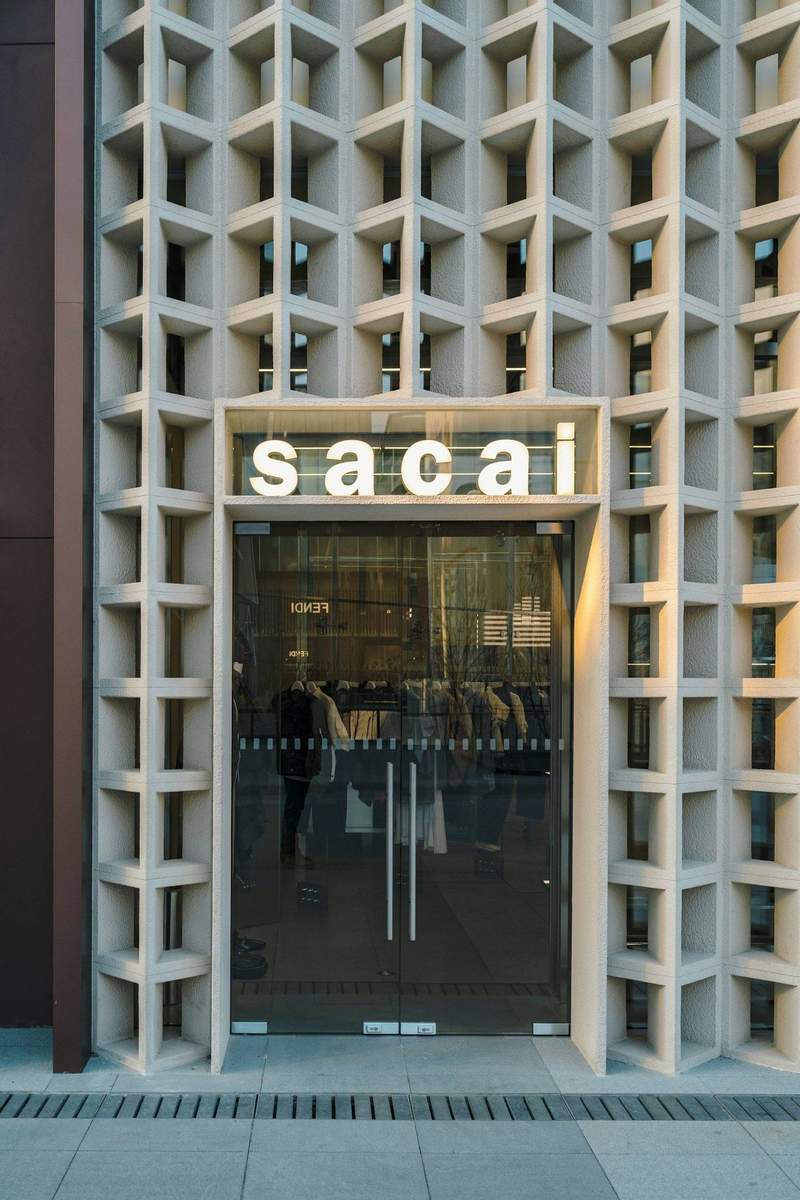
Giorgio Armani died on 4 September 2025; Armani/Archivio is the maison’s first posthumous statement, and it places Armani in the same archive-activation gesture as Demna’s Gucci Memoria, Matthieu Blazy’s Bottega Veneta Casa, and Cassina’s six unbuilt Le Corbusier pieces — three different theories of what a house’s past is for. The Armani Archivio archive activation, launched in 2026 as a reissue programme drawing on the house’s digitised archive, is the cleanest version of the question because it asks the simplest one: when the founder is gone and the archive is the maison, what do you take out of it, and what do you do with it once it is in your hands?
The answer Armani offers is narrow, deliberate, and closer in spirit to Cassina than to anything happening in fashion this season. It is a thirteen-look reissue with a stated date range, a single photographer, and a single venue. There is no fictional biography, no distress, no scaling-up of motifs. The pieces come back as they were, with the prices adjusted for the present.
What Armani/Archivio Contains
Giorgio Armani founded his maison in Milan on 24 July 1975 with Sergio Galeotti. The archive that Armani/Archivio now draws on holds, by the house’s own count, more than 200 physical collections and roughly 30,000 pieces — a body of work assembled across half a century and held at Armani/Silos, the museum that opened on 30 April 2015 at Via Bergognone 40, on the fortieth anniversary of the house. Armani/Silos is a working archive as well as an exhibition space; the digitisation that underwrites the Archivio programme is what makes a reissue project structurally possible at this scale.
The first drop is thirteen looks, men’s and women’s, spanning 1979 to 1994. The dates are not arbitrary. This is the period during which the Armani silhouette — the unstructured jacket, the dropped shoulder, the column of fluid neutral — moved from a Milanese proposition to the dominant grammar of late-twentieth-century power dressing. Among the reissued pieces are a Spring/Summer 1979 collarless blazer, a 1983 broad-shouldered blouson, a Spring/Summer 1979 double-breasted leather jacket, and a Spring/Summer 1990 wrap-effect skirt. Jacket prices range from £2,900 to £5,850; the overall range is £195 to £5,850.
The campaign is photographed by Eli Russell Linnetz, the American image-maker behind ERL, who works in a register that is closer to documentary memory than to fashion-house gloss. A dedicated installation runs at the Giorgio Armani boutique on Via Sant’Andrea in Milan, with programming by the podcast Throwing Fits — a choice that signals Armani is willing to let the archive be talked about in a register the house does not control, by people who came to the work as critics and customers rather than as employees.
How the Armani Archivio Archive Activation Treats the Past
The defining choice in Armani/Archivio is the refusal to costume the archive. The pieces are reissued as objects — same cut, same proportion, same period of origin stated explicitly. The press materials do not narrate a fictional past; the dates are plain. A 1979 blazer is presented as a 1979 blazer. A 1990 skirt is presented as a 1990 skirt. The campaign’s documentary tone reinforces the gesture: Linnetz’s photographs read closer to inventory than to editorial.
This is unusual now. Most fashion-house archive work in 2026 is doing something more rhetorical with the past — either using it as a source of distressed surface (Gucci) or as the structural DNA of a new category (Bottega Veneta). Armani’s choice is to let the archive be itself. The thirteen looks are not “inspired by” the archive; they are the archive, manufactured again, at a price that locates them squarely within the contemporary luxury market rather than within the secondary-market archive economy that has, over the past five years, taught fashion houses how much their old work is worth.
It is also a thesis about authorship. Giorgio Armani designed these pieces; he is no longer alive to design new ones. Reissuing them under the Archivio label, with the dates stated, makes the founder the author of the new collection without pretending he is in the room. The maison is treating the archive the way an estate treats a body of work: not as raw material for new authorship, but as a finished oeuvre that can be returned to circulation under its original signature.
Comparison: 2026 Archive Activations Across Fashion and Furniture
| Project | House | Archive Source | Method | Venue | Year |
|---|---|---|---|---|---|
| Armani/Archivio | Giorgio Armani | 1979–1994 collections, 30,000-piece archive at Armani/Silos | Reissue, 13 looks, dates stated | Via Sant’Andrea, Milan | 2026 |
| Gucci Memoria | Demna at Gucci | GG canvas, flora print, Web stripe | 12 domestic objects, distressed and pre-aged | Basilica di San Simpliciano, Brera | 2026 |
| Bottega Veneta Casa | Matthieu Blazy at Bottega Veneta | 1966 intrecciato weave | Single weave at four-metre scale on a daybed | Via San Maurilio 14, Milan | 2026 |
| Cassina Le Corbusier Inédits | Cassina with Fondation Le Corbusier | Six unbuilt Le Corbusier pieces, 1928–1952 | First production of folding desk, low table, side chair, wall-mounted writing surface, daybed, cantilevered shelving | Salone del Mobile | 2026 |
Reading the table across — Armani, Gucci, Bottega, Cassina — the four projects look superficially similar (each invokes the past, each lands in 2026, three of the four sit inside Milan Design Week’s gravitational field) and divide cleanly on method. Two of the four return objects to production essentially as they were drawn or cut. Two of the four use the archive as a source of grammar rather than as a source of pieces. The split does not run along the fashion–furniture line, which is the interesting part.
How Gucci Memoria Treats the Archive — As Costume
Gucci Memoria, Demna Gvasalia’s first project for Gucci, opened at Milan Design Week 2026 inside the Basilica di San Simpliciano in Brera — a 4th-century church whose age does most of the staging work before any object is placed in it. Inside, twelve domestic objects rendered in distressed GG canvas, flora print, and Web stripe were arranged as if they had been lived with for decades. The treatment is essentially theatrical: the archive’s surface marks are pulled forward, but the patina is invented. The objects look used in a way they cannot have been, because they were made this year. This is the archive used as costume — a fictional biography for new pieces, with the codes acting as evidence of a past those objects do not actually have.
Memoria works because Demna is honest about the artifice. The objects are not pretending to be old; they are pretending to be from a particular kind of remembered home, and the basilica makes the pretence legible as theatre rather than as fraud. But the relationship to the archive is rhetorical. The GG monogram and the flora are deployed as semiotic shorthand for Gucci-ness; nothing is reissued, nothing is dated, nothing is returned to production in its original form.
How Bottega Veneta Casa Treats the Archive — As Structure
Bottega Veneta Casa, Matthieu Blazy’s first home collection for the house, opened on Via San Maurilio 14 during the closing weekend of Milan Design Week with no press event and no advance preview. The thesis of Casa is the intrecciato — the diagonal-strip leather weave Bottega Veneta originated in 1966 — used at a scale and in a context the archive never anticipated. The daybed at the centre of the collection is upholstered in a single piece of intrecciato calfskin nearly four metres long. The same weave appears on a screen, on a magazine holder, and at smaller scales throughout the room.
The archive here is not a piece; it is a construction principle. Blazy is not reissuing a 1966 bag at four-metre scale. He is using the 1966 weave as the structural grammar for a category — home — that Bottega Veneta has never previously entered. The archive is acting as the DNA of new authorship rather than as a finished body of work. There are no dates on the press card. The intrecciato is presented as continuous practice, not as a historical artefact, and Blazy’s identity sits on top of it as the current author.
How Cassina Treats the Archive — As Completion of the Unbuilt
Cassina’s Le Corbusier Inédits, presented at Salone del Mobile 2026, is the project Armani/Archivio most resembles. Cassina has produced the LC series — the canonical Le Corbusier, Charlotte Perriand, and Pierre Jeanneret pieces — since 1965, and the continued manufacture of LC2, LC4, and LC6 is the bedrock of the brand. Inédits is a different proposition. With the Fondation Le Corbusier in Paris, Cassina has developed six previously unproduced pieces drawn from drawings made between 1928 and 1952: a folding desk (1928), a low table (1937), a side chair (1944), a wall-mounted writing surface (1948), a daybed (1950), and a cantilevered shelving system (1952).
These pieces are reissues of intent rather than of production. They were drawn but never made. Cassina, working with the foundation that holds the rights and the archive, has produced them for the first time, with the dates and the authorship preserved. There is no claim that these are new Cassina designs; they are presented as Le Corbusier objects that arrived late. The archive is being used to complete an oeuvre rather than to ornament a contemporary collection.
This is structurally what Armani/Archivio is doing, with one important difference. Cassina is producing objects that were never made; Armani is reproducing objects that were made and have since gone out of production. The gesture is the same — the archive is the author, and the date is part of the work — but Cassina is filling gaps in a body of work, and Armani is returning circulated work to availability. Both refuse the temptation to use the archive as raw material for present-tense authorship.
What Armani’s Choice Tells Us — Closer to Cassina Than to Gucci
Armani’s decision sits closer to Cassina than to either of its fashion-house peers. Three details make the alignment clear. First, the dates are stated. A reissued Spring/Summer 1979 blazer is presented as a Spring/Summer 1979 blazer. Cassina’s folding desk is presented as a 1928 folding desk. Neither house pretends the work is contemporary; both treat the date of origin as part of the object’s identity, the way a publisher would treat the date of a book’s first edition.
Second, the gesture is narrow. Thirteen looks. Six pieces. Neither programme is trying to flood the market with archive product or to launch a sub-line that will be extended quarterly. Both are bounded interventions, scoped to what can be defended on the merits. Compare this to the temptation, visible elsewhere in luxury, to extend an archive into a permanent capsule structure — and then into a second capsule, and a third — until the archive is a marketing engine rather than a body of work.
Third, the authorship is inherited rather than appropriated. Armani/Archivio is launched without Giorgio Armani in the room, and the maison’s choice is to let his work stand as his work, dated and signed. Cassina, with Le Corbusier dead since 1965 and Charlotte Perriand since 1999, is doing the same thing: producing objects under the original authorship with the foundation’s blessing, not under a contemporary creative director’s signature. By contrast, Gucci Memoria and Bottega Veneta Casa are explicitly authored projects — Demna at Gucci, Blazy at Bottega — that use the archive as a source for new work.
There is a temptation to call the Armani approach conservative. It is more accurate to call it estate-like. The maison is treating the archive the way a literary estate treats an author’s body of work after death: reissue carefully, date plainly, do not attempt to write new books in the dead author’s voice. The choice of Eli Russell Linnetz as photographer reinforces this; Linnetz’s documentary register is closer to a museum publication than to a fashion campaign, and the Throwing Fits programming at Via Sant’Andrea opens the work up to outside commentary rather than insulating it inside house-controlled narrative.
The cost of this choice is that Armani/Archivio cannot generate the same theatrical impact as Memoria or the same category-defining ambition as Casa. Thirteen reissued looks cannot do what twelve distressed objects in a 4th-century basilica can do, and they cannot do what a four-metre intrecciato daybed can do. What they can do is keep faith with the founder’s work at a moment when the maison’s most consequential decision — what kind of house Armani is going to be without Giorgio Armani in it — is still in front of it.
Coda
The four 2026 archive activations, taken together, describe the spectrum of what a house can do with its past. Gucci uses the archive as costume; the codes become semiotic shorthand for an invented biography. Bottega uses the archive as structure; a 1966 weave becomes the grammar of a new category. Cassina uses the archive to complete the unbuilt; six drawings become objects for the first time. Armani uses the archive as estate; thirteen looks are returned to circulation under their original dates and signatures.
Three of the four are explicit acts of contemporary authorship. One is not. Armani/Archivio is the closest the fashion industry has come, this year, to admitting that an archive can also be a finished thing — that not every body of work needs to be raw material for a current creative director, and that the most respectful thing a maison can do with its founder’s pieces, in the year after his death, is to make them available again under his name and let them speak. Whether that gesture is sustainable as a long-term programme — whether Armani/Archivio can keep going without sliding into either fictional biography or contemporary appropriation — is the question the next drop will answer. For now, thirteen looks at Via Sant’Andrea, dated 1979 to 1994, photographed by Linnetz, framed by Throwing Fits, drawn from 30,000 pieces at Armani/Silos. The maison is letting the work be the work.