From Hosoo’s 12th-generation Kyoto looms (founded 1688) to Koyori’s Tokyo debut (founded 2021), Japanese craft collaborations with western designers have spent the last eight years quietly inverting the catalogue model: the workshop is the fixed asset, the foreign designer is the variable, and the brief travels rather than the loom. The news event that anchors May 2026 is Craft x Tech Tokai, the second edition of Hideki Yoshimoto and Maria Cristina Didero’s programme, opening 30 May at Kudan House in Tokyo with six designers paired to six Tokai-region workshops; the streetwear-meets-Struer bookend is Hiroshi Fujiwara’s Fragment Design x Bang & Olufsen pop-up at Isetan Shinjuku on 20 May, ten days before. Read together they sketch the working geometry of the form.
This piece inventories the verifiable commissions, not the marketing decks. Where a Japanese craft house has handed a brief to a non-Japanese designer between 2018 and 2026, we name the workshop, the designer, the object, the venue and the date. Where adjacent European houses - Hermès, Prada, Cassina, Loewe - have adopted Japanese craft as a vocabulary rather than a source, we treat that as a parallel axis. Both axes converge in spring 2026 on the same week-long calendar, which is why this is the moment to take stock.
Craft x Tech Tokai 2026: six designers, six Tokai workshops
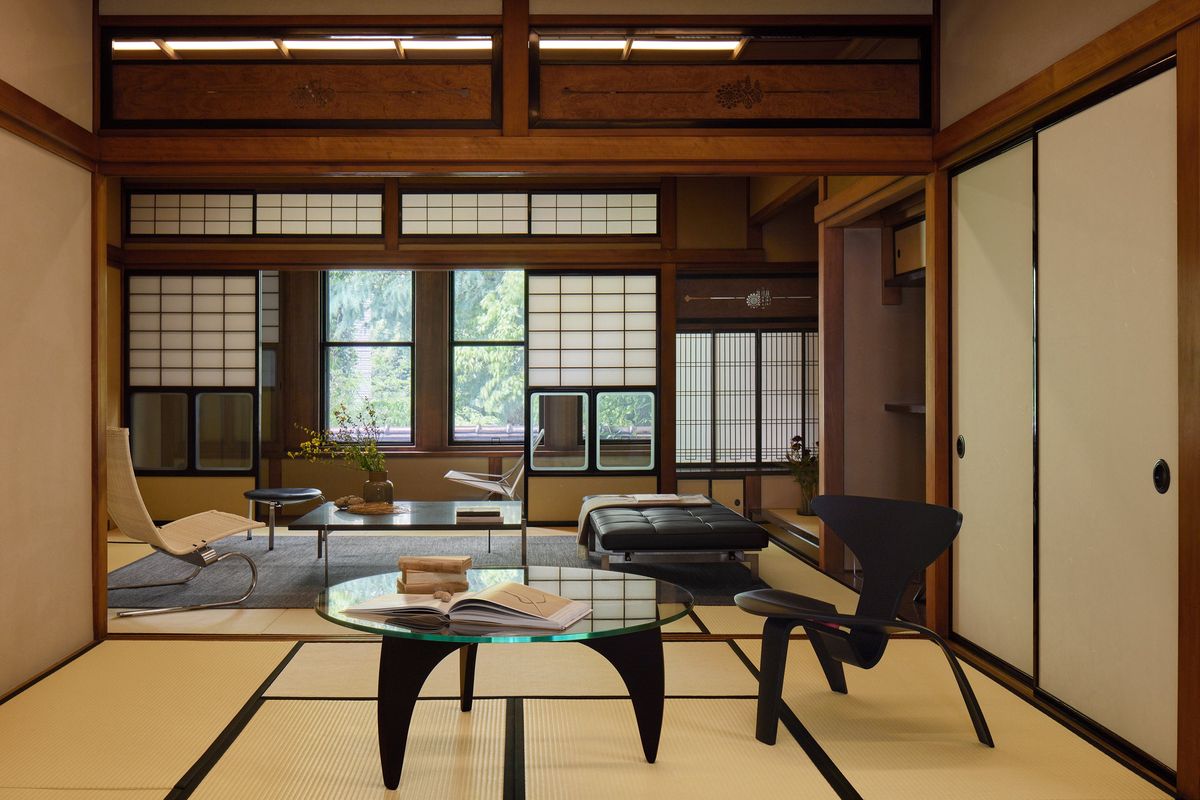
The second edition of Craft x Tech runs at Kudan House, the restored 1927 modernist residence in Tokyo’s Chiyoda ward, from 30 May to 2 June 2026, and then travels to London Design Festival from 12 to 20 September 2026. The pairing logic is one-to-one. Philippe Malouin, Bethan Laura Wood, David Caon, Atang Tshikare, Eugene Kangawa and Lanzavecchia + Wai have each been matched to a single Tokai-region craft: Mino-yaki ceramics, Mino washi paper, Arimatsu-Narumi shibori dyeing, Owari shippo cloisonné enamel, Seto sometsuke porcelain, and Iga kumihimo braiding. The brief is a single object per pair, made in the workshop, exhibited in Tokyo and again in London. A symposium titled “Craft as a Response” runs in parallel at the University of Tokyo.
The choice of designers is telling. Malouin (Canadian-British, London studio since 2008) has spent his catalogue work at Established & Sons, Zanotta, Hem and Flos refining a tactile minimalism that should sit cleanly with Mino-yaki’s restrained celadons. Wood (British, b. 1983, RCA 2007) brings the opposite register - the Moroso, Bitossi, Valextra, cc-tapis, Hermès and Rosenthal portfolio reads as a polychrome maximalism that will test how far Arimatsu-Narumi shibori can be pushed beyond indigo. Caon (Australian) and Atang Tshikare (South African, Cape Town studio Zabalazaa) widen the geography deliberately; Eugene Kangawa, Tokyo-based founder of The Wonder Room, is the in-house bridge; Lanzavecchia + Wai (Italy/Singapore, since 2010) supply the cross-Pacific axis that the programme’s name promises.
Yoshimoto, an alumnus of RCAST at the University of Tokyo, and Didero, the Italian curator, launched Craft x Tech in 2023 with a Tohoku-region first edition that exhibited at the V&A during London Design Festival 2023. The 2026 Tokai edition moves the workshop pool 600 kilometres south-west - from Iwate, Miyagi and the Tohoku coast to Aichi, Gifu and Mie - and trades the V&A for Kudan House on the home leg. The economic structure is the same: the workshops absorb the production cost in exchange for a designer-led prototype that becomes part of their catalogue, the designers absorb the time in exchange for a documented residency, and the curators absorb the brief-writing. No house brand sits between them.
Fragment x B&O: Tokyo streetwear meets Struer audio
Hiroshi Fujiwara (b. 1964, Ise) and the Tokyo studio he founded in 2004, Fragment Design, are not a craft house in the Hosoo or Karimoku sense - they are a graphic-and-curation operation whose double-lightning-bolt logo has by now stamped Nike, Louis Vuitton, Moncler and most of the streetwear shelf. The Bang & Olufsen collaboration, announced for a 20 May 2026 pop-up at Isetan Shinjuku and a global release on 3 June 2026, matters for a different reason: it is the cleanest current example of a Tokyo designer commissioning a European industrial-craft house rather than the other way round.
The product list is four objects. The Beoplay H100 over-ear headphone at £1,700. The Beosound A1 third-generation portable speaker at £350. The Beosound Shape wall system at £5,300. And, for Japan only, a Beosystem 9000c integrated home audio piece from £53,000. Fujiwara’s own quotation explains the choice: “building my home around Bang & Olufsen’s integrated home sound system in the 1990s, the brand has been my first choice for audio.” B&O, founded in Struer, Denmark in 1925, supplies the metalwork, the speaker engineering and the century of cabinet craft. Fragment supplies the lightning-bolt-marked finish, the limited-edition framing and the Isetan Shinjuku launch window. The pop-up runs against the same Tokyo design-week calendar that Craft x Tech occupies a week later.
This is the streetwear-meets-Danish-audio bookend the brief promises, but it also makes the 2018-2026 inventory legible: the commission economy now runs both directions. A Tokai shibori workshop briefs Bethan Laura Wood at Kudan House on 30 May; a Tokyo streetwear studio briefs Bang & Olufsen at Isetan Shinjuku on 20 May. The same ten-day window in the same city.
Japanese craft houses, 2018-2026: a comparison
The five Japanese houses that have done the most visible foreign-designer commission work over the last eight years sit at very different points on the age and scale curve. Hosoo is 337 years old and operates from a single Kyoto workshop. Karimoku turns 86 in 2026 and runs an Aichi-prefecture factory complex. Koyori is barely five. Noritake sits between them at 122. Karimoku New Standard is a 2009 sub-brand. The commission logic at each is different.
| House | Founded | Location | Signature material / technique | Named foreign-designer commissions (2018-2026) |
|---|---|---|---|---|
| Hosoo | 1688 | Kyoto | Nishijin obi weaving, wide-loom architectural textile | Long-running architecture and interior brief pool; 12th-generation CEO Masataka Hosoo leads the foreign-designer programme |
| Karimoku | 1940 | Aichi | Solid-wood furniture manufacturing | Karimoku Case x Norm Architects (Jonas Bjerre-Poulsen, Kasper Rønn), ongoing |
| Karimoku New Standard | 2009 (sub-brand) | Aichi | Hardwood furniture, designer-led | Big-Game; Sylvain Willenz; Scholten & Baijings (launch trio, 2009 onward) |
| Noritake | 1904 | Nagoya | Porcelain tableware | Recurring designer collaborations on tableware |
| Koyori | 2021 | Tokyo | Designer-led cabinetmaking, Japanese workshops | Debut collection: Vincent Van Duysen, Ronan and Erwan Bouroullec, GamFratesi (2021) |
Read this table as a shape, not a list. The two Aichi houses - Karimoku and Karimoku New Standard - have built a permanent designer-collaboration channel that runs in parallel with the catalogue. The two Kyoto-and-Nagoya houses - Hosoo and Noritake - treat foreign-designer commissions as supplementary to their own design language. Koyori, the youngest, is the only one whose entire founding proposition is the foreign-designer commission: there is no pre-existing catalogue to supplement.
The Karimoku archipelago: New Standard, Case and the Norm Architects pipeline
Karimoku’s structure deserves its own paragraph. The parent company, founded in Aichi in 1940, is a solid-wood furniture manufacturer at industrial scale. Karimoku New Standard, launched in 2009, is the explicitly designer-led sub-brand: Big-Game (Augustin Scott de Martinville, Elric Petit, Grégoire Jeanmonod), the Belgian designer Sylvain Willenz, and the Dutch studio Scholten & Baijings supplied the founding catalogue. Karimoku Case, the third channel, is the long-running collaboration with the Copenhagen studio Norm Architects, whose principals Jonas Bjerre-Poulsen and Kasper Rønn have built an ongoing object-and-interior programme that runs through Audo Copenhagen’s Tribeca showroom and back to Aichi.
The Karimoku model is the answer to a question the Hosoo model leaves open: how do you industrialise a foreign-designer commission programme without diluting it. The answer is three brand layers, one factory. Karimoku for the domestic catalogue. Karimoku New Standard for the European designer pool. Karimoku Case for the long-form Scandinavian collaboration. The Norm Architects relationship has run long enough that it now produces interiors as well as objects, which is the bridge that takes Karimoku from furniture brand to architectural-craft house. The Aichi factory absorbs the prototyping cost in all three cases.
Hosoo, Noritake, Koyori: the Kyoto-Nagoya-Tokyo triangle
Hosoo’s Kyoto workshop, founded in 1688 and now run by the 12th-generation Masataka Hosoo, sits at the opposite scale from Karimoku. The product is Nishijin obi-derived architectural textile - wide-loom weaving developed originally for kimono and adapted, over the last fifteen years, into wall covering, upholstery and installation material. The foreign-designer programme is built around the wide loom itself: the technical demand is to weave at a scale the kimono tradition never required, which means each commissioned designer is effectively co-developing the loom alongside the cloth. This is why Hosoo’s foreign-designer briefs travel - the loom does not, but the wall-covering panel does.
Noritake, founded in Nagoya in 1904, is the largest of the five by sales and the most catalogue-driven. Its foreign-designer programme has been less foregrounded but is structurally similar to Karimoku New Standard’s: porcelain tableware briefed to non-Japanese studios and folded back into the seasonal range.
Koyori, the youngest at five years old, is the cleanest case. Founded in Tokyo in 2021, its debut collection paired three European studios - Vincent Van Duysen, Ronan and Erwan Bouroullec, and the Copenhagen-and-Rome duo GamFratesi - with Japanese cabinetmakers. There is no pre-existing Koyori catalogue. The commission is the catalogue. This is the structural inversion the rest of the inventory has been working toward: at Hosoo the foreign-designer commission supplements the loom, at Karimoku New Standard it parallels the catalogue, at Koyori it is the brand.
Adjacent house adoptions: Hermès, Prada, Cassina, Loewe
The second axis is the European house that has adopted Japanese craft as a vocabulary rather than commissioning a Japanese workshop directly. Four examples in 2026 alone.
Hermès Maison’s Les Mains de la Maison, curated by Charlotte Macaux Perelman and Alexis Fabry, runs at La Pelota in Milan from 22 to 28 April 2026 as the Hermès Milan Design Week presentation. Twelve pieces. The Japanese-craft register sits inside a wider Hermès argument about hand-work that includes leather, wood and metal as equally craft-led. Hermès does not commission Japanese workshops here; it stages the Hermès ateliers in a frame that reads, deliberately, as Japanese in its restraint.
Prada’s Chawan Cabinet, by Theaster Gates, sits in Prada Home at Via Montenapoleone 6 during Milan Design Week 2026. The cabinet holds tea bowls by the Japanese ceramicists Taira Kuroki, Yuichi Hirano, Shion Tabata and Koichi Ohara - four named makers, not a pool. This is the cleanest adjacent example: a European fashion house commissioning a Chicago artist to build a piece of furniture that holds Japanese craft objects, all of it under a Prada Home roof. The commission is two-step rather than direct.
Cassina Sengu, the 2020 tatami-modular sofa by Patricia Urquiola, is the most assimilated example. The sofa borrows the tatami module - the proportional grid that has organised Japanese domestic space for centuries - and folds it into Cassina’s catalogue without invoking a Japanese workshop at all. The vocabulary is Japanese; the manufacturing is Italian; the designer is Spanish. This is the case where the Japanese-craft reference has been entirely metabolised by the European house, with no commission flow back to Japan. Cassina’s I Maestri programme - the long-running reissue series of mid-century-master pieces - sits structurally adjacent: a catalogue-of-references rather than a catalogue-of-commissions.
Loewe Craft Prize 2026, now in its eighth edition, is the fourth case. The prize is a craft-as-art frame rather than a workshop-commission, and the 2026 cycle’s recognition of Korean ceramicist Jongjin Park sits in a wider Loewe pattern of treating East Asian ceramic and textile practice as the prize’s center of gravity. The commission is monetary and reputational rather than productive.
Taken together, the four adjacent examples mark the difference clearly. Hermès stages craft as restraint. Prada commissions craft as a held object. Cassina absorbs craft as a vocabulary. Loewe recognises craft as an autonomous practice. None of the four commissions a Japanese workshop in the way Craft x Tech Tokai does.
The 2018-2026 commission inventory, condensed
Pulled together, the verifiable foreign-designer commissions of Japanese craft houses between 2018 and 2026 cluster around three nodes. The Karimoku archipelago - Karimoku, Karimoku New Standard, Karimoku Case - has the deepest catalogue, anchored on the ongoing Norm Architects relationship and the Big-Game / Willenz / Scholten & Baijings founding trio at Karimoku New Standard. Hosoo’s loom programme runs in parallel, with the 12th-generation Masataka Hosoo overseeing a pool of architectural-textile briefs that travel out of Kyoto in panel form. Koyori, founded in 2021, is the new node: Van Duysen, Bouroullec and GamFratesi as a debut collection rather than a supplementary range.
Craft x Tech Tokai 2026 adds a fourth node by inverting the brand layer entirely. The workshops - Mino-yaki, Mino washi, Arimatsu-Narumi shibori, Owari shippo, Seto sometsuke, Iga kumihimo - are the named credits. The designers - Malouin, Wood, Caon, Tshikare, Kangawa, Lanzavecchia + Wai - are paired to them one-to-one, not pooled under a Karimoku-style sub-brand or a Koyori-style debut collection. There is no house name above the workshop. Kudan House hosts; the V&A’s London Design Festival successor at the September stop frames; Yoshimoto and Didero curate. The Japanese craft house in this fourth model is the village, not the brand.
Why the May 2026 window matters
Two events, ten days apart, in the same city. Fragment x Bang & Olufsen at Isetan Shinjuku on 20 May. Craft x Tech Tokai at Kudan House from 30 May to 2 June. They share no organisers, no designers and no product category, but they share a structural argument: that the foreign-designer commission, in 2026, is now bilateral. Fujiwara commissions a Danish industrial-craft house; Mino-yaki’s Tokai workshop commissions a London-based product designer. Both pop-ups close before Milan Design Week’s after-echo has fully cleared - Hermès at La Pelota wrapped 28 April, Prada’s Chawan Cabinet remains installed - which is why the spring 2026 calendar is the cleanest moment in the last eight years to read the form whole.
The Japanese craft house in 2026 has stopped being a supplier and started being a commissioner. The catalogue has been replaced by the brief. The foreign designer is now the variable. From Hosoo’s 12th-generation Kyoto looms to Koyori’s 2021 Tokyo debut, and now to Craft x Tech Tokai’s six pairs at Kudan House on 30 May, the inventory is no longer of objects. It is of relationships.