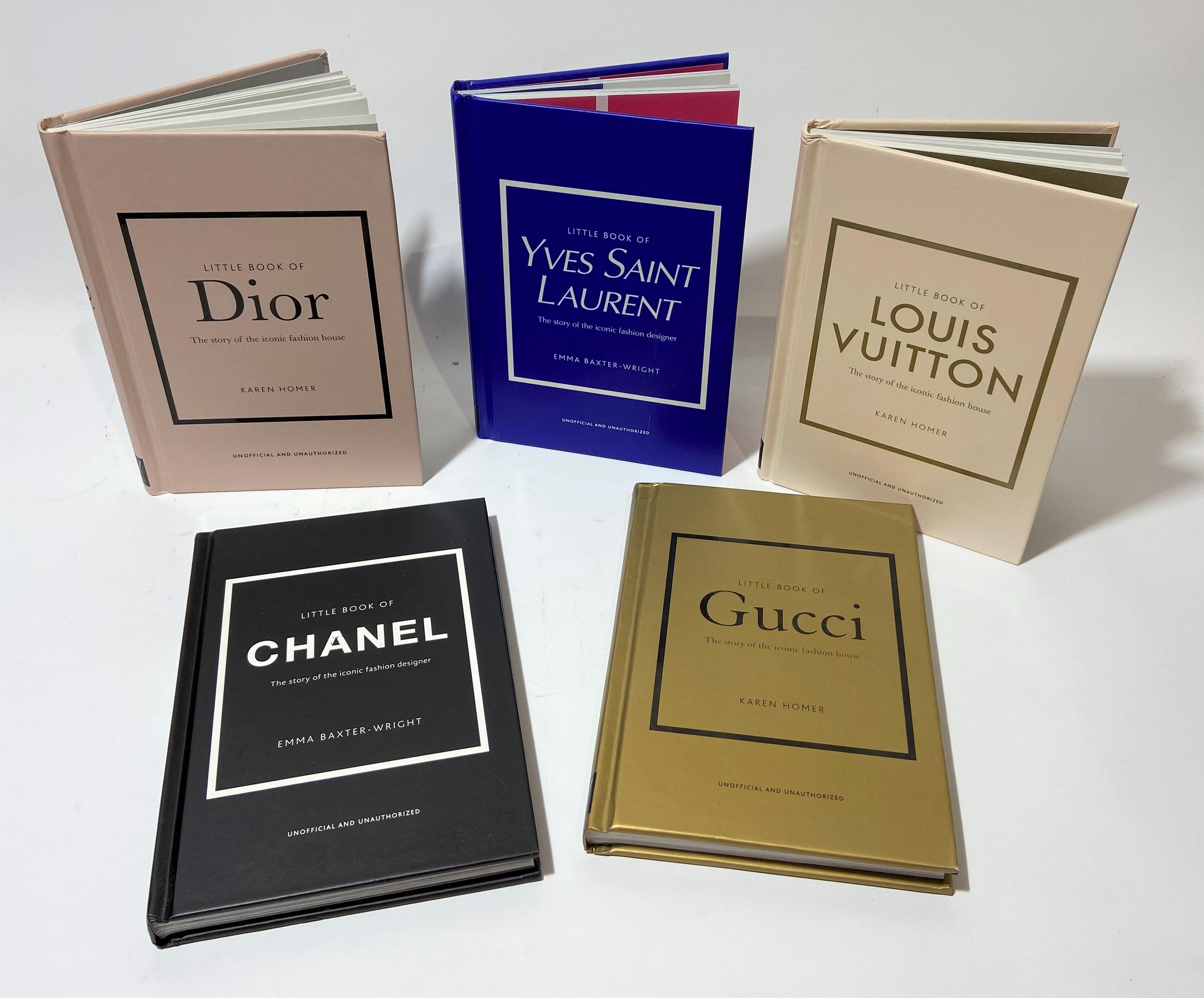
Of the eight luxury houses with a dedicated publishing imprint in 2026, only one — Louis Vuitton — has run one continuously for more than two decades, starting with a seven-volume City Guides boxed set in a handmade leather sleeve in 1998. Every other operation on the map below — Hermès Éditeur, Chanel via Steidl, Dior via Assouline and Rizzoli, Prada, Bottega Veneta, Saint Laurent Rive Droite, Miu Miu, Burberry and now Coach — is younger, in most cases by fifteen years or more. The story of luxury publishing imprints in 2026 is how an industry that spent the 2010s collapsing into Instagram squares spent the 2020s rebuilding itself around printed objects: monographs, magazines, literary salons, micro-books on bag charms.
The shift is not nostalgic. Robert Williams’ “How Books Became Fashion’s Favourite Flex,” published in BoF on 1 June 2026, framed the trend as a knowledge-and-taste signal in an age of AI-generated visual slop, anchored on Coach’s Spring 2026 bag charms and Jonathan Anderson’s Dior SS26 Book Totes. What follows is a working map of every luxury house with a publishing operation as of 2026 — when each one started, what it produces, and what the printed object is supposed to do for the brand that pays for it.
The eight-house map: luxury publishing imprints, 1998–2026
Before getting into the individual programmes, the structure of the field is easier to see in a single table. Each row is a different way of using paper to extend a house’s surface area.
| House | Imprint or programme | Launched | Format | Signature title |
|---|---|---|---|---|
| Louis Vuitton | City Guides; Travel Books; Fashion Eye | 1998; 2013; 2016 | Boxed guidebooks; illustrated travel monographs; photo monographs | Travel Book Easter Island by Daniel Arsham (2013) |
| Hermès | Le Monde d’Hermès; Hermès Éditeur | 1973/1975; 2005 | Biannual house magazine; numbered art editions | Josef Albers six works on silk, 200 units each |
| Chanel | Steidl partnership under Karl Lagerfeld | 2012 | Photo monographs documenting collections and sets | The Little Black Jacket (2012) |
| Dior | Assouline 70th anniversary; Rizzoli 75th anniversary | 2017; 2022 | Multi-volume creative-director monographs; single-volume house history | The seven-volume Dior set curated by Olivier Saillard |
| Prada | Fondazione Prada catalogues; Ten Protagonists | 1993; 2025 | Art and architecture books; literary fiction commissions | Ten Protagonists by Ottessa Moshfegh (Spring 2025) |
| Bottega Veneta | Issue digital quarterly; Butt Magazine relaunch | 2021; 2023 | Quarterly digital magazine; print queer quarterly | Issue under Daniel Lee (March 2021) |
| Saint Laurent | Rive Droite Éditions; Babylone bookstore | 2019; 2024 | Photographer monographs; out-of-print book and vinyl shop | Daidō Moriyama Rive Droite edition |
| Burberry | Assouline house monograph | 2023 | Single-volume illustrated history | Burberry by Assouline (200 illustrations) |
| Miu Miu | Literary Club; Summer Reads | April 2024; June 2024 | Literary salons and newsstand giveaways | Forbidden Notebook by Alba de Céspedes |
| Coach | Explore Your Story with Penguin Random House | 7 March 2026 | Readable micro-book bag charms | Sense and Sensibility bag charm (USD 95) |
| Dior (men’s) | SS26 Book Totes with SP Books | 2 January 2026 | Embroidered tote bags reproducing facsimile covers | Madame Bovary Book Tote |
Ten programmes across nine houses, spanning twenty-eight years. Three patterns are visible. Only Louis Vuitton and Hermès predate 2010; everything else is a 2010s or 2020s invention, and seven of the ten launched in or after 2019. The dominant format is not the magazine but the book — a long-shelf-life object that can sit in a vitrine, a hotel room, or a feed. And the youngest entrants (Coach, Dior men’s, Miu Miu) treat books less as supporting matter and more as the product itself.
Louis Vuitton: the 28-year publishing arc that started with City Guides
Louis Vuitton is the only luxury house to have run a publishing programme continuously since the 1990s. The City Guides launched in 1998 as a seven-volume boxed set inside a handmade leather sleeve — a publishing object that doubled as a small piece of leather goods, which set the template for everything that followed.
Fifteen years later, in 2013, the house added the Travel Book series — illustrated travel monographs commissioned from a single artist per city. The founding four titles paired Daniel Arsham (Easter Island), Jean-Philippe Delhomme (New York), Natsko Seki (London) and Chéri Samba (Paris), priced EUR 45 at launch. Arsham’s Easter Island remains the most-cited single volume in the series, and it is the title that anchors the line on most house bookshelves a decade later.
In 2016, Vuitton extended the programme again with Fashion Eye, a photography-monograph series keyed to a city or region. The five founding titles — New York by Saul Leiter, Berlin by Peter Lindbergh, Monte Carlo by Helmut Newton, Morocco by Vincent van de Wijngaard and British Columbia by Sølve Sundsbø — moved the imprint into territory that Steidl and Aperture had been working for years.
Three series, three formats, one house. The Vuitton programme is the only one on the 2026 map operating simultaneously across guidebooks, illustrated travel and photo monographs, and the only one whose backlist is large enough to fill a small bookstore by itself.
Hermès Éditeur: limited art as a 200-unit ledger
Hermès’ relationship to print starts earlier than anyone’s. Le Monde d’Hermès, the house’s biannual magazine, was first published as Die Welt von Hermès in German in 1973 and in French in 1975. Today it circulates 600,000 copies per issue in eleven languages — a print run larger than most consumer magazines now operate, distributed largely to clients rather than newsstands.
In 2005, the house added Hermès Éditeur, founded by artistic director Pierre-Alexis Dumas as a programme of numbered art editions printed on silk. The first edition gave six Josef Albers works the Hermès silk-print treatment in editions of 200 units each — a deliberately small ledger that treated the scarf as a vehicle for limited-edition printmaking rather than a seasonal accessory. The second edition, Daniel Buren’s Photos-souvenirs au carré, produced 365 unique scarves. The third, Hiroshi Sugimoto’s Couleurs de l’ombre, applied the same logic to a longer body of photographic work.
What separates Hermès Éditeur from every other house programme is that the printed object is the artwork, not the documentation of one. The Albers and Buren editions are catalogued by collectors and museums the way a numbered etching is catalogued. The 200-unit ledger places the Hermès imprint in a different register than any other house on this map, and the programme is now twenty-one years old.
Chanel × Steidl: Karl Lagerfeld’s printed grammar
Chanel does not run an imprint of its own. It runs a partnership, and that partnership was Karl Lagerfeld’s. Steidl, the Göttingen publisher long known for its photobook craft, produced three Chanel-adjacent Lagerfeld titles between 2012 and 2015 that together form the closest thing the house has to a publishing line.
The Little Black Jacket (2012), co-edited with Carine Roitfeld, photographed more than a hundred figures in variations on the Chanel jacket and toured as both book and exhibition. Chanel Art (2014) documented the Grand Palais Spring/Summer 2014 set — a fictional museum staged inside the runway space — as a printed object. Chanel Shopping Center (2015) did the same for the Fall/Winter 2014 supermarket set.
The three titles work as a printed grammar of Lagerfeld’s late Chanel: jacket as portrait series, set as museum, supermarket as gallery. The house has not added to the line since Lagerfeld’s death; the partnership is effectively closed at three. The titles remain the standard reference for how Chanel-era set design functioned as a publishing strategy.
Dior: the Assouline seven and the Rizzoli single
Dior has most consistently outsourced its publishing to external imprints, and 2017 produced its most ambitious single project. For the house’s 70th anniversary, Assouline published a seven-volume monograph series curated by Palais Galliera director Olivier Saillard. Each volume covered a single creative director — Christian Dior, Yves Saint Laurent, Marc Bohan, Gianfranco Ferré, John Galliano, Raf Simons, and Maria Grazia Chiuri — with photography by Laziz Hamani. The set remains the most complete published account of the house’s creative-director history.
Five years later, in 2022, Rizzoli published Dior: The Legendary 30, Avenue Montaigne for the 75th anniversary — a single-volume history pitched at the address rather than the line of designers. The two anniversary publications now sit side by side on the official Dior reference shelf: Assouline’s seven volumes for the designers, Rizzoli’s single volume for the building.
Dior’s publishing strategy in 2026 has shifted from books-about-the-house to books-as-product. Jonathan Anderson, now creative director of Dior, used the Spring/Summer 2026 men’s collection — launched worldwide on 2 January 2026 — to embroider Book Totes with the covers of SP Books facsimile editions: Madame Bovary, Les Liaisons Dangereuses, Dracula, Ulysses, In Cold Blood, Les Fleurs du Mal, and Bonjour Tristesse. See the Dior SS26 Book Tote coverage and the wider Dior store-architects review. The Tote is a Dior product; it is also a marketing object for SP Books, until 2026 known to a small audience of facsimile collectors.
Prada and Bottega: the magazine as anti-Instagram
Two houses in the 2020s have used print to step out of the Instagram economy without leaving the conversation. The strategies are different; the intent is similar.
Fondazione Prada, founded in 1993 by Miuccia Prada and Patrizio Bertelli, has run an in-house publishing programme of exhibition catalogues, artist monographs and artists’ books since the 1990s, distributed in North America by D.A.P. The catalogues are not house marketing; they are scholarly objects produced around exhibitions, and they sit inside the Prada universe as a separate cultural institution with its own publishing voice.
The Prada brand itself crossed into literary publishing more directly in 2025. Ten Protagonists, presented in Prada stores in Tokyo, Milan, Paris and London from February 2025, gathered ten short stories by Ottessa Moshfegh, each starring Carey Mulligan, into a Prada-branded edition that was distributed as a Spring 2025 store object. Moshfegh’s involvement gave the project literary weight on its own terms. The store object behaved like a magazine launch, but the object was a short-story collection.
Bottega Veneta’s intervention was sharper. In January 2021, the house deleted its global Instagram accounts under then-creative-director Daniel Lee. Two months later, in March 2021, it launched Issue — a digital quarterly that effectively replaced the Instagram feed with a downloadable magazine. Lee oversaw three Issue editions before his November 2021 departure, and the project was closed in its original form.
Under Matthieu Blazy, the house took a different print route in 2023, funding the relaunch of Butt Magazine — the Dutch queer print quarterly originally published from 2001 to 2011 — and staging a three-day Palais de Tokyo installation in March 2023 to mark its return. Bottega’s print strategy in 2026 is to underwrite a magazine it does not own, on the premise that independence is part of the appeal. Issue used the magazine to substitute for Instagram; the Butt relaunch uses the magazine to do what no Instagram brand handle could do — speak from inside a community Bottega is not part of.
Saint Laurent Rive Droite: editions as physical retail
Saint Laurent Rive Droite Éditions launched in 2019 alongside the Rue Saint-Honoré store that took over the former Colette space. Under Anthony Vaccarello, the imprint has commissioned monographs with Jeanloup Sieff, Cai Guo-Qiang, Bruno Roels, Daidō Moriyama and Henrik Purienne, the last of these published as Éditions Purienne — an inside-the-imprint imprint that gives the photographer his own editorial identity within Saint Laurent’s broader publishing line. Henrik Purienne’s arrangement is unusual: rather than commissioning a single monograph, Saint Laurent gave him a sub-label.
The point of Rive Droite Éditions has always been that the books are physical-retail objects first. The store is an art-and-objects space, the books sit on the shelves, and the publishing programme is what gives the store its non-clothing inventory. Without the books, Rive Droite would be a regular Saint Laurent boutique with a few candles. With the books, it functions as a small art-bookstore-with-a-fashion-house-attached.
In 2024, Vaccarello extended the logic with Saint Laurent Babylone — a Paris bookstore and record shop on Rue Babylone that stocks out-of-print art books, magazines and vinyl. Babylone does not produce its own editions; it curates other people’s. The Saint Laurent print strategy in 2026 is therefore a two-store arrangement: Rive Droite produces books, Babylone sells other people’s. Both stores treat the printed object as the merchandising hook that gets a customer through the door of a fashion store that does not lead with clothes.
Burberry’s first monograph, 2023
Burberry is the most recent of the older British houses to formalise a publishing presence. In 2023, the house published its first monograph with Assouline — a single-volume history running from Thomas Burberry’s 1856 founding through the Christopher Bailey and Riccardo Tisci tenures, illustrated with 200 photographs and references.
Burberry waited 167 years to publish a house monograph, then went to Assouline rather than building anything internal. The choice mirrors Dior’s: when a heritage house wants a definitive printed object, it goes to Assouline or Rizzoli rather than starting its own line. Building one in-house requires editors, designers, distribution and several years of investment before any title can claim shelf authority.
Miu Miu Literary Club: the newsstand as runway
The Miu Miu Literary Club launched in April 2024 in Milan with an edition titled “Writing Life,” spotlighting Italian writers Sibilla Aleramo and Alba de Céspedes. The format was a one-off salon — readings, conversations, distributed copies — packaged as a Miu Miu event but built around a writer rather than a designer. A second Milan edition titled “A Woman’s Education” ran on 9–10 April 2025 during Milan Design Week, adding Simone de Beauvoir and Fumiko Enchi to the rota. A Shanghai edition on 21 November 2025 added Eileen Chang.
The Literary Club’s most visible side project ran on 7–9 June 2024 as Miu Miu Summer Reads, which took over newsstands in Milan, Paris, London, New York, Seoul, Shanghai, Hong Kong and Tokyo. The house gifted copies of three titles — Forbidden Notebook by de Céspedes, A Woman by Aleramo, and Persuasion by Jane Austen — to anyone who showed up. Three-day pop-up newsstands, in eight cities, gave copies of mid-century feminist novels. The activation made a runway out of the newsstand.
The Literary Club is the only house programme on this map that exclusively promotes other publishers’ books rather than producing its own. Miu Miu does not run an imprint; it runs a reading list. The economics — buying out a print run, organising distribution, paying for the newsstand takeovers — are not trivial, but the point of the activation is that the brand association sits on books the brand did not produce. The reading list is the product; the salon is the runway.
Coach × Penguin: books shrunk into bag charms
Coach’s Spring 2026 Explore Your Story campaign, launched on 7 March 2026 in partnership with Penguin Random House, is the most literal answer to the BoF observation that books have become fashion’s favourite flex. The collaboration produced twelve readable micro-book bag charms at USD 95 each, including Jane Austen’s Sense and Sensibility, Maya Angelou’s I Know Why the Caged Bird Sings, and Jandy Nelson’s I’ll Give You the Sun, alongside nine other Penguin titles. The charms are not props. They are bound, printed, and legible at charm scale.
The strategic move is what to notice. Coach is the first mainstream luxury house to put a publisher’s name on the product itself, not on the marketing copy. Penguin Random House gets twelve titles in front of every Coach customer who buys one of the charms, and Coach gets the cultural cover of being the bag-with-the-Maya-Angelou-charm rather than the bag-with-the-monogram-charm. The Penguin partnership is not editorial; it’s licensing. But the licensing is structured so that the printed object — the readable mini-book — is the bag charm, and the bag charm is the printed object. The two products fuse.
At USD 95, the charm sits at a price point that is high for a bag charm and low for a Penguin licensing deal. The first run sold quickly, and the format is the most plausible template for what comes next across the rest of the industry. If a Coach customer will pay USD 95 for a readable Maya Angelou bag charm, a Coach customer will pay USD 200 for the next one.
Dior SS26: Jonathan Anderson’s literary Book Tote
Jonathan Anderson’s Spring/Summer 2026 Dior men’s collection, which launched on 2 January 2026, embroidered the existing Dior Book Tote silhouette with covers from SP Books facsimile editions of Madame Bovary, Les Liaisons Dangereuses, Dracula, Ulysses, In Cold Blood, Les Fleurs du Mal, and Bonjour Tristesse. The Book Tote was already named after the bookshelf; Anderson made it the bookshelf. Each tote reproduces the exact SP Books cover — typography, ornament, frame — at tote scale, so the carrier visibly identifies which facsimile they paid for.
The collaboration is not a one-off. SP Books has been publishing the facsimile-manuscript format since the 2010s, but the imprint was a small-collector concern until the Dior commission. The Tote is a Dior product first, but the embroidery is also a marketing object for SP Books — every tote carried in public is a printed reference to a single facsimile edition. Anderson’s SS26 men’s collection sits in the same publishing-as-fashion register as the Coach charms, but the direction of the licensing is reversed: Coach licenses Penguin’s catalogue and prints small books; Dior licenses SP Books’ covers and embroiders them on totes. The same trend produces two opposite product formats.
The 2026 stock-take
The eight-house map shows a single industry pattern. Print is no longer the supporting matter of a fashion house — the lookbook handed out at the show, the catalogue printed for stylists. Print is the product. The houses with the longest publishing histories (Louis Vuitton, Hermès) treat their imprints as decades-long programmes with their own backlists and their own collectors. The houses that came later (Chanel, Dior, Burberry) use external imprints to publish singular reference objects on house anniversaries. The houses that came latest (Prada, Bottega, Saint Laurent, Miu Miu, Coach, Dior men’s) have turned the printed object — the magazine, the literary salon, the bag charm, the facsimile-cover tote — into the primary site of brand expression.
Williams’ BoF piece on 1 June 2026 was right about the framing. In a year when every fashion-adjacent feed is being flooded with AI-generated images that look like images of nothing, the printed book has become the screen-test for taste, because a book is the one object that AI cannot generate cheaply at scale. Buying a Coach Maya Angelou charm is buying a position; carrying a Dior Madame Bovary tote is buying a position; subscribing to Issue or attending the Miu Miu Literary Club is buying a position. The luxury publishing imprints of 2026 are not the marketing department’s afterthought. They are the front of the store.