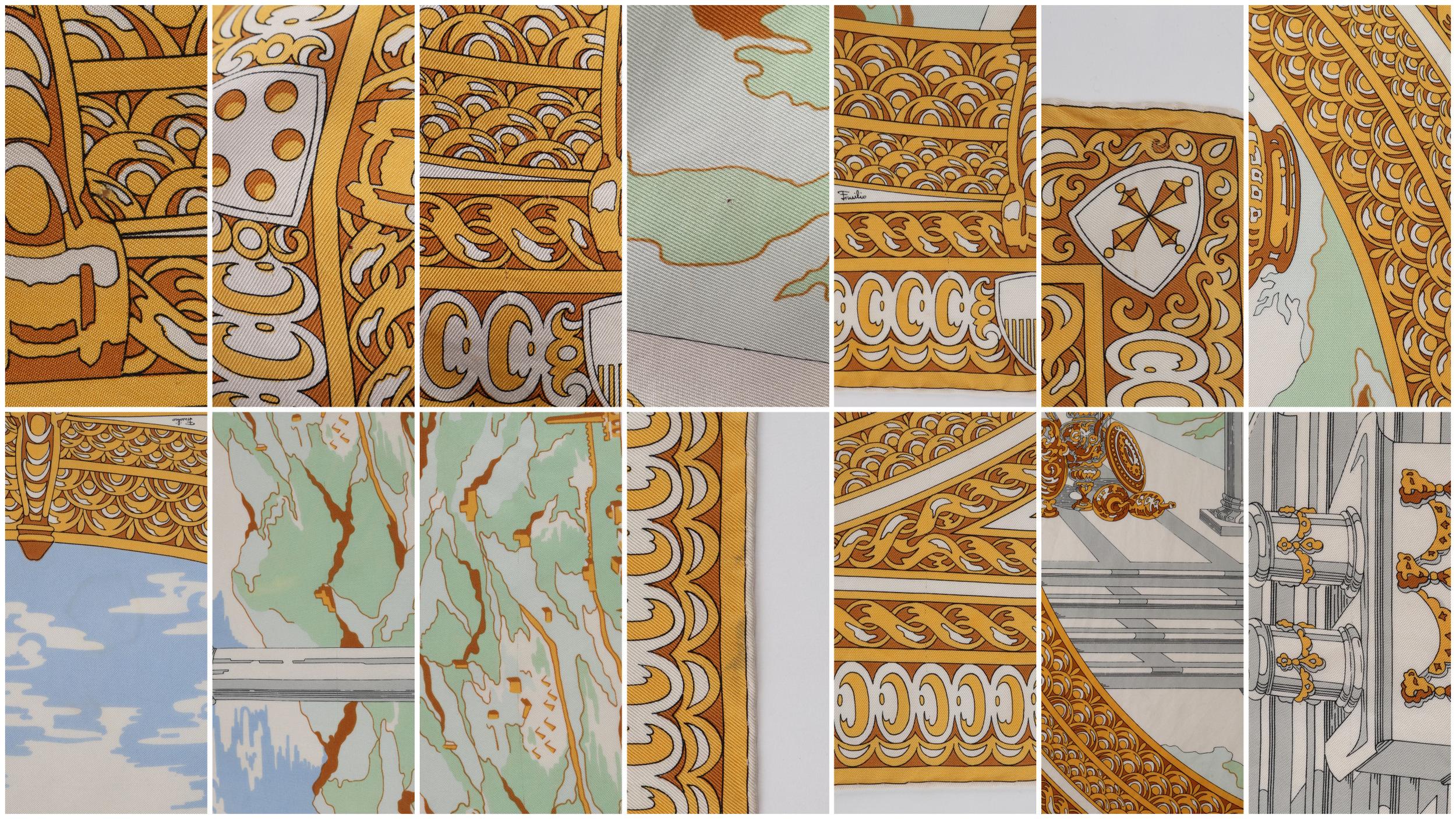
When LVMH put Camille Miceli into the artistic director seat at Pucci on 1 September 2021, three months after taking the house to 100% ownership, it ignored the conventional luxury wisdom about reviving a small brand: the appointment was a twenty-four-year accessories insider — Chanel PR, Louis Vuitton costume jewellery, Dior fine jewellery, Vuitton accessories — for a Florentine house no celebrity creative director had managed to fix in two decades. That single hire is the cleanest single-line statement of the lvmh small brand revivals playbook between 2020 and 2026: at the level of Pucci, Loro Piana, Nina Ricci, Berluti and the long Fendi-second-line, the group does not buy outside celebrity; it promotes from within, often from the accessories or operating side, on the bet that someone who already knows the machine will outrun anyone who has to learn it.
The bigger houses get the famous names. Jonathan Anderson at Dior, Pharrell Williams at Vuitton menswear, Sarah Burton at Givenchy — these are the moves the trade press writes about, and they fit the older, twentieth-century model of a head designer hired to author a “vision”. One tier down, at the small and mid-size houses where the upside is real but the budgets do not justify a couture-led relaunch, LVMH has been quietly running a different procedure. Pucci got Miceli. Loro Piana got Damien Bertrand and then Frédéric Arnault. Marc Jacobs, the small house where the playbook did not work, got sold. The five years 2020–2026 are the cleanest evidence we have that the group treats its smaller houses as operational problems first and creative-direction problems second.
Pucci and Camille Miceli, since 2021
Pucci was founded in Florence in 1947 by Emilio Pucci (1914–1992), at Palazzo Pucci, where the house remains seated. LVMH took a 67% stake in 2000 and lived inside the brand for two decades without ever cracking it. The print archive — Mediterranean, geometric, postwar — was the most recognisable in Italian fashion, but the runway ready-to-wear that successive creative directors layered on top of it never built a coherent business. By the time LVMH bought out the family and took 100% ownership in June 2021, the question was no longer whether to bring in another runway-driven designer; it was whether to keep trying that model at all.
The answer arrived ten weeks later. On 1 September 2021 LVMH named Camille Miceli artistic director of Pucci — the first woman to lead the house. Miceli’s CV is a near-perfect map of the LVMH accessories economy: Chanel PR from 1989, Louis Vuitton PR and costume jewellery from 1997 under Marc Jacobs, Christian Dior jewellery director from 2009, Louis Vuitton accessories creative director from 2014 to 2021. She had spent her career building product into the spaces where a brand’s identity actually transacts — the bag, the bracelet, the silk square — and not on the runway. That match-to-house was the point of the appointment.
Miceli’s first eighteen months reset the brand’s premise. The Capri shows of 2022 and 2023 — Emilio Pucci had opened his first boutique in Capri in 1951 — and the St. Moritz winter outing operated on a “see now, buy now” model: Mediterranean resort wear and the printed silk twill scarf as the lead categories, not the runway dress. The fashion press treated this as a softening of ambition; it was the opposite. Pucci had been a print and resort house from day one and had been mis-positioned as a runway brand for decades. Miceli was simply reading the archive correctly. Laudomia Pucci, Emilio’s daughter and the house’s Image Director and archive custodian at Palazzo Pucci, has stayed in place across the transition — the rare instance in modern LVMH where founder-family continuity is treated as a strategic asset rather than a press-release line.
Loro Piana from Damien Bertrand to Frédéric Arnault
Loro Piana is the other anchor of the playbook, on the opposite end of the brand-condition spectrum. The Quarona-founded textile house (Pietro Loro Piana, 1924) is the group’s quiet-luxury archetype, specialist in cashmere, vicuña, baby cashmere, linen and merino. LVMH acquired 80% in July 2013 for $2.6 billion, took a further 5% in 2017, and left the Loro Piana family with the remaining 20% — the kind of structure the group reserves for houses it intends to leave alone. The brand celebrated its centenary in 2024 with no creative-director hire and no rebrand; the running of the maison was, and is, an operations problem.
Damien Bertrand took the CEO chair in 2021, the same year Miceli arrived at Pucci, and ran the house through the quiet-luxury inflection that pushed Loro Piana into a different revenue tier between 2021 and 2025. He positioned the maison as the “Master of Fibres,” kept the marketing tightly inside the brand’s pre-existing register, and built out the ready-to-wear and accessories businesses around the textile core. In June 2025 LVMH moved him: out of Loro Piana, into the role of Deputy CEO of Louis Vuitton alongside Pietro Beccari, joining the LVMH Executive Committee in January 2026. The internal logic of that promotion is the playbook in miniature — Bertrand had proven, at Loro Piana, that he could read a small house’s true commercial geometry without forcing a runway answer onto it.
His successor at Loro Piana, effective 10 June 2025, was Frédéric Arnault, Bernard Arnault’s second son (b. 1994), who had been TAG Heuer CEO from 2020 and CEO of LVMH Watches from January 2024. The Loro Piana appointment is the highest-signal succession in the group: a 31-year-old family executive sent to a 100-year-old textile maison at the moment quiet luxury became the most contested category in the industry. The choice fits the small-brand pattern — promote a known LVMH operator, not a designer — and adds the family-succession layer on top of it.
Marc Jacobs and the WHP–G-III exit, May 2026
The clearest evidence the playbook is a deliberate procedure and not an accident is what happened when it could not be made to work. LVMH had owned a majority stake in Marc Jacobs since 1997 — the same year Marc Jacobs the designer joined Louis Vuitton as the brand’s first creative director — and ran the house for nearly three decades. On 14 May 2026 the group agreed to sell it to WHP Global and G-III Apparel for $850 million, the two buyers taking equal $425 million stakes in a 50/50 joint venture, with closing expected by end of 2026. Marc Jacobs the person remains founder and creative director of the brand inside the new structure.
Read against Pucci and Loro Piana, the divestment is informative in two ways. First, it confirms that LVMH is willing to exit a small brand cleanly when the operational shape will not bend. Marc Jacobs the company had a creative director who was also the founder — the one configuration the small-brand playbook cannot intervene in, because the namesake is unmoved. Second, the sale was to a brand-management firm and a wholesale apparel licensee, not to another conglomerate. WHP–G-III is built to extend a name across categories and territories through licensing; that is a different business from the LVMH model of vertically-integrated maisons. The group, in effect, chose to stop running Marc Jacobs as a maison and to let it be run as a name.
For context against the group’s headline appointments: Nicolas Ghesquière, who replaced Marc Jacobs at Louis Vuitton womenswear on 4 November 2013 after fifteen years at Balenciaga (1997–2012), is still in that seat thirteen years on; Jonathan Anderson took creative direction of Dior in 2025; Kim Jones has led Fendi womenswear and couture since 2020 with Silvia Venturini Fendi continuing across accessories and menswear; Michael Rider arrived at Celine in 2024 after Hedi Slimane’s departure. Those are the runway-economy moves. The small-brand moves run on a different clock.
LVMH small brand creative-director and CEO appointments, 2020-2026
The comparison table below is the single clearest document of the playbook. Read by column, the pattern is almost monotonous: the new appointee is, in nearly every case, someone the group already employed in a different seat. The exception — the Marc Jacobs entry — is the divestment, not an appointment.
| Brand | Appointed | New CD/CEO | Prior Role | LVMH ownership |
|---|---|---|---|---|
| Pucci | 1 Sep 2021 | Camille Miceli (artistic director) | Louis Vuitton accessories CD 2014-2021 | 100% (from June 2021) |
| Loro Piana | 2021 | Damien Bertrand (CEO) | LVMH internal executive | ~85% (LVMH); 20% family |
| Fendi | 2020 | Kim Jones (womenswear/couture CD) | Dior Men CD 2018-2025 | 100% |
| Celine | 2024 | Michael Rider (creative director) | Polo Ralph Lauren design lead; ex-Celine under Philo | 100% |
| Givenchy | 2024-2025 | (see Givenchy creative direction 1952-2026) | — | 100% |
| Loro Piana | 10 Jun 2025 | Frédéric Arnault (CEO) | TAG Heuer CEO 2020-; LVMH Watches CEO Jan 2024 | ~85% (LVMH); 20% family |
| Marc Jacobs | 14 May 2026 | sold to WHP Global + G-III ($850M) | — | divested (closing end 2026) |
| Dior | 2025 | Jonathan Anderson (creative director) | Loewe CD 2013-2025 | 100% |
The Pucci and Loro Piana rows are the small-brand archetype; the Dior and Celine rows are included as the runway-economy contrast. The two lists do not behave the same way.
The Phoebe Philo precedent: a minority stake instead of a creative directorship
Phoebe Philo is the other half of the same procedure, in inverted form. Philo had run Celine from 2008 to December 2017 and authored the most-imitated minimalist register of the decade. When she launched her own label in October 2023, LVMH took a minority stake and left her in operational and creative control. The structure says exactly what the Pucci and Loro Piana appointments say from the other side: LVMH is willing to put capital behind a small brand without buying the creative-director role. Where the founder is the asset, the group writes a cheque; where the founder is gone, the group sends an insider.
The two procedures are coherent. The conglomerate is not arbitraging fame; it is arbitraging operational fit. A Philo-controlled label needs LVMH money and back-office, not LVMH taste. A Pucci that has not had a coherent business case in twenty years needs the opposite — someone from inside the machine, who can read a print archive as product and not as runway.
This is also why LVMH’s behaviour at the bigger houses does not contradict the playbook: at Dior and Vuitton, the creative-director role is the operational fit, because those brands’ revenue is genuinely driven by runway authorship and global image. At Pucci and Loro Piana, it is not.
Nina Ricci, Berluti, Fendi: the second-tier playbook
Nina Ricci is the most interesting tell about how LVMH thinks about the small-brand category overall, because the group does not own it: Puig has owned the maison since 1998. Its Paris HQ at 39 Avenue Montaigne sits directly across the street from Dior, inside the LVMH “golden triangle” footprint — a constant reminder that the small-brand category is contested and that not every house that fits the profile is for sale on terms LVMH would accept. The Pucci playbook exists in part because Nina Ricci is not on the menu.
Berluti, by contrast, is wholly owned and runs as a men’s bespoke house extended into ready-to-wear and leather goods under continuous Arnault-era stewardship. The brand has cycled through creative directors but the institution is run as a category specialist (men’s, leather, shoes), not as a runway proposition. That is the same logic as Pucci. The category drives the appointment, not the other way round.
Fendi sits at the boundary between the runway-economy moves and the small-brand playbook. Kim Jones took womenswear and couture in 2020 — a runway appointment in the conventional mould — while Silvia Venturini Fendi continued at accessories and menswear, preserving the only continuous creative thread inside the house since the Lagerfeld era. The split-direction architecture is the group’s way of admitting that Fendi’s revenue lives in the bag, not in the dress, and of running the brand accordingly. The runway hire is allowed; it is paired with an operational, archive-rooted role at the category that actually pays.
The pattern across Nina Ricci (as a category LVMH would buy but cannot), Berluti (a category specialist not framed as a runway house) and Fendi (a hybrid) is the same as at Pucci and Loro Piana: the small-brand category is run from the product and the operating side, not from the runway. The creative-director role exists at these houses, but it is not the load-bearing decision.
Why LVMH doesn’t do celebrity hires for small brands
Three reasons, drawn from the record rather than from theory.
First, the economics. A small house at Pucci or Loro Piana scale cannot pay for a runway-driven relaunch — the show, the press machinery, the wholesale rebuild — out of its own revenue, and LVMH has shown across 2020–2026 that it will not subsidise that build-out indefinitely. Miceli’s Capri and St. Moritz outings are cheaper than a Paris runway, ship product on a “see now, buy now” basis, and target the actual Pucci customer geography. The Loro Piana centenary in 2024 was marked without any equivalent of a couture moment. The group is not trying to make these brands look like the big ones.
Second, the talent geography. Celebrity creative directors are the smallest pool in luxury and the most competed-for; LVMH uses that pool at Dior, Vuitton, Fendi, Celine and Givenchy, and exhausts it there. The accessories, jewellery, retail and operations talent inside the group — Miceli, Bertrand, dozens of others — is much deeper, much less visible from outside, and structurally available for promotion. The small-brand playbook is, in part, what you do when your celebrity bench is being used at the top of the house and your operating bench is not.
Third, the failure modes. A celebrity creative-director hire at a small house carries the inverse of its upside: when it works, the press is loud; when it doesn’t, the brand spends years getting out from under it, often with a writedown attached. Pucci had been through several of these cycles before 2021. The Miceli hire reset the brand’s premise without that risk — she does not need a runway moment to justify her appointment. Bertrand and Arnault at Loro Piana operate inside the same logic. If they do not deliver, the maison is not damaged by their tenure; it is just a missed year. That asymmetry is the whole point of the playbook.
There is a quieter group-strategy reason as well. The conglomerate has been actively reading Kering’s parallel exercise (see our Kering portfolio refresh 2026 note) and has, by the look of the 2020–2026 record, drawn the opposite conclusion: where Kering’s small-brand history is full of high-profile outside hires, LVMH is building a small-brand procedure that depends on its own internal labour market.
The Arnault-era portfolio thesis
Read together, the Marc Jacobs divestment in May 2026, the Loro Piana succession from Bertrand to Frédéric Arnault in June 2025, and the still-running Pucci turnaround under Camille Miceli since September 2021 are three readings of the same thesis: under the Arnault-era family executive bench, LVMH’s small brands are managed as operational, internally-staffed projects, not as creative-director showcases; the group will exit a small house cleanly when the configuration cannot bend, will hand the largest small house in its inventory to a family CEO when the strategic moment demands it, and will leave a successful in-house artistic director in place at a long-broken brand for as many years as it takes. That is the lvmh small brand revivals playbook in one sentence, and the five-year record reads consistently with it.