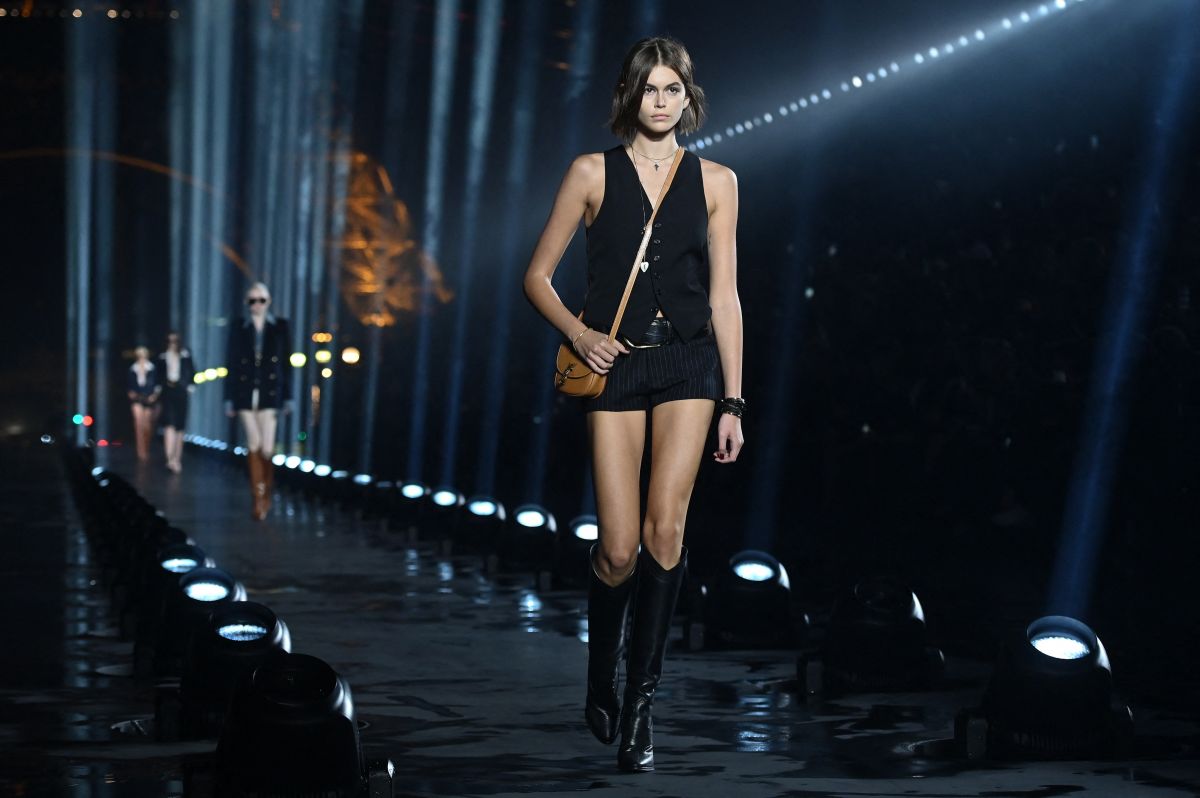
On 4 June 2026, Carven confirmed that Kai Nesselrath — Polimoda graduate, Italian-of-German-descent, and for nearly a decade the womenswear head designer inside Anthony Vaccarello’s studio at Saint Laurent — would become the house’s new design director, succeeding Mark Thomas, who exited in April. His debut runway is set for Paris Fashion Week SS27 in October. The appointment is the latest, and one of the most legible, entries in a register that has run almost without interruption since 1996: the list of Saint Laurent studio alumni who left the avenue Marceau and avenue George V ateliers to take creative-director or design-director chairs elsewhere in luxury. Read end-to-end, that register reads less like a series of one-off exits and more like a farm system — an in-house finishing school that, for thirty years, has produced more chiefs than any other ready-to-wear studio in Paris.
The Saint Laurent studio alumni roster matters because the house itself does not behave like an alumni network. Yves Saint Laurent and Pierre Bergé constituted the maison in 1961, ran it as a couture-and-ready-to-wear duopoly until the 1999 Gucci Group acquisition, and treated the design studio as a closed shop. The post-1996 era — first under Hedi Slimane’s men’s directorate, then under Tom Ford’s Rive Gauche, then under Stefano Pilati, then under Slimane again at Saint Laurent Paris, then under Vaccarello — turned that closed shop into a pipeline. Each of those creative directors built a studio whose senior bench eventually became creative-director material at other houses. Nesselrath in June 2026 is the most recent name on the list. He is unlikely to be the last.
What “Saint Laurent studio alumni” actually means in 2026
The phrase needs a definition before the list. A Saint Laurent studio alumnus is anyone who spent a meaningful tenure inside the design studio of Yves Saint Laurent (1961–1999), YSL Rive Gauche under the Gucci Group (1999–2012), or Saint Laurent / Saint Laurent Paris (2012 onward), and who subsequently took a named creative-direction, artistic-direction or design-direction title at another fashion house. The studio is, in this reading, the team that physically draws collections — the head designers of men’s and women’s ready-to-wear, the studio directors, the heads of haute couture (until couture was wound down in 2002), and the senior collaborators who ran categories under the creative director’s signature.
That definition excludes the creative directors themselves when reckoning the alumni list (they were the studio’s chiefs, not its graduates), but it captures both their predecessors-as-staff (Slimane spent four years inside the YSL men’s studio before Dior poached him for Homme) and their lieutenants. It is the lieutenant cohort that has, since the late 1990s, supplied the rest of luxury with creative directors. The headline 2026 example is Nesselrath. The structural example is harder to reduce to a single name, because for ten years it has been the way the studio has been run.
The 1961–1999 founder era: the closed shop
Yves Saint Laurent (born Oran 1936; died Paris 2008) and Pierre Bergé founded the house in 1961 after Saint Laurent’s January 1958 Trapeze collection had rescued Christian Dior, and after his 1960 conscription and discharge ended his Dior tenure. The Rue Spontini couture house opened the same year; ready-to-wear arrived in 1966 with the Saint Laurent Rive Gauche store on rue de Tournon, a structural innovation that pre-figured everything the luxury industry would commercialise across the next forty years. For the next three-and-a-half decades, the studio was an extension of one designer’s hand. It produced no creative directors for other houses because it was not configured to: Saint Laurent drew the collections, his studio executed them, and the senior names inside the house — Loulou de la Falaise as accessories and jewellery lead, Anne-Marie Muñoz as studio director from 1962 — were collaborators, not successors-in-training.
That closed shop began to crack in the mid-1990s, as Saint Laurent’s health deteriorated and Bergé began to look for a structural answer to the question of what the house would do next. The answer arrived in 1996, on the men’s side.
Slimane, Pilati and Ford: the 1996–2012 trio
Pierre Bergé hired Hedi Slimane (born Paris 1968) in 1996 as ready-to-wear director of YSL men’s collections — a thirty-year-old designer trained at the Institut d’Études Politiques and the École du Louvre, who had spent the previous five years assisting at Louis Vuitton menswear. Slimane spent four years on avenue Marceau building a rigorously narrow silhouette for the men’s collections before Bernard Arnault and Sidney Toledano pulled him to Dior Homme in 2000. He stayed at Dior Homme for seven years, until 2007, where his razor-thin silhouette redefined what menswear could look like — Karl Lagerfeld famously lost sixty pounds in 2001 to fit Slimane’s tailoring. Slimane’s first YSL stint, in retrospect, looks like the first proof that the Saint Laurent studio could produce a creative director for a rival house.
Stefano Pilati (born Milan 1965) is the second. Pilati had joined the YSL studio in 2000, under Tom Ford — whose own Rive Gauche directorate, which ran 2000–2004 after the Gucci Group’s $1 billion acquisition of YSL, is itself a pivotal entry on this list. Ford’s Rive Gauche was a sister project to his Gucci directorate, run in parallel from London and Milan, and it gave the YSL studio a working model for what a designer-led, group-owned French house could look like. When Ford left the Gucci Group in April 2004 after losing the renegotiation with François Pinault, Pilati was promoted to creative director of Yves Saint Laurent. He held the title for eight years, through March 2012, designing the collections that defined the Tuileries-era YSL silhouette — the tulip skirt, the cocoon coat, the broad-shouldered jacket. After his March 2012 exit he went on to head design at Ermenegildo Zegna across the main line, Agnona and Z Zegna, and in 2017 founded his Berlin-based label Random Identities. Three creative-director chairs after one tenure in the studio.
The Pilati period is the structural turning point. From 2000 onward, the Saint Laurent studio was being run, year-on-year, by a designer who had himself been trained inside it under his predecessor. The studio’s institutional memory began to compound. The senior bench that Pilati promoted — pattern cutters, head designers by category, studio directors — was the first generation that had been hired and trained under a Gucci Group house, not under a founder. When Pilati left in March 2012 and Slimane returned in April 2012 as creative director of the renamed Saint Laurent Paris, the studio absorbed a second generation of training without losing the first.
Slimane’s second stint, 2012–2016: the Saint Laurent Paris rebuild
Slimane’s return is worth dwelling on as a studio event, not a brand event. He moved the headquarters from avenue Marceau to a building on rue de Bellechasse in the 7th arrondissement, relocated the creative team to Los Angeles for the design phase, and rebuilt the studio’s senior bench almost from scratch. He renamed the ready-to-wear line Saint Laurent Paris (the couture house retained the Yves Saint Laurent name on legacy contracts), redesigned the logo in 2012 to a sans-serif typeface set by Hermès’ former graphic team, and ran four years of collections — Permanent Collection, Couture Inspired, Psych Rock, La Collection de Paris — that took Saint Laurent’s revenues from roughly €350 million in 2012 to over €1 billion by 2016. He left in April 2016, after a clean four-year contract, and was replaced the same month by Anthony Vaccarello.
The senior bench Slimane built in this period included designers who had followed him from Dior Homme and from his between-houses photographic studio in Los Angeles. Some of them did not stay through the Vaccarello transition. Several have surfaced since at smaller houses and at Slimane’s later stops — first at Celine, where he was named artistic, creative and image director in January 2018 and ran the house until 2024, and then at the as-yet-unnamed project he is understood to be working on as of 2026. The point, for the alumni register, is that Slimane’s Paris studio of 2012–2016 was its own subsidiary node of the Saint Laurent pipeline. People who joined the house under Slimane and stayed under Vaccarello — Nesselrath is the highest-profile of them — are alumni of both stints.
Anthony Vaccarello, 2016–2026: the studio as a decade-long bench
Anthony Vaccarello took the creative-director chair on 4 April 2016. He was thirty-five, Belgian-Italian, born in Brussels in 1980 to Italian parents from Calabria, and had run his eponymous label since 2009 after winning the ANDAM prize. He had also done a three-year stint as creative director of Versus Versace from 2013 to 2016. His Saint Laurent debut, in October 2016 at the Fondation Louis Vuitton, was a clean continuation of Slimane’s tailoring vocabulary at a different temperature — more skin, more brass, fewer references to subculture. The collections that followed compounded the brand. By the end of 2025, Saint Laurent had topped the Lyst Index for the year, the first time it had taken the top position in the index’s history. By April 2026, Vaccarello had completed a full ten years in the role — the longest single tenure of any creative director at the house since the founder.
The 2016–2026 Vaccarello studio is the bench that the rest of luxury has begun to recruit from in earnest. It is where Nesselrath spent his nine-and-a-half years; it is where the womenswear head designer’s title sat, structurally, between Vaccarello’s signature and the pattern-cutting floor. The reason the bench is now exporting creative directors is partly that ten years is long enough for a senior designer’s career to mature inside one house, and partly that the wider Kering portfolio — Bottega Veneta under Louise Trotter from 2025, Gucci, Balenciaga under Pierpaolo Piccioli from 2025, Alexander McQueen under Sean McGirr — has been turning over its own creative chairs at a pace that has emptied the upstream bench at houses that would, in calmer years, have grown their own. The full portfolio dynamics are mapped in our Kering portfolio refresh; the consequence for Saint Laurent studio alumni is that the rest of the group, and the rest of Paris, now knows the bench by name.
The 1961–2026 creative-director timeline
The list of who has held the top creative chair at the house — distinct from, but the precondition for, the alumni list below — fits on a single line per name.
| Years | Creative director | Note |
|---|---|---|
| 1961–2002 | Yves Saint Laurent | Founder; couture line until retirement January 2002. |
| 1996–2000 | Hedi Slimane (men’s) | Hired by Pierre Bergé as ready-to-wear director, YSL men’s. |
| 2000–2004 | Tom Ford (Rive Gauche) | After Gucci Group’s 1999 YSL acquisition. |
| 2000–2004 | Stefano Pilati (studio) | Joined Rive Gauche studio under Ford. |
| 2004–2012 | Stefano Pilati (creative director) | Promoted on Ford’s exit; through March 2012. |
| 2012–2016 | Hedi Slimane (return) | Renamed line Saint Laurent Paris; logo reset 2012. |
| 2016–present | Anthony Vaccarello | Ten years completed April 2026. |
Where the Saint Laurent studio alumni went next
The alumni table — the actual subject of the query — runs from 1996 to 2026 and is best read by next-stop title rather than by exit date. Six entries are load-bearing.
| Saint Laurent studio role | Years inside SL | Next chair | Date confirmed |
|---|---|---|---|
| Hedi Slimane, men’s RTW director | 1996–2000 | Dior Homme, creative director | 2000 |
| Hedi Slimane, Saint Laurent Paris CD | 2012–2016 | Celine, artistic / creative / image director | January 2018 |
| Stefano Pilati, studio under Ford → CD | 2000–2012 | Ermenegildo Zegna head of design (Agnona, Z Zegna); Random Identities founder | 2013; 2017 |
| Tom Ford, Rive Gauche CD | 2000–2004 | Tom Ford (his own house, founded 2005) | April 2005 |
| Anthony Vaccarello, CD | 2016–present | (currently in seat; previously Versus Versace 2013–2016) | — |
| Kai Nesselrath, womenswear head designer | 2016–2026 | Carven, design director | June 2026 |
Two structural observations follow from the table. First, the next-chair in five of six cases is a creative-director title at another LVMH, Kering or independent house — not a step sideways within Saint Laurent. The studio exports rather than promotes internally. Second, three of the six destinations are houses with a founder whose name is the marque (Dior, Carven, Tom Ford) and three are houses where the marque is a place-name or family-name without a living founder (Celine, Zegna’s Agnona / Z Zegna, Random Identities as Pilati’s own). The Saint Laurent studio’s training appears to translate across both types: the alumni are equipped to reinterpret a founder’s legacy and to write a brand voice from a near-blank slate.
Kai Nesselrath at Carven: the June 2026 case
Nesselrath’s appointment is the cleanest demonstration of the pipeline’s logic to date. The biographical facts: Italian, of German descent, trained at Polimoda in Florence with additional study at the Accademia di Belle Arti di Roma and Central Saint Martins in London. He joined Saint Laurent in 2016, the same year Vaccarello took the creative-director chair, and rose over almost a decade from senior designer through head designer of women’s ready-to-wear. He was, by 2025, the most senior named designer beneath Vaccarello on the women’s side of the house.
Carven, the receiving house, is the smallest of the relevant 2026 platforms. Founded in 1945 by Marie-Louise Carven on the rue du Faubourg Saint-Honoré, the house has cycled through several owners — Bernard Henrion in the 2000s, the Beaumanoir Group, then in 2018 the Shanghai-based Icicle Fashion Group, founded in 1997 by Ye Shouzeng and Tao Xiaoma. In 2020, Icicle constituted the ICCF Group — Icicle Carven China France — as a Franco-Chinese holding company headquartered in Paris, consolidating both brands under one structure. In 2026, Kering took a minority stake in ICCF Group via its House of Wonders initiative. The Carven seat Nesselrath is taking is, in 2026, a designer-led design-director title inside a Franco-Chinese group with a minority Kering shareholder — the kind of seat where a Saint Laurent-trained head designer is the maximally legible appointment for both an Asian holding company and a French luxury conglomerate.
His predecessor at Carven, Mark Thomas, exited in April 2026 after a tenure that had restored the house’s commercial register but not the cultural one — a register that, traced back to Marie-Louise Carven’s 1945 founding, reads as the through-line our Carven creative-direction lineage piece walks year by year. Nesselrath’s debut runway is scheduled for Paris Fashion Week SS27 in October. The October show will be the first reading of what a Vaccarello-era Saint Laurent training translates into when removed from the YSL marque and applied to a Carven price point — slimmer, smaller, and tonally further from the Marceau-era logo brutalism than anything Vaccarello has signed in Paris.
What makes the Saint Laurent studio a creative-director pipeline
Four structural facts explain why this particular studio has functioned as a finishing school for the rest of luxury.
The first is the post-1999 group structure. Kering (then PPR) bought YSL in 1999 and inherited a house that needed a designer-led rebuild. Every creative director since — Ford, Pilati, Slimane on return, Vaccarello — has been hired by group management rather than a founder, and has run a studio whose senior bench was vetted to a group-level competency standard. Designers leaving that bench arrive at their next interview with a Kering reference profile, not a personal one.
The second is the long-tenure pattern. Pilati ran the studio for eight years; Slimane for four; Vaccarello has now run it for ten. That is enough time for a head designer of women’s ready-to-wear to ship more than twenty seasonal collections, to learn the house’s pattern library, and to develop a portfolio that other houses can read. A two-year tenure produces a CV; a ten-year tenure produces a hire-able creative director.
The third is the breadth of categories. The studio runs ready-to-wear women, ready-to-wear men, leather goods, shoes, accessories, the couture-inspired specials Slimane introduced in 2015, the Rive Droite editions and the Saint Laurent Babylone publishing imprint introduced under Vaccarello in 2023. A senior designer inside the studio can credibly claim category training across a wider surface than at a single-category house. That breadth is what makes the alumni list look more like a creative-director list than a head-of-women’s list.
The fourth, and the one that has accelerated since 2024, is the wider market for creative directors. The portfolio shifts at LVMH (Jonathan Anderson to Dior, Matthieu Blazy to Chanel), at Kering (Trotter to Bottega, Piccioli to Balenciaga, Demna to Gucci), at OTB (Glenn Martens), and at the independent Franco-Chinese platform represented by ICCF Group have all created top-tier seats faster than the upstream bench has been able to grow alternatives. When the demand-side runs ahead of the supply-side, the Saint Laurent studio — long-tenure, group-trained, multi-category — is the bench that gets called first. Nesselrath is the visible 2026 case. The bench has not run out.
The atelier as farm system
The Saint Laurent studio in 2026 looks less like a single creative directorate and more like a thirty-year finishing school whose graduates have, between them, defined the look of menswear at Dior in the 2000s, of Celine in the late 2010s, of Zegna’s softer lines in the early 2010s, and now of Carven’s design directorate for SS27. The atelier on avenue George V is the closest thing French luxury has to a farm system: a house that trains designers to the standard at which other houses promote them, then watches them leave on schedule and replaces them from the next year-group below. The 4 June 2026 Carven announcement is one more data-point in the same pattern. Vaccarello, at ten years in, is now the longest-tenured chief since the founder; the next generation of Saint Laurent studio alumni is, by the maths of the bench, already being interviewed for the chairs that will open in 2027 and 2028.