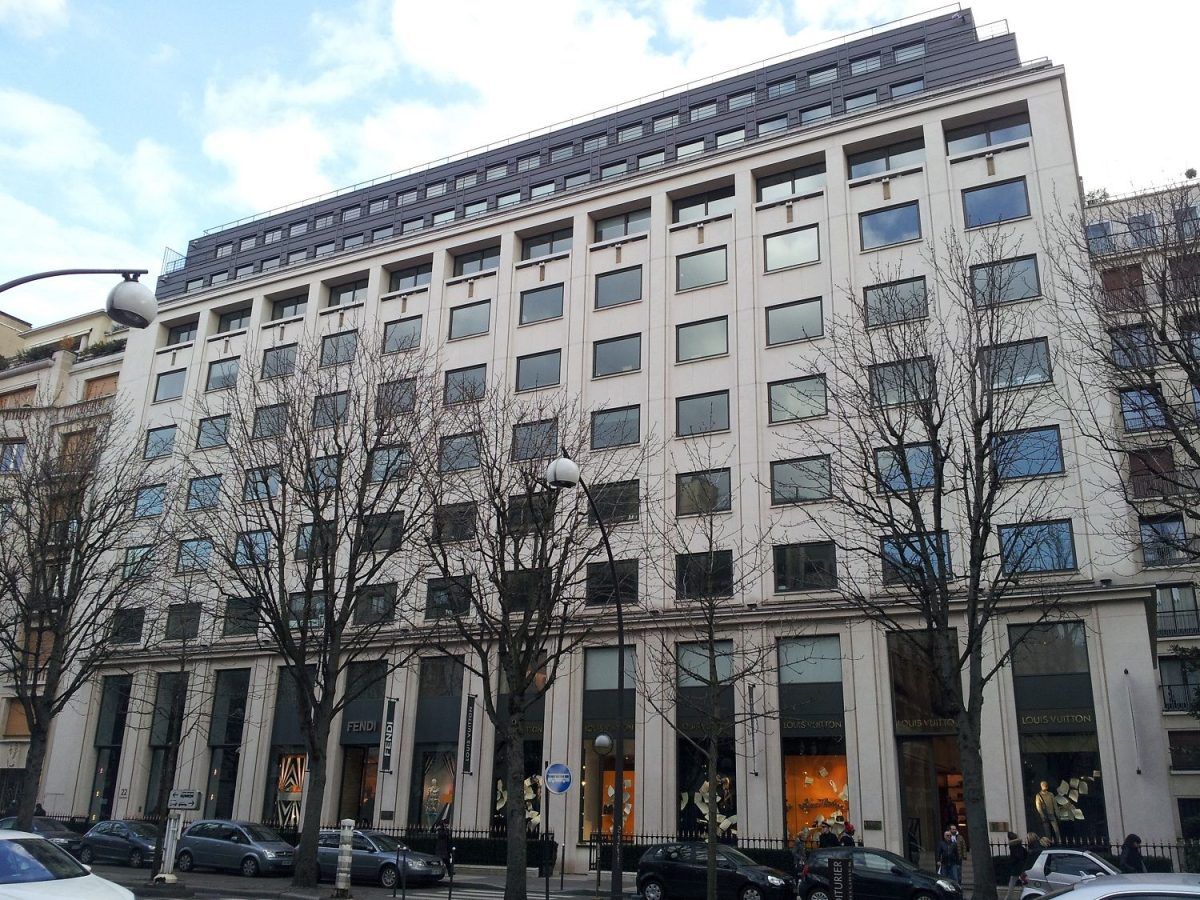
On 14 May 2026, LVMH sold Marc Jacobs to an $850M joint venture between WHP Global and G-III Apparel Group, ending a 29-year ownership that began the same year Marc Jacobs was named creative director of Louis Vuitton. The deal closes a chapter of LVMH divestitures that has, since 2020, quietly reshaped the group around three categories — leather goods, jewellery, wines and spirits — while pushing American designer brands, English shirtmakers, and minority creative-founder stakes out of the portfolio. The story is not the Marc Jacobs sale on its own. The story is the pattern: LVMH bought Tiffany, backed Phoebe Philo, and lined itself up for Giorgio Armani while shedding Off-White, Thomas Pink, Stella McCartney, and now Marc Jacobs in roughly eighteen months.
This piece sets out every LVMH divestitures move since 2020 — by year, by counterparty, by what it tells you about what Bernard Arnault actually believes a luxury brand is worth holding.
Marc Jacobs to WHP Global, May 2026
The definitive agreement announced on 14 May 2026 sells Marc Jacobs to a 50/50 joint venture between WHP Global and G-III Apparel Group, each contributing up to $425M toward up to $850M of financing. Under the structure, G-III runs global direct-to-consumer and wholesale; WHP Global handles licensing and brand management. Marc Jacobs himself — born 9 April 1963, New York — remains founder and creative director.
The buyer combination is more interesting than the headline number. G-III Apparel Group is not a stranger to LVMH. In 2016 G-III acquired Donna Karan and DKNY from LVMH for $650M, the same wholesale-led American playbook now being run on Marc Jacobs. WHP Global is the brand-management vehicle founded in 2019 by Yehuda Shmidman with Oaktree Capital backing, recapitalised in 2023 by a $375M Ares Management investment at a $1.6B valuation. Its portfolio coming into the Marc Jacobs deal already included Toys R Us, Babies R Us, Anne Klein, Express, Bonobos, Joe’s Jeans, rag & bone, Vera Wang, G-Star, Lotto, Joseph Abboud, Isaac Mizrahi, and Warners. Post-Marc-Jacobs, WHP’s retail sales across its licensed portfolio are projected to clear $9.5B.
Two quotes were attached to the announcement. Arnault: “Marc Jacobs is a designer of rare creativity and unique vision.” Jacobs: “I am forever grateful to Bernard Arnault for his support, belief and trust in me over the last 30 years.” The “30 years” framing matters because it reaches back past the 1997 LVMH stake to 1986, when Jacobs launched his eponymous label with backing from Onward Kashiyama USA. The relationship LVMH bought into in 1997 was already eleven years old. The relationship being unwound in 2026 is closer to forty.
The economics also have a tell. Marc Jacobs as a wholesale-led American designer business with a strong licensing tail — fragrance, eyewear, Heaven by Marc Jacobs (launched 2020), Marc by Marc Jacobs (relaunched in 2024 after a 2001–2015 first run) — was structurally mismatched with LVMH’s post-Tiffany operating model. LVMH’s fashion and leather goods division is built around vertically integrated leather houses with high mono-brand retail density. Marc Jacobs is the opposite shape. WHP and G-III are the correct shape for that brand: a licensing and brand-management firm paired with a wholesale and DTC operator who has run the playbook once before, on Donna Karan, with the same seller.
LVMH took Marc Jacobs in 1997 — and the same week, took Louis Vuitton
LVMH’s majority stake in Marc Jacobs was acquired in 1997. The same year — the same conversation, in effect — Arnault appointed Jacobs as the first creative director of Louis Vuitton, then a leather-goods house with no ready-to-wear line. Jacobs would hold that role for sixteen years, until 2014, building Louis Vuitton’s apparel category essentially from zero and turning the Vuitton runway into one of the defining commercial vehicles of the 2000s and early 2010s.
The dual nature of the 1997 deal explains why the 2026 divestiture reads more like a graduation than a fire sale. The Marc Jacobs label was, for the better part of two decades, the personal-brand half of an arrangement whose other half (Louis Vuitton) made it strategically untouchable. Once Jacobs left Vuitton in 2014 — succeeded by Nicolas Ghesquière — the strategic logic of keeping the eponymous label inside LVMH thinned out. The brand spent the next decade as a New York creative outfit inside a Paris leather-goods group, attached to a designer who was producing some of the most culturally legible American work of the period (Heaven by Marc Jacobs in particular has functioned as a Gen-Z gateway since 2020) but without the operating shape LVMH’s fashion and leather goods division was optimised for.
The 2026 sale, in that reading, is LVMH cashing the option it never exercised: letting the Marc Jacobs brand go to operators who can scale it as a licensed, wholesale-led American business, while Jacobs himself stays in the chair. It is the cleanest possible exit.
The 2020–2026 LVMH Divestitures Ledger
LVMH spent the first half of the decade buying, the second half selling. The pivot is sharp enough to read off a calendar.
| Year | Brand / Asset | Action | Counterparty |
|---|---|---|---|
| 2021 (Jan) | Tiffany & Co. | Acquired | $16B; announced Nov 2019, renegotiated Oct 2020 |
| 2021 (Jul) | Off-White | Acquired | 60% stake from Virgil Abloh |
| 2023 (Oct) | Phoebe Philo | Backed | Minority stake; brand launches Oct 2023 |
| 2024 (Sep) | Off-White | Divested | Sold to Bluestar Alliance |
| 2024 (Dec) | Thomas Pink | Divested | Icon Luxury Group / CP Brands Group JV |
| 2025 (Jan) | Stella McCartney | Divested | 49% stake sold back to founder |
| 2025 (Sep) | Giorgio Armani | Preferred buyer | Initial 15% within 18 months; option to 54.9% |
| 2026 (May) | Marc Jacobs | Divested | WHP Global / G-III JV, up to $850M |
LVMH portfolio movements, 2020–2026.
The shape is unmistakable. Tiffany was the last megadeal. Off-White was a designer-led bet that closed and reopened inside three years. The Philo and Armani moves are both minority structures — capital and distribution without operational control — which is now the preferred LVMH form for working with a designer-founder or family business. Everything else from late 2024 onward is a sale, mostly to specialist operators (Bluestar, Icon Luxury Group, WHP, G-III) rather than to other luxury conglomerates. None of these brands went to Kering, Richemont, Prada Group, or OTB. The divestitures are not strategic transfers inside the luxury system. They are exits to brand-management and wholesale platforms.
Off-White to Bluestar, September 2024
LVMH’s purchase of 60% of Off-White from Virgil Abloh in July 2021 was the second time the group had backed a Black American designer’s eponymous label — the first being its 2019 partnership with Rihanna on Fenty, which itself was unwound in February 2021. Abloh died in November 2021, four months after the deal closed. LVMH continued to operate Off-White directly for three more years under a series of designers and licensees, then sold the brand to Bluestar Alliance in September 2024.
Bluestar Alliance is a brand-management firm of the same archetype as WHP Global: it licenses, it operates capital-light, and it does not run integrated retail. The Off-White sale prefigured the Marc Jacobs sale in form. Both took a designer-founded label out of a vertically integrated luxury group and placed it inside a licensing-first vehicle. The Off-White exit, coming three years after acquisition, also signalled the limit of LVMH’s tolerance for operating a designer brand whose value was tightly bound to a single founder no longer present.
Thomas Pink to Icon Luxury Group, December 2024
The December 2024 sale of Thomas Pink — the Jermyn Street shirtmaker LVMH had owned since 1999 — to a joint venture between Icon Luxury Group and CP Brands Group is the divestiture most easily filed under “category cleanup.” Shirting is a low-margin, wholesale-dependent business that does not scale on the leather-goods-and-handbags model. Thomas Pink had been a quiet asset for over two decades; selling it to a brand-management JV with experience in heritage menswear was the obvious move. The deal received almost no industry coverage because the brand had been operationally orphaned for years.
Read alongside Off-White and Marc Jacobs, though, Thomas Pink fits the pattern. LVMH is divesting brands that don’t carry the leather-goods operating shape: wholesale-led, licensing-led, or shirting-led businesses are moving to specialist operators.
Stella McCartney back to the founder, January 2025
In January 2025 LVMH sold its 49% stake in Stella McCartney back to McCartney herself, ending the five-year partnership that had begun in 2019. The deal mattered for what it said about minority structures: even a minority position, even with a founder-led brand whose values aligned with LVMH’s then-emerging sustainability narrative, was not stable on its own terms. McCartney bought back the stake to regain full ownership; LVMH took the exit without forcing a sale to a third party.
This is one of two reference points for how the Phoebe Philo minority arrangement might end. Either Philo eventually buys LVMH out, on the McCartney template, or LVMH sells its stake to a third party at a later date. The structure does not commit either side to a permanent relationship; it commits them to a defined holding period during which the brand has capital and distribution support from the group.
The other reference point — and the more recent one — is Marc Jacobs itself, where LVMH held a majority for 29 years and exited via sale to a wholesale-and-licensing JV. The Marc Jacobs model is what happens when a minority becomes a majority and the operating shape no longer fits. The McCartney model is what happens when a minority stays a minority and the relationship simply runs its course. Both are now templates in the LVMH playbook for unwinding designer-founder partnerships.
What LVMH is buying instead
The buying side of the LVMH ledger over the same period has been almost entirely two things: Tiffany, and minority creative positions.
The Tiffany acquisition closed in January 2021 at $16B after a renegotiation that dropped the price from the November 2019 announcement. Tiffany was, structurally, the inverse of Marc Jacobs: a vertically integrated American luxury house with global mono-brand retail, a strong category (jewellery and silver) that LVMH was under-indexed in, and operating economics that mapped onto LVMH’s existing systems. Tiffany has subsequently become the largest single contributor to the watches and jewellery division’s growth, with the Schlumberger and Bird on a Rock relaunches reading as classic LVMH archive activations.
The minority creative positions are smaller in capital but pointed in intent. LVMH backed Phoebe Philo’s eponymous brand restart in October 2023, with a debut collection that month. The group disclosed in September 2025 that it had been named as preferred buyer in Giorgio Armani’s will, with the right to acquire an initial 15% stake within 18 months and an option to grow to 54.9% over time. These are not classic acquisitions — they are option structures, designed to give LVMH a privileged seat without immediate consolidation. Both reflect the post-Tiffany operating reality: LVMH would rather hold a minority position in a brand it cannot operate today than acquire and absorb it.
The Armani arrangement is particularly telling because Armani is one of the few remaining independent luxury houses at scale. Securing preferred-buyer status without an immediate transaction is a hedge against the moment Armani changes hands — which, given Giorgio Armani’s death and the resulting succession, is already underway. LVMH is paying optionality for the right to make the next move on its own timing.
WHP Global and G-III as the new American luxury exit
The Marc Jacobs deal cements a pattern that was already legible in the Donna Karan transaction a decade earlier: when LVMH exits an American designer-founded brand, the buyer tends to be a U.S. licensing-and-wholesale operator, not a European luxury group.
WHP Global, founded in 2019, is now one of the largest brand-management platforms in the U.S. The Ares Management investment in 2023 at a $1.6B valuation, on top of the original Oaktree Capital backing, gave WHP the balance sheet to participate in deals at the Marc Jacobs scale. The portfolio is a mix of legacy mass-market labels (Anne Klein, Joseph Abboud, Isaac Mizrahi), specialty retailers (Toys R Us, Babies R Us, Express, Bonobos), and contemporary fashion (rag & bone, Vera Wang, Joe’s Jeans, G-Star). Marc Jacobs lifts the average price point and the cultural relevance of the portfolio meaningfully. Post-deal projected retail sales above $9.5B put WHP within range of the largest licensed-brand platforms globally.
G-III Apparel Group, founded in 1956 and listed on NASDAQ, is the operating half of the JV. G-III’s existing book includes Donna Karan and DKNY (acquired from LVMH in 2016), Karl Lagerfeld (acquired in 2021), Vilebrequin, and a long list of licensed labels. G-III’s expertise is precisely the wholesale-and-DTC operating layer that WHP does not run directly. The division of labour between the two — WHP on licensing and brand management, G-III on operations — is the most efficient structure available for a brand of Marc Jacobs’s scale and shape.
This pairing has structural implications for the next round of American designer-brand exits. Tory Burch, Michael Kors (already inside Capri Holdings, but Capri’s own future is in flux post the failed Tapestry merger), Coach, Kate Spade — any of these is a plausible future WHP/G-III candidate if their current owners decide to restructure. The American luxury exit ramp now has a clear shape: brand-management firm plus wholesale operator, JV structure, valuation in the high single digits to low billions, founder or design team often retained.
What LVMH is keeping (and adding)
To read the LVMH divestitures in the round, list them against what the group is keeping and adding. LVMH continues to own — and continues to invest in — Louis Vuitton, Dior, Loewe, Celine, Givenchy, Kenzo, Fendi, Berluti, Loro Piana, Rimowa, Tiffany, Bulgari, TAG Heuer, Hublot, Zenith, Chaumet, Fred, Sephora, DFS, Moët Hennessy, Veuve Clicquot, Krug, Dom Pérignon, Hennessy, Glenmorangie, Belmond, and Cheval Blanc. The fashion and leather goods division has been reinforced in the last eighteen months by the appointment of Jonathan Anderson at Dior (his Cruise 2027 show is scheduled for LACMA in 2026), a leadership refresh at Loewe, and the Frédéric Arnault appointment at Loro Piana in early 2026.
What is being shed: Off-White, Thomas Pink, Stella McCartney, Marc Jacobs. Three are American-or-British designer brands with wholesale-led operating shapes. The fourth — Stella McCartney — was a minority stake in a founder-led independent. None of them carried the integrated leather-goods or jewellery operating model that defines the rest of the portfolio.
The directional read is therefore tight. LVMH is consolidating around vertically integrated maisons with global mono-brand retail, leaning into jewellery (Tiffany, Bulgari) and quiet-luxury soft goods (Loro Piana, Berluti), and using minority structures to hold options on the next generation of designer-founded brands (Philo) and the remaining independent luxury houses (Armani). Everything else is going to specialist operators in licensing, wholesale, and brand management.
The Marc Jacobs deal as proof of LVMH’s operating thesis
It is tempting to read the Marc Jacobs sale as the loss of a culturally important brand — Heaven by Marc Jacobs is one of the most influential American youth labels of the 2020s, and the eponymous main line has been quietly reasserting its design point under Jacobs himself. That reading is correct but secondary. The primary reading is that LVMH no longer needs to own brands whose operating shape diverges from its core model.
This is a luxury group of approximately 75 maisons with €84B in 2024 revenue. The decision to divest a brand the size of Marc Jacobs — estimates of the label’s annual sales sit somewhere in the $400-600M range — is not a capital-raising move. It is a focus move. The proceeds, even at the full $850M consideration, are a rounding error against the group’s cash flows. What LVMH is buying with the sale is operational simplification: one fewer wholesale-led American brand to manage, one fewer set of creative-director succession decisions to make outside the core leather-goods houses, one fewer divisional report to integrate.
Marc Jacobs the person comes out of the deal in the strongest position of any party. He retains creative control of his eponymous label, is paired with operators who specialise in scaling exactly his kind of business, and exits the LVMH portfolio with explicit warmth from Arnault. The 30-year framing in his statement is not boilerplate; it reflects an actual relationship that began in 1986 and ran through 1997, 2014, and now 2026. The fact that the brand is leaving LVMH without losing the designer is the structural innovation of the deal.
How the divestitures pattern reads against Kering and Richemont
LVMH is not the only large luxury group rebalancing. Kering is running its own portfolio review under Luca de Meo, with the jewellery division (Boucheron, Pomellato, Dodo, Qeelin) flagged as a potential carve-out and Gucci, Saint Laurent, and Bottega Veneta consolidating around a leaner brand list. Richemont is selling YNAP to Mytheresa-Farfetch successor entities and reducing exposure to wholesale fashion. The Prada Group has been buying — Versace from Capri Holdings is the headline deal — while Pieter Mulier has taken creative direction at Versace.
In that comparative frame, LVMH’s divestitures are the most aggressive in dollar terms but the most coherent in logic. Kering is restructuring under financial pressure, with the Gucci turnaround as the urgent variable. Richemont is rationalising e-commerce. LVMH is doing neither: it is operating from a position of strength, selling brands that do not fit, holding minority options on the brands it might want next, and reinvesting cash flow into the maisons it already owns.
The Marc Jacobs sale is therefore not a sign of stress. It is a sign that LVMH knows, with unusual precision, which brands belong inside its model and which do not. The list of LVMH divestitures since 2020 — Off-White, Thomas Pink, Stella McCartney, Marc Jacobs — names four exits in eighteen months. Against that, the list of acquisitions and minority backings — Tiffany, Phoebe Philo, the Armani option — names three highly selective moves. The total brand count of the group is shrinking. The average operating quality of what remains is rising.
Coda
When historians of the luxury industry come back to the 2020–2026 window, the Marc Jacobs sale will be the headline event but not the structural one. The structural event is the pattern: LVMH stopped buying everything and started buying only what fits, while building option positions on the brands it might want to own later. The Marc Jacobs divestiture closes the longest-running American designer relationship in the group’s history on terms that read as a graduation — designer retained, brand placed with the right operators, $850M cleared, and an explicit Arnault statement that the relationship was a good one. The list of LVMH divestitures since 2020 names a strategy, not an accident. The strategy is simpler than it looks: LVMH is becoming, at the operating level, an ever purer version of the leather-goods, jewellery, and integrated-luxury group that Bernard Arnault has spent four decades building. Everything else has somewhere else to go.