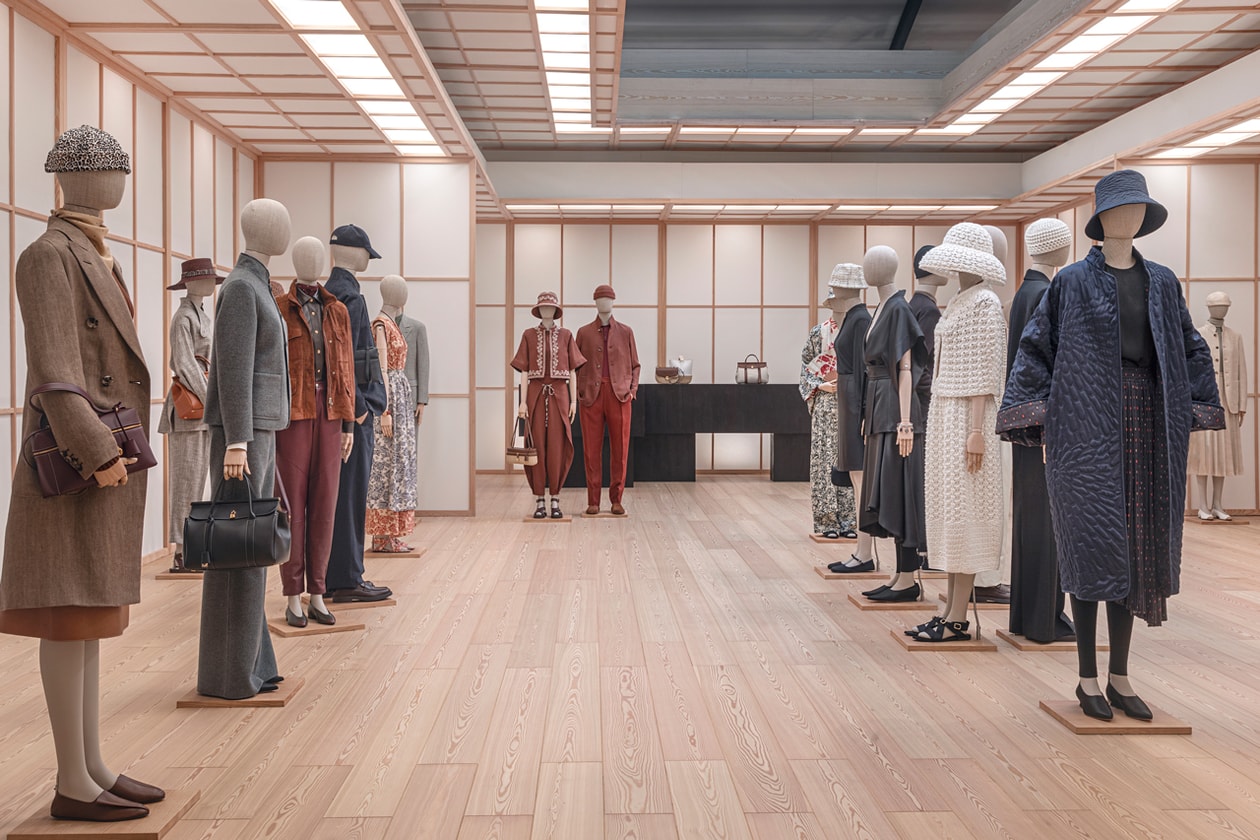
When Frédéric Arnault walked into Loro Piana on 1 June 2025, he inherited a 101-year-old cashmere house that had — three months earlier — already committed to opening a four-floor 19th-century townhouse on Via Solferino in Milan as its cultural and commercial centre of gravity. The appointment was announced on 13 March 2025; the maison he took over was no longer the discreet Quarona-born fibre supplier his father Bernard Arnault had bought a controlling stake in for roughly $2.6 billion in July 2013. Under Damien Bertrand’s four years as CEO and Antoine Arnault’s continuing chairmanship, Loro Piana had been pushed — quietly, methodically — out of the wool sheds and into the rooms where furniture, ceramics and curated mid-century objects sit alongside double-ply cashmere. By the time Casa Brera opened during Milan Design Week 2026, the question facing the youngest of LVMH’s heirs was no longer whether Loro Piana could become a fashion-into-design house. It was whether a 31-year-old engineer who had run watches for five years could hold that pivot together while his father’s group posted a -2% organic quarter in Fashion & Leather Goods.
That is the question this piece is built around. It has a specific answer, and the answer is legible in the way Frédéric Arnault’s first year has been staged: not as a reset, not as a rupture, but as the formal handoff of a maison whose direction was set before he arrived and whose execution will define whether the Arnault generational map at LVMH continues to read as orderly succession or as something more brittle.
What Frédéric Arnault actually inherits
The numbers come first because they decide everything else. Loro Piana posted €1.609 billion in revenue in 2024 and €389 million in net income — a margin north of 24% that, in any quarter where the broader Fashion & Leather Goods division wobbles, makes the maison disproportionately useful to the LVMH group. It is now cited as LVMH’s third-largest fashion brand by revenue, behind Louis Vuitton and Christian Dior Couture. Its retail footprint sits at 182 stores worldwide, anchored on a Milan headquarters and a 1924 origin in Quarona, Piedmont, where Pietro Loro Piana founded the company on the back of vicuña, baby cashmere and merino sourcing relationships that competitors have never quite replicated.
That is the asset side of the inheritance. The liability side is more complicated. Loro Piana was the LVMH brand most exposed to a 2024 Italian labour-rights investigation into subcontracted production; it was the LVMH brand whose codes — beige, brown, undyed — were absorbed wholesale by an entire generation of “quiet luxury” copyists between roughly 2021 and 2024, leaving its own visual language partially commoditised; and it is now the LVMH brand expected to demonstrate, in furniture and ceramics and home objects, a creative project that the group can point to when investors ask what comes after the logo cycle. Frédéric Arnault did not commission any of that pivot. He arrived to execute it.
The brief he received from the chairman — his elder brother — has been visible in the schedule. Casa Brera was always going to open in April 2026. The cultural programme curated by Federica Sala was already in development when the CEO change was announced. Vincenzo De Cotiis had been working on the Via Solferino 11 restoration for three years before Frédéric was named, which means the building, its proportions and its furniture mix were set under the previous administration. What the new CEO inherits, then, is not the conception of Casa Brera but its consequences: a four-floor flagship that has to perform commercially while functioning as a house museum for Carlo Scarpa, Charlotte Perriand, mid-century Italian, African and Japanese folk furniture, alongside Loro Piana’s own home collection.
Why Damien Bertrand mattered, and where he went
To understand the handoff, the outgoing CEO has to be taken seriously. Damien Bertrand ran Loro Piana from 2021 to 2025. In those four years he completed three things that were not obviously connected at the start. He pushed the maison’s product range past textiles and ready-to-wear into furniture, ceramics, glass and a slowly expanding home collection. He committed to Casa Brera as a non-store flagship — a townhouse rather than a boutique — at a moment when peers were still reproducing the same boutique template across capital cities. And he absorbed the labour-rights pressure of 2024 without permanently destabilising the brand’s positioning, in part by insisting that Loro Piana’s vertical integration in fibre was the relevant story, not the subcontracted finishing work that had drawn the headlines.
The reward was the deputy CEO seat at Louis Vuitton, alongside Pietro Beccari, with a place on LVMH’s executive committee from 2026. That promotion does two things at once. It signals that LVMH considers the Loro Piana playbook portable — that what Bertrand did at a €1.6bn maison can be scaled to the group’s €20bn-plus flagship — and it leaves the Casa Brera project in the hands of an heir rather than an operator. The choice is deliberate. Louis Vuitton needs operational depth in a year when Fashion & Leather Goods has already shown softness. Loro Piana needs an Arnault.
The watchmaker’s CV, and why it fits
Frédéric Arnault is the youngest of Bernard Arnault’s five children, born 7 November 1994. He graduated from the École Polytechnique in 2017 with a degree in applied mathematics and computer science, joined LVMH the same year, and was named CEO of TAG Heuer in 2020 — at twenty-five. From January 2024 he ran LVMH Watches as a division, with Hublot, TAG Heuer and Zenith reporting to him. Loro Piana is his first non-watches LVMH brand. The CV reads, on its face, like an unusual fit for a 101-year-old cashmere house with no mechanical movement to engineer.
It is not, in fact, an unusual fit, and it is worth saying why. Watches and fibre are two of the very few categories inside LVMH where the underlying product cannot be faked through marketing alone. A TAG Heuer Carrera and a Loro Piana baby-cashmere stole both depend on a vertically held supply chain — a movement manufactory in one case, a vicuña sourcing relationship in the other — and on an operator who understands that the brand’s pricing power lives upstream, not at the till. Frédéric Arnault spent five years inside the watch division learning how to defend those upstream economics against a market that had stopped buying the mid-tier (Smartwatch substitution at TAG Heuer) and against a market that had stopped paying full margin (grey-market discounting at Hublot). The exercise he is now being asked to run at Loro Piana — defend the upstream story, neutralise the commoditisation pressure from quiet-luxury imitators, redirect the brand’s surface area into furniture and home — is structurally the same exercise.
What he does not bring is fashion-week experience. Loro Piana has historically not run a runway show in the Milan Fashion Week sense, and the Casa Brera model — a permanent address in the Brera district, with a programme curated by Federica Sala that runs across the calendar rather than a twice-yearly catwalk — explicitly bets that the runway is not the right surface for this maison. Whether that is conviction or accommodation depends on the year ahead.
Casa Brera as the actual product
The four floors at Via Solferino 11 are the most concrete piece of evidence in this story, and they deserve to be read carefully. The building is a 19th-century Milanese townhouse in the Brera district, restored over three years by Vincenzo De Cotiis. The ground floor and first floor function as retail and gallery space; the upper floors house the cultural programme. Loro Piana’s home collection sits inside the building alongside Carlo Scarpa pieces, Charlotte Perriand furniture, mid-century Italian designers, and African and Japanese folk objects. The cultural programme — exhibitions, residencies, conversations — is curated by Federica Sala, whose Milan reputation predates Loro Piana and whose appointment signals that the maison has bought a Milanese voice rather than imported a French one.
What this configuration does, in commercial terms, is solve a problem that neither boutique nor flagship has been able to solve in the post-2024 quiet-luxury market. A boutique sells stoles. A flagship sells stoles, ready-to-wear and accessories. A townhouse sells stoles, ready-to-wear, accessories, furniture, ceramics, glass, table objects and a context — the Scarpa, the Perriand, the African folk piece — in which those Loro Piana objects make sense. The townhouse format produces an average ticket and an average dwell time that the boutique does not, and it produces a press surface — the cultural programme, the curation credit, the architecture coverage — that the boutique cannot. Bottega Veneta Casa has reached for the same configuration; the Loro Piana version is more specifically Milanese, more architecturally invested, and more committed to the historic-furniture canon as a peer for the brand’s own production.
The risk of the format is also worth naming. A townhouse that mixes Carlo Scarpa with a contemporary cashmere throw flatters the throw. It also exposes the throw — if the Loro Piana home object cannot hold its own next to the Scarpa, the format reveals that. The maison has, on the evidence of the opening rooms, decided that this is a risk worth running. Whether the home collection’s second and third drops sustain that confidence is the genuinely open question.
The Arnault generational map at LVMH brands
The question of who runs which maison at LVMH has stopped being decorative. It is, at this point, the readable spine of the group’s succession plan, and it sits inside the Loro Piana story whether or not Frédéric Arnault wants it there. The table below maps each Arnault sibling to a current role and the year the role began. It does not include positions that are no longer current.
| Family member | Born | Current LVMH role | Year of appointment |
|---|---|---|---|
| Bernard Arnault | 5 March 1949 | Chairman & CEO, LVMH | 1989 |
| Delphine Arnault | 4 April 1975 | Chairman & CEO, Christian Dior Couture | February 2023 |
| Antoine Arnault | 4 June 1977 | Vice-Chairman, LVMH; CEO, Christian Dior SE; Chairman, Loro Piana | 2013 (Loro Piana chair) / December 2022 (Dior SE) |
| Alexandre Arnault | 22 September 1992 | Deputy CEO, Moët Hennessy | February 2025 |
| Frédéric Arnault | 7 November 1994 | CEO, Loro Piana | June 2025 |
Two patterns are worth flagging. First, every sibling currently runs or chairs a maison in a different LVMH division — Couture, Dior SE holding, Wines & Spirits, Fashion & Leather Goods — which means the family is no longer being clustered inside a single category. Second, Frédéric’s appointment closes a sequence that began with Delphine at Dior Couture in 2023 and continued through Alexandre at Moët Hennessy in February 2025. Those three moves, in roughly two years, have placed three of Bernard Arnault’s children at the operating head of three of the group’s most strategically central maisons. The succession question is not whether the heirs will be tested. It is which of them will be tested first by a downturn that hits their specific category — and whether the bench is deep enough to absorb a fourth Italian maison if LVMH wins the Armani stake auction now opening in Milan.
Antoine Arnault’s chairmanship, read against this
Antoine Arnault has been Chairman of Loro Piana since LVMH took its 80% stake in July 2013, with a further 5% acquired in 2017. He is also Vice-Chairman of LVMH and, since December 2022, CEO of Christian Dior SE — the holding company that controls the family’s stake in LVMH itself. He is the eldest son, born 4 June 1977, and his role at Loro Piana has historically been low-public-profile relative to his communications and image briefs across the group.
The chairman-CEO pairing now in place at Loro Piana is therefore unusual inside LVMH: an Arnault chair and an Arnault CEO, with twelve years of seniority between them, both sons of the founder, in a maison that one of them has overseen since the acquisition. There is no other LVMH brand where that exact configuration applies. It can be read in two ways. As a vote of confidence in the maison’s strategic centrality — Bernard Arnault has put two of his sons into the same building. Or as a hedge — Frédéric is in the operating seat with Antoine in the chair, which means the brother who has overseen the project since 2013 is positioned to absorb any volatility in the brother who arrived in 2025. The reading depends on the next four quarters.
Where this sits in the LVMH Q1 2026 picture
Loro Piana reports inside Fashion & Leather Goods, which is the group’s largest and most-watched division. The LVMH Q1 2026 numbers showed FLG down 2% organic — a soft quarter, not a crisis, but enough to compress the room for error inside every maison in that division. The reading is straightforward. In a flat or down quarter for FLG, Loro Piana’s job is to deliver the margin and the press surface that absorbs slack from elsewhere. The Casa Brera opening is therefore not a vanity launch. It is a calculated counterweight to a soft top line at the division level.
The cost of running that counterweight is real. A four-floor townhouse with a multi-year cultural programme is not cheap; the rough order of magnitude of the De Cotiis restoration alone has not been disclosed but is consistent with the kind of capital that LVMH has historically only deployed at flagship-flagship assets — the Louis Vuitton Maison Vendôme, the Dior 30 Avenue Montaigne, the Tiffany Landmark in New York. Loro Piana, at €1.6bn in revenue, is being given the same kind of address-book treatment as maisons three to ten times its size. That is a statement about where the group thinks the brand is going.
Frédéric Arnault and Loro Piana’s quiet-luxury problem
The phrase “quiet luxury” has been the most useful and the most damaging frame Loro Piana has had since the Succession-era Hollywood adoption of its codes around 2022 and 2023. Useful, because it built awareness in a younger demographic that had previously read the brand as the uniform of their parents. Damaging, because it triggered a wave of imitation — at every price point, in every market — that copied the beige-brown-undyed palette, the unbranded-but-recognisable silhouettes, and the high-fibre pricing without the supply chain to back it up.
The strategic answer being run under Frédéric Arnault has two halves. The first is to thicken the brand’s vertical story — vicuña, baby cashmere, merino sourcing relationships dating to the 1920s — so that imitation looks thin by comparison. The second is to move the brand’s surface area sideways, into furniture and home, where the imitation infrastructure does not exist yet. A copyist can produce a beige cashmere coat in eight weeks. A copyist cannot produce a four-floor townhouse on Via Solferino with a Carlo Scarpa cabinet on the second floor in eight weeks. The Casa Brera format is therefore, among other things, an anti-imitation moat. Whether the moat holds depends on whether the home objects themselves earn their place next to the historic furniture they are exhibited beside.
Phoebe Philo’s bronze mirror launched into roughly the same problem from the opposite end — a designer-led label moving from clothing into a single domestic object — and the comparison is instructive. Philo’s first object is a single piece, made in low quantity, sold at a price that frames it as art rather than furniture. Loro Piana’s home programme is a full collection, made in repeatable runs, sold at prices that frame it as living. The two strategies are answering the same question — can a fashion label produce a believable home object — with different bets about volume and authorship.
Fashion-into-design as a category, and Loro Piana’s place in it
The pivot Frédéric Arnault now executes is not unique to Loro Piana. It is the dominant move across the upper end of the industry in 2026. Marni’s Cucchi residency used a historic Milanese caffè as the surface for a brand-into-place reading. Gucci’s Memoria used an archival object programme to do the same work. Bottega Veneta Casa pushed the brand directly into furniture. What separates the Loro Piana version is the ratio of historic to contemporary on display.
At Casa Brera, the Loro Piana home object sits inside a room of Scarpa and Perriand. At Bottega Veneta Casa, the Bottega object sits more or less alone. The Loro Piana choice is harder to execute and more durable if it works. Sitting next to Scarpa, a contemporary throw either holds or doesn’t; if it holds, it has been credentialed by the historic furniture in a way no advertising campaign can replicate. If it doesn’t, the format makes that visible too, in a way no advertising campaign can hide.
This is the bet Frédéric Arnault arrived to manage. He did not place it. Antoine Arnault and Damien Bertrand placed it, with De Cotiis and Sala as the architectural and curatorial executors. The new CEO’s first-year job is to make sure the bet pays out across the second and third drops of the home collection — the ones that will arrive in late 2026 and through 2027, after the opening press cycle has cooled.
What the first year actually tells us
Eleven months into Frédéric Arnault’s tenure, the legible facts are these. Casa Brera opened on schedule. The Federica Sala programme is running across the calendar rather than around the fashion-week dates, which is the right choice for a maison that does not show on the runway. The home collection has been placed inside a serious architectural and curatorial frame, which raises the bar for its second drop. The Q1 2026 division print was soft, which means the maison is being asked to deliver in a year when the group needs it. Damien Bertrand has moved to Louis Vuitton, which means the operator who designed the pivot is no longer in the house executing it. Antoine Arnault remains in the chair.
What we cannot yet know — and what 2026 to 2027 will reveal — is whether the home collection holds up commercially after the press cycle ends, whether the townhouse format proves portable beyond Milan (a New York or Tokyo Casa would be the test), and whether Frédéric Arnault’s watchmaker instincts about defending upstream margin transfer cleanly into a category where the upstream is fibre, not movement. The early signals are favourable. The hard quarters have not yet been run.
Coda
The most useful way to read Frédéric Arnault’s first year at Loro Piana is not as the arrival of a new creative direction. It is as the formal binding of a maison’s pivot — already designed, already capitalised, already opened on Via Solferino — to the operating seat of an heir whose family has decided this is the brand on which his career will be measured. Casa Brera is a 19th-century townhouse with Carlo Scarpa on the second floor and a Loro Piana home collection on the first. Whether those two floors keep speaking to each other through 2027 is the real test, and it will be answered not by the opening, which has already gone well, but by the second and third home drops, the next quarterly print, and the question of whether a 31-year-old engineer with five years of watchmaking and one year of cashmere can defend a margin in a category where the imitators have caught up to the codes but not yet to the building.