The Triennale Milano presidents named since the 1998 reconstitution of the Fondazione — Augusto Morello, Davide Rampello, Claudio De Albertis, Clarice Pecori Giraldi (interim), Stefano Boeri and Vincenzo Trione, the last installed on 4 June 2026 — form a complete answer to the institutional question Italy’s design world has been asking for a quarter-century: who, in any given decade, gets to decide what the Palazzo dell’Arte is for. Before 1998 the question had no single answer, because the institution was governed edition by edition through commissioners rather than by a continuous presidency; after 1998 the chair becomes the most consequential single seat in Italian design politics, and the lineage of six names since 2000 reads as a sequence of sharply different institutional postures rather than a smooth continuity. This piece walks that lineage in order, starting from the 1923 founding in Monza and ending with the press framing of Trione’s appointment as the resolution of a Milan–Rome tug-of-war between the Comune di Milano and the Ministry of Culture.
The thesis is straightforward. The Triennale has had, over a hundred and three years, two distinct governance grammars. From 1923 to 1998 it was a commissioner-led exhibition, where the architect or critic who steered a given edition — Gio Ponti and Mario Sironi for the fifth in 1933, Piero Bottoni for the eighth in 1947, and so on — set the cultural posture of that triennial and then handed the building back. From 1998 onward, with the Fondazione La Triennale di Milano established as a permanent legal person, the president became a continuous office, and the holder of that office defined a multi-year programme rather than a single show. The shift from impresario-curators to multi-year institutional presidents is the single most important fact about how the Triennale has worked since the turn of the millennium, and it is the reason the names listed below carry the weight they do.
1923 in Monza: a Biennale of Decorative Arts before it was a Triennale
The institution opens in 1923, not in Milan and not as a triennial. The first Biennale Internazionale delle Arti Decorative opened on 19 May 1923 at the Villa Reale in Monza, conceived as a showcase for the decorative and industrial arts of the Lombard region and, by quick extension, the rest of Europe. The Monza editions ran biennially through the 1920s and were governed by a series of organising committees and edition commissioners rather than by a standing president. There is no continuous presidential lineage from 1923 to 1998 to recover, because the institution did not have one. To pretend otherwise — to retrofit a roster of “presidents” onto the Monza years — would be to invent.
What can be said with precision is that the cultural posture of the Monza biennials was set by the figures who organised individual editions and by the Lombard industrial families who funded them. The decorative-arts mandate was broad enough to encompass furniture, ceramics, textiles, metalwork and graphic design, and the Monza years built the audience and the diplomatic relationships — with French, Austrian, Czech and Scandinavian pavilions — that would migrate to Milan in 1933.
1933: the move to Milan, the triennial cadence, and Muzio’s Palazzo dell’Arte
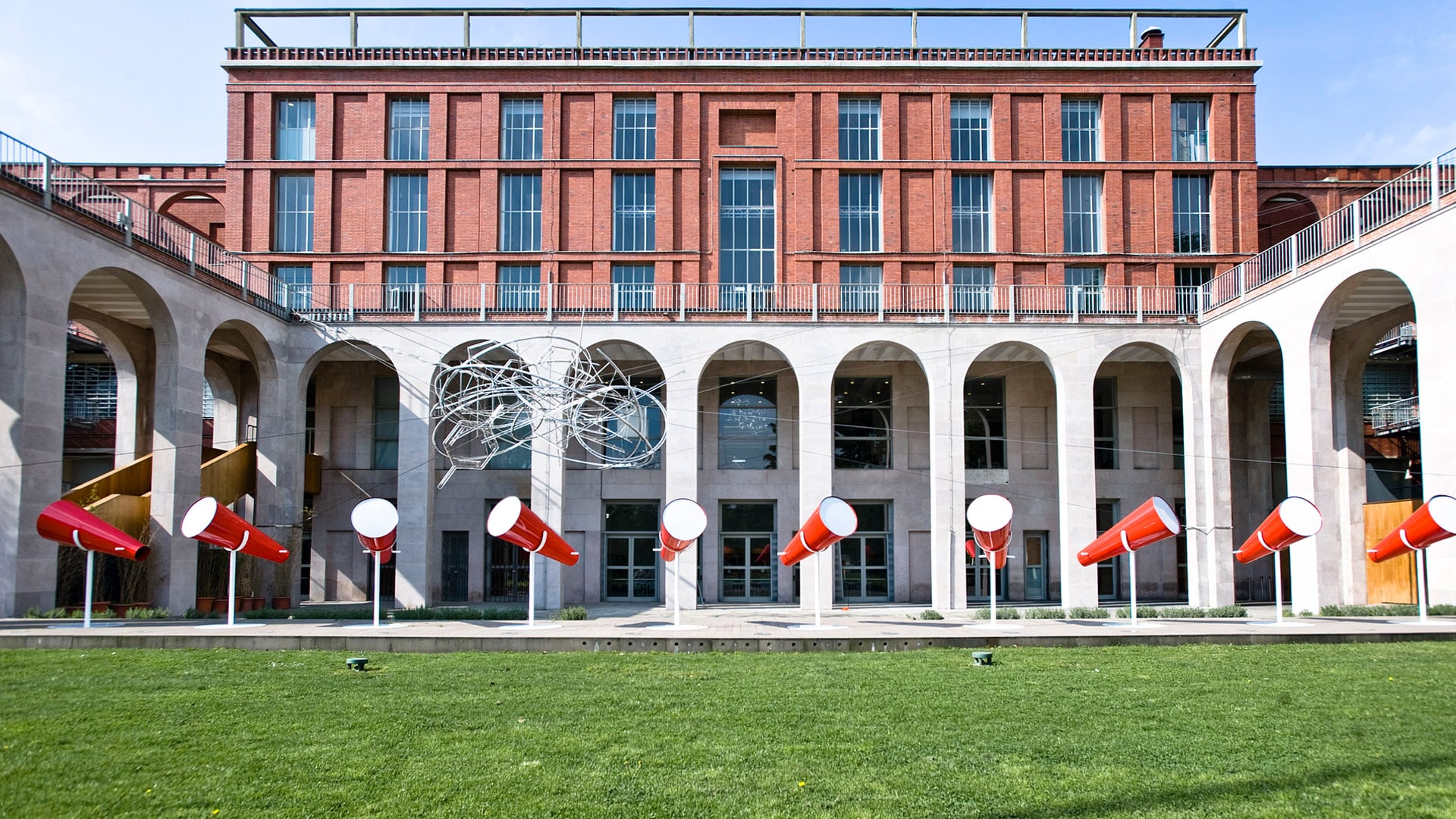
The fifth edition in 1933 is the institution’s hinge. It moved from Monza to Milan, shifted from biennial to triennial cadence (and acquired the name it has carried ever since), and opened in a purpose-built rationalist exhibition palace in Parco Sempione: the Palazzo dell’Arte, designed by Giovanni Muzio between 1931 and 1933 and built with a donation from the industrialist Antonio Bernocchi. Muzio, the leading figure of the Novecento Milanese movement, gave Milan a building that was simultaneously austere, civic and large enough to host a continental exhibition programme. The Palazzo has been the Triennale’s permanent seat for ninety-three years; every president named below has inherited Muzio’s plan as the ground condition of the job.
The fifth Triennale of 1933 itself was steered by Gio Ponti and Mario Sironi as the principal organising figures, with Ponti shaping the design and architecture sections and Sironi directing the mural and decorative programme that gave the new Palazzo its inaugural visual identity. Neither was “president” in the post-1998 sense — they were commissioners for that single edition — but their authorship of the 1933 opening set a precedent that the institution’s posture would, for the next sixty-five years, be defined edition by edition by whichever architect or critic was given the steering role.
The commissioner-led era, 1933–1998: edition-by-edition authorship
Between the move to Milan and the 1998 establishment of the Fondazione, the Triennale’s governance ran on a recurrent pattern: a national or municipal authority appointed an organising committee for each triennial, that committee named commissioners and curators for the constituent sections, and the show closed, the staff dispersed, and the next committee began work for the next edition. This is why the table further down opens with a single row for 1923–1999 rather than a falsified list of names. The institution was real and continuous; the office of the presidency, in the modern sense, was not.
Within that pattern, specific editions are remembered for the figures who shaped them. The 1933 Triennale belongs to Ponti and Sironi. The eighth Triennale, in 1947, belongs to Piero Bottoni, who used it to mount QT8 — the Quartiere Triennale 8, an experimental residential district in the Milan periphery conceived as a built demonstration of postwar housing and urban-planning principles, and one of the most ambitious things any Triennale has ever attempted. Later editions in the 1950s, 1960s and 1970s were shaped by architects and designers who would later become protagonists in their own right, including figures associated with the Italian radical design generation — Ettore Sottsass, Andrea Branzi, Alessandro Mendini, Joe Colombo and Gae Aulenti — who used the Triennale as a working platform for the experimental Italian design culture they were simultaneously building elsewhere. But none of these names held a multi-year presidency. They authored editions, sections and exhibitions; the institution itself was governed by rotating committees.
The 1998 reform changed that. The Fondazione La Triennale di Milano, established as a permanent foundation that year, gave the institution a continuous legal identity, a standing board, a director and — most consequentially for the story this piece is telling — a president with a multi-year mandate. The first holder of that mandate took office in 2000.
Triennale Milano presidents and the Palazzo dell’Arte: the six-name lineage since 2000
The six presidents of the Fondazione-era Triennale share a building, a charter and a city, and almost nothing else. The table below lists them in sequence, with the signature initiative most closely associated with each tenure. The first row consolidates the seventy-five years of commissioner governance that precede the modern presidency; the remaining rows give a discrete mandate per person.
| Years | President | Signature initiative |
|---|---|---|
| 1923–1999 | Commissioner-led era (no continuous presidency) | Edition-by-edition governance; 1923 founding at Villa Reale, Monza; 1933 move to Palazzo dell’Arte under Ponti and Sironi; 1947 QT8 under Piero Bottoni |
| 2000–Sept 2002 | Augusto Morello | ADI- and ICSID-aligned repositioning of the Triennale as the institutional home of Italian industrial design; died in office |
| 2003–2011 | Davide Rampello | Opened the Triennale Design Museum in 2007; rebuilt the contemporary-culture and live-programme calendar |
| 7 Feb 2012 – 2 Dec 2016 | Claudio De Albertis | Reconfirmed in 2014; consolidated the construction-side patronage and rebuilt the Palazzo’s restoration finances; died in office |
| Dec 2016 – Feb 2018 (interim, ~12 months) | Clarice Pecori Giraldi | Held the institution together through the De Albertis succession; ran continuity rather than new programme |
| 16 Feb 2018 – June 2026 | Stefano Boeri | Returned the architectural Triennale (XXII edition Broken Nature 2019, XXIII edition 2022); positioned Milan as host of the next International Exhibition |
| from 4 June 2026 | Vincenzo Trione | Inaugurated with Maria Porro as vice president and Carla Morogallo confirmed as direttore generale; opens with the Andrea Branzi retrospective Continuous Present |
Augusto Morello (2000 – September 2002): the industrial-design president
The first president of the Fondazione-era Triennale was Augusto Morello (1928–2002), the Turin-born design theorist who had directed the Compasso d’Oro from 1954, co-founded ADI (the Associazione per il Disegno Industriale) and served as ADI’s president from 1992 to 1998 before being elected president of ICSID, the International Council of Societies of Industrial Design, from 1997 to 2001. By the time Morello took the Triennale chair in 2000 he was, on paper, the most institutionally credentialed industrial-design figure in Italy, and his election was a deliberate statement about what the newly-reformed Fondazione was for.
Morello’s posture was that the Triennale should be, primarily, the public institutional home of Italian industrial design — the discipline whose recognition the Compasso d’Oro had built since 1954 and which ADI had professionalised through the 1990s. He aligned the Palazzo dell’Arte’s programme with the institutional bodies he had spent his career building and treated the Triennale’s mandate as continuous with the ADI/ICSID project rather than separate from it. The posture was design-discipline-first, with architecture and contemporary culture as adjacent rather than central.
Morello’s tenure was cut short by his death in September 2002, less than three years into the mandate. The brevity is part of the story: the industrial-design Triennale he was building did not have time to consolidate, and his successor inherited an institutional posture rather than a finished programme.
Davide Rampello (2003–2011): the museum president
Davide Rampello, who succeeded Morello in 2003, ran an eight-year presidency that turned the Triennale from a primarily exhibition-led institution into one with a permanent museum at its centre. The single most consequential act of the Rampello tenure was the 2007 opening of the Triennale Design Museum: the first permanent museum of Italian design, installed inside the Palazzo dell’Arte, with a rotating curatorial format that allowed a different exhibition concept and curator to reframe the collection every year or two. The museum is the reason Triennale Milano is today a year-round destination rather than a triennial event.
Rampello’s posture was broader than Morello’s. Where Morello had aligned the Triennale with the industrial-design professional bodies, Rampello positioned it as a contemporary-culture institution — design, architecture, fashion, performance, video — with the permanent museum as its anchor. The live-programme calendar that Milan now takes for granted, the year-round screenings and conferences and design talks at the Palazzo, was built out during the Rampello years. After leaving the Triennale he went on to serve as artistic director of Padiglione Zero at Expo 2015, a role that confirmed the broader cultural-direction profile his Triennale presidency had established.
The 2007 museum opening is the dividing line in the modern Triennale’s identity. Every president since has inherited an institution that is both the host of triennials and the home of a permanent design collection, and the running tension between those two functions has structured every subsequent mandate.
Claudio De Albertis (7 February 2012 – 2 December 2016): the entrepreneur president
Claudio De Albertis, the Milanese construction entrepreneur and former president of ANCE (the Associazione Nazionale Costruttori Edili, Italy’s national construction-industry association), was appointed president of the Fondazione La Triennale di Milano on 7 February 2012 and reconfirmed in 2014. His tenure ran until his death on 2 December 2016. De Albertis was the first non-designer, non-architect, non-critic to hold the post in the Fondazione era. He brought to the Palazzo dell’Arte the financial discipline and construction-industry network of a Milanese builder, and he treated the institution as a piece of cultural infrastructure that needed competent ownership as much as it needed curatorial ambition.
The posture De Albertis shaped was institutional and patrimonial. He used his ANCE connections and his standing in the Milanese business establishment to rebuild the Triennale’s restoration finances and to anchor the foundation’s board with figures from construction, real estate and corporate Milan. The Palazzo’s building fabric — Muzio’s 1933 rationalist envelope — benefited materially from the period. So did the institution’s solvency: by the time of his death the Fondazione was, by the standards of Italian cultural institutions of comparable scale, unusually stable.
De Albertis died in office on 2 December 2016. His succession was not immediate, and the question of who should follow him was, even at the time, framed as a question about what kind of person the institution needed next — another builder-patron, another designer, an architect, a curator. The answer took fourteen months to arrive.
Clarice Pecori Giraldi (December 2016 – February 2018, interim): the holding pattern
Clarice Pecori Giraldi, the art advisor and former managing director of Christie’s Italy, had served as vice president of the Triennale since 2013 under De Albertis. After his death in December 2016 she stepped in as interim president and held the role for roughly twelve months, until Stefano Boeri’s confirmation in February 2018. Her tenure was the only interim presidency in the Fondazione era and is the only entry on the table above that did not generate a multi-year programme of its own.
The posture Pecori Giraldi shaped was, properly, continuity. The interim presidency’s job was to keep the institution running, to honour the programme De Albertis had set in motion, and to give the foundation’s board the time it needed to select a successor with a fresh multi-year mandate. The fact that the interim lasted a full year — rather than the two or three months a more procedural succession might have taken — is itself evidence of how seriously the board took the choice of De Albertis’s successor. The institution had been founded twice by then (in 1923 in Monza and in 1998 in Milan as the Fondazione), and the post-2018 mandate was going to set its identity for the rest of the decade.
Stefano Boeri (16 February 2018 – June 2026): the architect-mayor’s president
Stefano Boeri, the Milanese architect born in 1956, was appointed president of the Fondazione La Triennale di Milano on 16 February 2018 and held the post until his replacement by Vincenzo Trione in June 2026. Boeri came to the chair with an unusual combination of credentials: founder of Stefano Boeri Architetti, author of the Bosco Verticale (2014), and — critically for the Triennale role — former Culture Councillor of the Municipality of Milan from 2011 to 2013. He arrived at the Palazzo dell’Arte fluent in both architectural practice and the municipal cultural-policy apparatus that funds and steers Triennale Milano. No previous president had combined those two literacies at that level.
The Boeri posture was architecturally ambitious and internationally outward-facing. The XXII Triennale International Exhibition in 2019, Broken Nature: Design Takes on Human Survival, curated by Paola Antonelli, returned the international-exhibition format to the foreground and pitched the Triennale as a participant in the global ecological-design conversation rather than a domestic Italian institution. The XXIII Triennale in 2022, Unknown Unknowns, continued the international-exhibition cadence. Across both editions Boeri positioned the Palazzo as a host capable of holding a continental-scale show, and his municipal connections were instrumental in securing Milan’s standing as a recurring host city for the International Exhibition format.
Boeri’s posture also brought architectural practice and the institutional presidency into close contact, in ways that occasionally generated friction. As the city’s most visible practising architect-president, Boeri ran the Triennale while Stefano Boeri Architetti continued to win and deliver major commissions in Milan and abroad — a balance that the Milanese press tracked closely and that the eventual handover to a non-practitioner successor was, in part, a response to. The eight-year run is the longest in the Fondazione era and decisively shaped how the institution presents itself: architecturally serious, internationally legible, programmatically dense.
The closing act of the Boeri presidency was the institutional handover of June 2026, with the new direction inheriting the Andrea Branzi Continuous Present retrospective — the Toyo Ito-designed Branzi retrospective that opens the Trione presidency — as the signature show that bridges the two mandates.
Vincenzo Trione (from 4 June 2026): the art-historian president and the Milan–Rome resolution
Vincenzo Trione, the art historian and curator born in Sarno in 1972, was named president of Triennale Milano on 4 June 2026. He arrived from IULM Milano, where he is full professor of contemporary art history and art-and-media and served as Dean of the Faculty of Arts and Tourism from 2015 to 2024, and from the curatorial credit of having organised the Italian Pavilion at the 56th Venice Biennale in 2015. He is the first art historian and academic to hold the Triennale presidency in the Fondazione era; every predecessor had been a designer, a critic-impresario, a builder or an architect.
The political reading of the Trione appointment, in the Milanese and national press, was that it resolved a months-long tug-of-war between the Comune di Milano — which has historically defended the Triennale as a municipally-anchored institution — and the Ministry of Culture in Rome, which had been pushing for a national-level figure with central-government legibility. Trione’s profile reads as a compromise that both sides could accept: a Milan-based academic with national curatorial standing, no architectural practice to manage in parallel, and a clear arts-and-humanities posture rather than a design-discipline-first or architecture-first one.
The new directorate’s structural shape is itself an institutional statement. Maria Porro, the Como-born executive who has been president of Salone del Mobile.Milano since July 2021 (the first woman in that role), was named vice president of Triennale Milano on the same day as Trione’s appointment. Porro’s installation as vice president fuses, at the governance level, the two most important Milan-based design institutions: the Triennale (a foundation with a permanent museum and a triennial international exhibition) and the Salone del Mobile (a trade fair that drives the global furniture-industry calendar and the city’s design-week economics). The fusion is partial — the two institutions remain legally distinct — but it is the first time the senior leadership of both has been overlapped at the board level.
The third name in the new directorate is Carla Morogallo, the cultural manager who has worked inside the Triennale for more than twenty years and has served as direttore generale since 2022. Her reconfirmation under Trione is the continuity element of the transition: where the presidency and vice presidency turn over, the executive directorate that runs the building day to day stays in place. This is a deliberate posture. The Triennale enters the Trione mandate with new ceremonial leadership, a fused Salone–Triennale governance link and an unchanged operational spine.
The first major exhibition of the Trione presidency, inherited from the Boeri programming but opened under the new directorate, is the Andrea Branzi Continuous Present retrospective, with exhibition design by Toyo Ito. That the new presidency opens with a Branzi retrospective is itself a posture: the Italian radical design generation is being reclaimed by the institution as canonical at exactly the moment a non-designer, art-historian president takes the chair. Trione’s first signature is, fittingly for an art historian, a historiographical one.
A coda from the building outward
A hundred and three years after the first opening at the Villa Reale in Monza, ninety-three years after the move into Muzio’s Palazzo dell’Arte, and twenty-eight years after the establishment of the Fondazione, the institutional posture of Triennale Milano is set by a six-name presidential lineage and a fused vice-presidential link to the Salone del Mobile. The lineage is not smooth — Morello’s industrial-design Triennale, Rampello’s contemporary-culture museum, De Albertis’s patrimonial-building Triennale, Pecori Giraldi’s interim continuity, Boeri’s international-exhibition architecture-Triennale and Trione’s art-historian humanities-Triennale are six genuinely different propositions about what the Palazzo is for. The institution that survives all six is the building. Muzio’s 1931–1933 rationalist envelope, paid for by Bernocchi and handed to the city in 1933, has absorbed every president the Fondazione has elected and held the cultural argument together. The next decade of the Triennale will be argued out inside it.